


Anil Dave, Chandra Bhushan awarded UN Environment 'ozone award' for contributions to Montreal Protocol
Late Union Environment Minister Anil Dave and CSE Deputy Director Chandra Bhushan have been conferred with awards by the United Nations Environment

New Delhi: Late Union Environment Minister Anil Dave and Centre for Science and Environment's (CSE) Deputy Director Chandra Bhushan have been conferred with awards by the United Nations Environment.[caption id="attachment_3455132" align="alignleft" width="380"]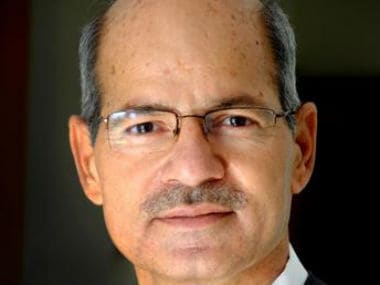 File image of late Union minister Anil Madhav Dave. Twitter @AnilMDave[/caption]The awards recognise the exemplary role played by individuals and institutions in the protection of the ozone layer.Dave, who died while in the office in May, was posthumously awarded the 'Political Leadership Award' at a ceremony held in Canada on Thursday to mark the 30th anniversary of the Montreal Protocol.The award is in recognition of his leadership role in getting an amendment to the Montreal Protocol on Substances that Deplete the Ozone Layer endorsed in the Rwandan capital in October last year. It is named the Kigali Amendment.Bhushan was given the 'Partnership Award' for providing policy and research support to the negotiations during the Kigali Amendment.The amendment is the single largest contribution the world has made towards keeping the rise of global temperature to "well below" two degrees Celsius, a target agreed upon at the Paris climate conference in 2015.It aims to phase down climate-warming hydrofluorocarbons (HFCs) used widely in refrigerators, air conditioners and aerosol sprays. It will enter into force on 1 January, 2019.Hailing India's role in the negotiations at Kigali last year, Bhushan said, "India did many things differently during negotiations. For one, NGOs and government worked as a team. India was proactive and not reactive. It submitted its own proposals, instead of reacting to the proposals of developed countries.""Most importantly, India negotiated on the principal of positive reciprocity — it came forward and took more responsibilities, thereby pushing developed countries and China to do more," he added.

China has dominated Myanmar’s rare earth mines — now India eyes deal to harness country’s critical minerals
CJP protest in Delhi: New videos of stone pelting, violence emerge as police, agitators trade charges
'From make in India to launch from India': Skyroot COO on why Vikram-1 could change India’s space sector
Choke terror funding, keep international shipping lanes safe: Jaishankar at Asean Regional Forum
PM Modi announces fast-track courts for paper leak cases; CJP responds ‘Dharmendra Pradhan must go’