
Advertisement


Sections
Why is barefoot running so popular right now?
From Milind Soman to Jake Gyllenhaal, youth icons from across the globe are choosing to run barefoot rather than wear specially designed shoes.

Just 30 minutes of running can burn anywhere between 280 to 520 calories. The activity carries more benefits than one can count, including toning and building muscles, improving stamina and heart function, and reducing stress and anxiety.[caption id="attachment_8039081" align="alignleft" width="380"]![Representational image. Image by uveese from Pixabay]() Representational image. Image by uveese from Pixabay[/caption]The first thing that anybody who wants to run needs to sort out is footwear. Getting the right shoes is absolutely necessary to minimise injuries - or that’s what fitness experts and companies that manufacture shoes will tell you. Yet, if that’s really the case, why is barefoot running picking up so much in recent years? From Milind Soman to Jake Gyllenhaal, youth icons from across the globe are choosing to run barefoot rather than wear shoes specially designed to allow your feet to “breathe” and reduce the foot stress. The reason behind this is simple: humankind, like all other animals, first learned to walk and run barefoot.
Representational image. Image by uveese from Pixabay[/caption]The first thing that anybody who wants to run needs to sort out is footwear. Getting the right shoes is absolutely necessary to minimise injuries - or that’s what fitness experts and companies that manufacture shoes will tell you. Yet, if that’s really the case, why is barefoot running picking up so much in recent years? From Milind Soman to Jake Gyllenhaal, youth icons from across the globe are choosing to run barefoot rather than wear shoes specially designed to allow your feet to “breathe” and reduce the foot stress. The reason behind this is simple: humankind, like all other animals, first learned to walk and run barefoot.
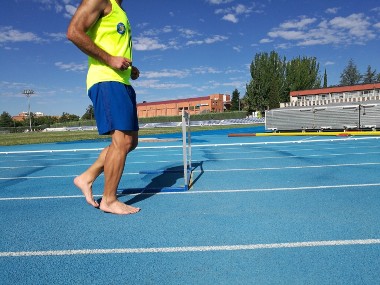 Representational image. Image by uveese from Pixabay[/caption]The first thing that anybody who wants to run needs to sort out is footwear. Getting the right shoes is absolutely necessary to minimise injuries - or that’s what fitness experts and companies that manufacture shoes will tell you. Yet, if that’s really the case, why is barefoot running picking up so much in recent years? From Milind Soman to Jake Gyllenhaal, youth icons from across the globe are choosing to run barefoot rather than wear shoes specially designed to allow your feet to “breathe” and reduce the foot stress. The reason behind this is simple: humankind, like all other animals, first learned to walk and run barefoot.
 The evolution of footwear and injuries
According to a study published in the British Journal of Sports Medicine in 2013, humans have used footwear for the past 50,000 years in some form or the other and gradually adapted to increased footwear use over time. Modern running shoes came into existence only in the 1970s, when endurance running became popular as a way to manage and prevent chronic lifestyle-related diseases like heart disease, obesity, hypertension and diabetes.And while the popularity of running shoes increased, so did the realisation that running puts a lot of stress on the joints and muscles of the feet, shins, knees, thighs and legs. Data gathered since the 1970s have shown that there’s a 50-79% prevalence of running-related injuries, including torn ligaments, sprained ankles, shin splints, stress fractures, etc. Of course, the running shoe-makers of the world caught on to this risk runners were exposed to, and created new technologies to cope with them. Increased heel bevel (that curved protrusion on the back of your shoes), softer and thicker soles for cushioning, dual-density medial midsole support, etc were all invented in the hopes that minimising impact forces and joint angle changes will also reduce the risk of injuries. This, clearly, did not happen, and shoemakers are yet to design a completely injury risk-free running shoe.Benefits of barefoot running
And while the running shoe industry was trying to adapt to this prevalence of injuries, some made their mark globally by running barefoot while insisting that this method of running is what humans were naturally supposed to do - and therefore could lead to minimal or no injuries. Ethiopian runner Abebe Bikila ran barefoot and won the gold medal for the Olympic marathon in Rome in 1960. His example has inspired many athletes to go barefoot running on professional and recreational tracks through the decades until barefoot running became a trend in 2009 and shoe companies started manufacturing “minimalist shoes” in 2011. This new trend also spurred a lot of research into barefoot running, all of which supported the fact that this method is highly beneficial.A study in Sports Health in 2014 reveals that barefoot running has three major benefits:- Injury prevention
- Enhanced running efficiency
- Improved performance
- Find a track with a hard surface that’s also clean. Avoid grassy tracks and sandy beaches with tidal shells and stones.
- Run lightly and quietly, and make sure you always land on your forefoot or midfoot.
- Start barefoot running for short durations since your feet are more used to shoes. Gradually increase your barefoot running time.
- Get minimalist shoes if you’re afraid of injuries in the beginning.
- Once you’re used to running barefoot after a few months’ training, gradually shift to softer surfaces.
First Published:Feb 13, 2020, 19:26:39 IST
Advertisement
Advertisement

10,000 steps a day is not enough: Top doctor explains the role of timing
Walking 10,000 steps a day is beneficial, but experts say timing matters. Short walks after meals and breaking up long periods of sitting may be more effective for blood sugar control and overall metabolic health
3 min read
What happens when you stop drinking tea for 30 days? Doctor explains the effects
Thinking of quitting tea for a month? Experts explain how cutting out caffeine can affect your body, from withdrawal symptoms in the first week to better sleep and improved iron absorption over time.
2 min read
Stroke is rising among young adults. Doctor explains why it's happening and what you must do
Stroke is increasingly affecting adults in their 30s, 40s and 50s. Experts say unhealthy lifestyles, undiagnosed high blood pressure and delayed treatment are driving the rise in younger stroke cases
3 min read
Stroke in young adults, silent symptoms and late diagnosis: India's growing brain health challenge
Neurologists warn that stroke is increasingly affecting people in their 30s and 40s, while many brain disorders progress silently before symptoms appear. They say early diagnosis, timely referrals and healthier lifestyles are key to reducing India's growing neurological disease burden.
5 min read
Brain tumours aren't always fatal, but delayed diagnosis can be: Experts explain the key warning signs
Brain tumours are frequently mistaken for common headaches, stress or age-related cognitive changes. Doctors say recognising warning signs early and adopting a brain-healthy lifestyle can improve outcomes and reduce the risk of long-term neurological complications.
2 min read
Advertisement
Advertisement