


The US elections are seeing science, public health become more political than ever before
Some research shows increasing political divides this year as a pandemic thrusts science into the election spotlight.

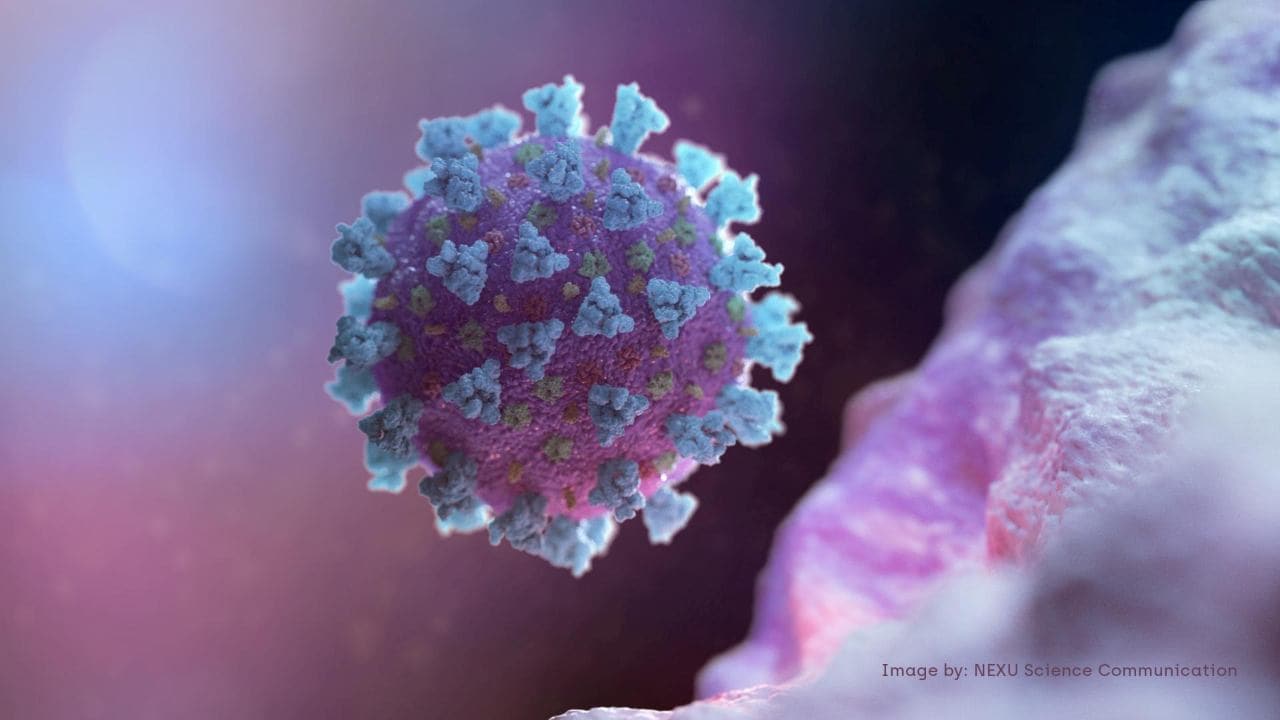
An illustration of the novel SARS-CoV2 virus. Image: Nexu Science Communication/Trinity College[/caption]Doctors in Politics was formed this year by a group of physicians who were frustrated by what they viewed as a failed federal response to Covid-19. The group’s aim is to elect 50 Democratic or independent doctors to political office by 2022, said Dr. Dona Murphey, one of the group’s founders and a neurologist. But for now, they’re focused on 2020.According to David Lazer, a professor of political science and computer science at Northeastern University in Boston and one of the leaders of a Covid-19 polling consortium, their timing might be right.“My intuition is that this is a good year to be running as a doctor or scientist,” he said, pointing to a September survey from the consortium that showed trust in doctors and scientists is higher than trust in any other American institution or political entity.Much of that may be traced to Covid-19. But, as the science surrounding the disease has been on nearly everyone’s mind, differing attitudes among the American electorate are likely to play out at the polls.“The growing political divide around coronavirus is also seen in terms of trust in medical scientists,” Funk said.Funk pointed to a May report by the Pew Research Center that showed overall public trust increased in medical scientists since 2019, but that increase is attributed to a growing trust among Democrats. Republicans’ trust in scientists stayed about the same from 2019 through the first few months of the pandemic. A more recent survey from Pew showed that those on the political right are often less trusting of scientists than are those on the left.Trump’s rhetoric around science may be contributing to the split. During the pandemic, the president has dismissed public health advice from experts, touted unproven coronavirus treatments, and questioned the efficacy of masks.“The Trump administration has systematically done everything it could to downplay, dismiss or deny science,” said Michael Gerrard, an environmental lawyer and professor at Columbia University. “This is most prominent with climate change and now with the coronavirus, but it’s all across the board.” Gerrard has tracked more than 300 situations in which he found scientific initiatives to be restricted or questioned by federal officials since 2016, 19 of them Covid-related.Such frustration during the course of this election cycle has become palpable, with organizations that don’t normally step into the political fray doing so.The presidents of the National Academy of Sciences and National Academy of Medicine, for instance, released a joint statement Sept. 24 expressing alarm over what they considered to be political interference in the response to Covid-19 by the president.And a multitude of scientific publications have spoken out. Scientific American formally endorsed the Democratic presidential candidate, former Vice President Joe Biden — its first time making such a political pick in its 175-year history. The journal Nature has also endorsed Biden. The New England Journal of Medicine published a scathing critique — “Dying in a Leadership Vacuum” — of the federal government’s pandemic response. Although it was not a formal endorsement of any candidate, the editorial said, “Our current political leaders have demonstrated that they are dangerously incompetent.”Such picking sides has led to another phenomenon, said Dominik Stecuła, an assistant professor of political science at Colorado State University.“You’ll see yard signs that say ‘Science is real’ and with other messages clearly aligning scientists with a group on the political spectrum,” he said. But Stecuła said pro-science messaging by Democrats could lead to deeper fissures in public opinion.“From a scientist’s point of view, it hurts the goals that you’re trying to achieve,” he said, “because what ends up happening is that, increasingly, Republicans treat scientists as an out-party group, a constituency of the Democrats.”“The Trump administration has systematically done everything it could to downplay, dismiss or deny science,” said Gerrard.Others offer a different take.“I really reject that premise,” said Rep. Lauren Underwood (D-Ill.), a registered nurse who flipped her district to Democratic when she was elected in 2018 on a pro-science platform. She’s running for reelection this year. “I just don’t think that’s true. The American people may be uncomfortable with some findings and recommendations, but this is a core value set in our community.”“We learn science in every grade, in every level of education,” she said. “There may be some partisan differences in how we take partisan findings, but I think it’s dangerous if we start to presume that science is polarizing.”She also thinks her background as a health professional helps her in Congress to work across the aisle. For instance, she worked with Rep. Roe last spring to introduce legislation on protecting the medical supply chain.Roe also dismissed the idea that science — especially regarding the pandemic and the development of a Covid-19 vaccine — is further polarizing the electorate. In his view, it’s less about science and more about the race for the White House.“Of course it’s been politicized, it’s a political year,” said Roe. “If we hadn’t had an election, I think it would look different.”Victoria Knight reports for Kaiser Health News.This article was originally published by Kaiser Health News and is republished here under a Creative Commons license.

10,000 steps a day is not enough: Top doctor explains the role of timing
What happens when you stop drinking tea for 30 days? Doctor explains the effects
Stroke is rising among young adults. Doctor explains why it's happening and what you must do
Stroke in young adults, silent symptoms and late diagnosis: India's growing brain health challenge
Brain tumours aren't always fatal, but delayed diagnosis can be: Experts explain the key warning signs