
Advertisement


Sections
Nine yoga poses to strengthen the spine
A 2003 research study with 11,000 people in north India found that a staggering 23% of them had lower back pain.

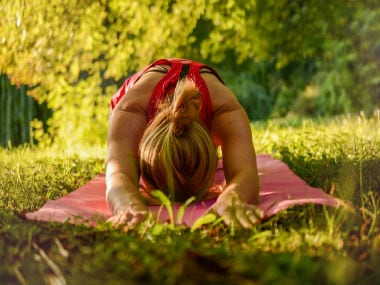
Among the major causes of back pain today, are poor posture and a sedentary lifestyle. A 2003 research study with 11,000 people in north India found that a staggering 23% of them had lower back pain. Another report in the Hindu Business Line newspaper said that one-fifth of all Indians suffering from back pain aren’t old at all - they are in the 16-34 age group.As life becomes more hectic, more and more people are turning to the wisdom of the ancient sages for relief. Case in point: yoga - a low-impact workout that is suitable for most people.[caption id="attachment_7316891" align="alignleft" width="380"]![Representational image. Image by Sofie Zbořilová from Pixabay]() Representational image. Image by Sofie Zbořilová from Pixabay[/caption]It is, of course, advisable to start your yoga practice with a trained guru, especially if you are a beginner. If you have a back injury or back pain, please consult your doctor to find out which movements to avoid. Increase the duration and intensity of the session gradually to reap maximum benefits.That said, here are nine poses to help you get a super-strong back.Cat pose
Representational image. Image by Sofie Zbořilová from Pixabay[/caption]It is, of course, advisable to start your yoga practice with a trained guru, especially if you are a beginner. If you have a back injury or back pain, please consult your doctor to find out which movements to avoid. Increase the duration and intensity of the session gradually to reap maximum benefits.That said, here are nine poses to help you get a super-strong back.Cat pose
 Representational image. Image by Sofie Zbořilová from Pixabay[/caption]It is, of course, advisable to start your yoga practice with a trained guru, especially if you are a beginner. If you have a back injury or back pain, please consult your doctor to find out which movements to avoid. Increase the duration and intensity of the session gradually to reap maximum benefits.That said, here are nine poses to help you get a super-strong back.Cat pose
- Come down on all fours; your hands should be right under your shoulders and your knees right below the hips
- Breathe out, as you curve and stretch your spine upwards, just like a cat
- Hold for 20-25 seconds
- Exhale and return to the starting position
- Repeat five times
- Come on all fours
- Breathe in. Curve your back, so that it forms a trough
- Hold this position for 20-25 seconds
- Come back to the starting position
- Repeat five times
- Stand on the mat with your feet apart
- Interlock your fingers behind your back
- Bend forward from your waist, lifting your arms straight behind you
- Make sure your back is not rounded. Stay in this position for 30 seconds
- Breathe out and come back to the starting position
- Do five repetitions
- If you have asthma, check with your doctor before performing this pose
- Lie down on your back
- Tuck your arms under your back; try to touch the elbows
- Breathe in, lift your head and chest to look down at your toes
- Now tilt your head back and place the crown on the mat. Do not drop your chest and do not make any jerky movements
- Stay in this position for 15-20 seconds
- (If you need to come out of the pose at any point, lift your head to look at your toes again. Then gently lay it down on the mat)
- Breathe out and come back to the starting position
- This is an advanced pose. Please see your expertise and comfort before doing it
- Lie down on your back
- Bend your knees. Now place your feet on the mat, close to your buttocks
- Place your hands close to your feet, with palms facing down. You can also hold your heels lightly
- Breathe in and lift your buttocks and torso off the floor. Do not lift your head or strain the neck in any way
- Stay in this position for 15-20 seconds
- Breathe out and come back to the starting position
- Do five repetitions
- Lie down on your stomach on a yoga mat
- Place your palms on the floor, right next to your shoulders
- Now using your arms for support, lift your chest. Your hips should still be on the floor
- Breathe in, look up and feel the stretch on your upper back
- Hold this position for 15-30 seconds
- Come back to the starting position
- Do three to five repetitions
- Lie down on your stomach, and place your chin on the mat
- Interlock your fingers behind your back. Keep your arms straight
- Breathe in and slowly raise the right leg. Check your hip position to make sure you haven’t twisted it
- Hold the position for a few seconds
- Breathe out and lower the right leg
- Repeat with the left leg
- Do five repetitions on each leg
- Lie down on your stomach
- Bend your knees. Now firmly hold your ankles with your hands
- Breathe in and lift your chest and thighs off the floor
- Stay in this position for 15-20 seconds
- Breathe out and come back to the starting position
- Do five repetitions
- Sit down on your heels, on a yoga mat
- Raise your arms overhead
- Now gently bend forward from the waist, till your palms touch the mat
- Exhale and try to touch your stomach to your thighs
- Hold this position for 1-2 minutes
- Inhale and come back to the starting position
First Published:Sep 10, 2019, 15:07:34 IST
Advertisement
Advertisement

10,000 steps a day is not enough: Top doctor explains the role of timing
Walking 10,000 steps a day is beneficial, but experts say timing matters. Short walks after meals and breaking up long periods of sitting may be more effective for blood sugar control and overall metabolic health
3 min read
What happens when you stop drinking tea for 30 days? Doctor explains the effects
Thinking of quitting tea for a month? Experts explain how cutting out caffeine can affect your body, from withdrawal symptoms in the first week to better sleep and improved iron absorption over time.
2 min read
Stroke is rising among young adults. Doctor explains why it's happening and what you must do
Stroke is increasingly affecting adults in their 30s, 40s and 50s. Experts say unhealthy lifestyles, undiagnosed high blood pressure and delayed treatment are driving the rise in younger stroke cases
3 min read
Stroke in young adults, silent symptoms and late diagnosis: India's growing brain health challenge
Neurologists warn that stroke is increasingly affecting people in their 30s and 40s, while many brain disorders progress silently before symptoms appear. They say early diagnosis, timely referrals and healthier lifestyles are key to reducing India's growing neurological disease burden.
5 min read
Brain tumours aren't always fatal, but delayed diagnosis can be: Experts explain the key warning signs
Brain tumours are frequently mistaken for common headaches, stress or age-related cognitive changes. Doctors say recognising warning signs early and adopting a brain-healthy lifestyle can improve outcomes and reduce the risk of long-term neurological complications.
2 min read
Advertisement
Advertisement