
Advertisement


Sections
Four things you need to know about Remdesivir, the FDA-approved drug for severe COVID-19 cases
Remdesivir is a broad-spectrum antiviral medicine that has got significant public attention for its possible benefits in the treatment of COVID-19.

Remdesivir is a broad-spectrum antiviral medicine that has got significant public attention for its possible benefits in the treatment of COVID-19. A nucleoside analogue drug, Remdesivir was developed by a US-based biopharmaceutical firm, Gilead Sciences, to fight against Ebola.Both lab and animal studies have shown that remdesivir is effective against SARS and MERS virus. This is significant because both SARS and MERS are coronaviruses; they belong to the same family as SARS-CoV-2, the coronavirus responsible for the ongoing COVID-19 pandemic.[caption id="attachment_8324871" align="alignleft" width="380"]![Representational image. Image by Willfried Wende from Pixabay.]() Representational image. Image by Willfried Wende from Pixabay.[/caption]Nucleoside analogue is a reference to the molecular structure of Remdesivir. It means that the drug contains a nitrogenous base with carbon sugar. This type of antiviral prevents the virus from making more copies of itself inside the human body. Once the virus is no longer able to replicate, the infection starts to clear up. Here’s everything you need to know about remdesivir and why it is being used to treat severely ill COVID-19 patients:
Representational image. Image by Willfried Wende from Pixabay.[/caption]Nucleoside analogue is a reference to the molecular structure of Remdesivir. It means that the drug contains a nitrogenous base with carbon sugar. This type of antiviral prevents the virus from making more copies of itself inside the human body. Once the virus is no longer able to replicate, the infection starts to clear up. Here’s everything you need to know about remdesivir and why it is being used to treat severely ill COVID-19 patients:
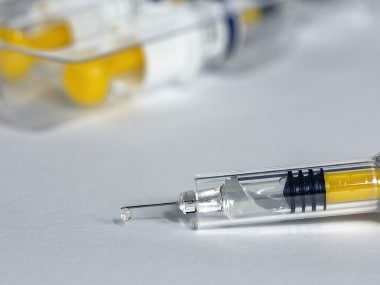 Representational image. Image by Willfried Wende from Pixabay.[/caption]Nucleoside analogue is a reference to the molecular structure of Remdesivir. It means that the drug contains a nitrogenous base with carbon sugar. This type of antiviral prevents the virus from making more copies of itself inside the human body. Once the virus is no longer able to replicate, the infection starts to clear up. Here’s everything you need to know about remdesivir and why it is being used to treat severely ill COVID-19 patients:
1. Has the US allowed emergency use of remdesivir? Is remdesivir approved by the US Food and Drug Administration (FDA)?
On May 1, the US FDA approved the remdesivir for emergency use in hospitalised patients with severe COVID-19 only - this approval is temporary, as it had to be expedited to help patients who are in critical condition.The drug may reportedly be used in 5-day or 10-day treatment durations, depending on the severity of the disease. However, this authorisation is not permanent. Remdesivir is still an investigational drug that needs to get authorisation from the FDA.2. Does India manufacture remdesivir? What’s ICMR’s stand on it?
Currently, Gilead owns the patent for remdesivir in India. The patent was granted as early as February 2020. However, as per media reports, the biopharma company is likely to announce licencing agreements with local pharmaceutical firms to let them make a generic version of the drug in the country.Meanwhile, various pharmaceutical companies in India ranging from Cipla, Dr Reddy’s and Glenmark have already started working on developing the active pharmaceutical ingredients or the raw materials of remdesivir in India.For now, all these companies are reportedly allowed to produce this drug for research purpose only - the drug in under patent for at least up to 2030.3. How does Remdesivir work?
Remdesivir is a nucleoside analogue. Studies show that it competes with ATP (adenosine triphosphate) during the production of viral RNA.Viruses are intracellular parasites. Once they get inside healthy cells, they use the machinery and materials from these cells to make copies of their own nucleic acid. RNA or ribonucleic acid is the genetic material of SARS-CoV-2.Every RNA is made of a series of four nucleotide bases arranged in various ways to code for specific characters or make specific proteins. These bases include ATP, GTP, CTP and UTP.An enzyme called RNA polymerase makes new RNA copies which are then used to make new viruses. Remdesivir, when it gets integrated in place of ATP during the formation of RNA, completely halts the replication process. No replication means no new RNA and no new virus.4. Are there any side-effects of the drug?
Remdesivir is still under investigation. So the side effects are not well known. However, as per the FDA, two possible side effects of remdesivir are as follows:- Increase in the levels of liver enzymes, indicating that it may negatively affect the liver. Before giving remdesivir to a patient, doctors check their liver health through various blood tests.
- Infusion-related reaction during the administration of the drug. It shows up as nausea, vomiting, shivering, sweating and low blood pressure.
First Published:May 02, 2020, 14:32:50 IST
Advertisement
Advertisement

Stroke in young adults, silent symptoms and late diagnosis: India's growing brain health challenge
Neurologists warn that stroke is increasingly affecting people in their 30s and 40s, while many brain disorders progress silently before symptoms appear. They say early diagnosis, timely referrals and healthier lifestyles are key to reducing India's growing neurological disease burden.
5 min read
Brain tumours aren't always fatal, but delayed diagnosis can be: Experts explain the key warning signs
Brain tumours are frequently mistaken for common headaches, stress or age-related cognitive changes. Doctors say recognising warning signs early and adopting a brain-healthy lifestyle can improve outcomes and reduce the risk of long-term neurological complications.
2 min read
Spices, health and the Indian plate: Why chilli can be good for you—but moderation is still key
From boosting metabolism to supporting heart health, chillies offer several surprising health benefits. But experts say the amount you eat matters, and too much spice can do more harm than good.
4 min read
Organ donation: 5 myths you need to stop believing, according to a transplant specialist
Organ donation has the power to transform and save lives, but this can happen only when myths are replaced with facts. Building awareness, having open conversations and understanding the process can help families make informed decisions.
2 min read
Fish over meat: Why a pescatarian diet may help people with obesity live longer
A large UK study tracking over 150,000 adults with clinical obesity found pescatarians outlived regular meat-eaters, while vegetarians and vegans saw no similar benefit, but experts say the findings don't translate simply to Indian diets.
4 min read
Advertisement
Advertisement