
Advertisement


Sections
Chest workout part 1: Four exercises for your upper chest
Few people know that the chest has three different portions - upper, middle and lower chest. It takes a three-day workout to complete a full chest routine.

What do most Bollywood actors have in common these days? A muscular physique highlighted by a super-defined chest. This is probably why many men nowadays want to achieve the same look.Our chest muscles extend from the upper collarbone to just above the abdomen. The chest is a big muscle group: few people know that the chest has three different portions - upper, middle and lower chest. This is why it takes a three-day workout to complete a full chest routine.[caption id="attachment_7748091" align="alignleft" width="380"]![Representational image. Image source: Getty Images.]() Representational image. Image source: Getty Images.[/caption]Pectoral muscles in the upper chest are the hardest to train. The pectoralis major—popularly known as the pecs—is a set of six muscle fibres that control the functions of the upper arm bone (humerus) as well as the shoulders. For this reason, upper chest workouts are designed to work with the shoulder and deltoids (triangular muscle in the upper arm). To achieve the desired results for your pecs, you also need to build up your shoulders.You can always train hard to get the body that you always desired. But before beginning a workout, always remember to warm up: do mobility exercises such as rotating your arms in the air, making big circles with your hips, stretching your chest, legs, and arms for five minutes before going full steam ahead. If you are working out early morning, make sure you get at least a minute or two of cardio in your warm-up, too. Jog on the spot, do jumping jacks or high-knees to get the heart pumping.Precaution: Do not try these exercises in the absence of a trainer or an experienced person who can correct your posture and guide you on the correct way to increase the weights.
Representational image. Image source: Getty Images.[/caption]Pectoral muscles in the upper chest are the hardest to train. The pectoralis major—popularly known as the pecs—is a set of six muscle fibres that control the functions of the upper arm bone (humerus) as well as the shoulders. For this reason, upper chest workouts are designed to work with the shoulder and deltoids (triangular muscle in the upper arm). To achieve the desired results for your pecs, you also need to build up your shoulders.You can always train hard to get the body that you always desired. But before beginning a workout, always remember to warm up: do mobility exercises such as rotating your arms in the air, making big circles with your hips, stretching your chest, legs, and arms for five minutes before going full steam ahead. If you are working out early morning, make sure you get at least a minute or two of cardio in your warm-up, too. Jog on the spot, do jumping jacks or high-knees to get the heart pumping.Precaution: Do not try these exercises in the absence of a trainer or an experienced person who can correct your posture and guide you on the correct way to increase the weights.
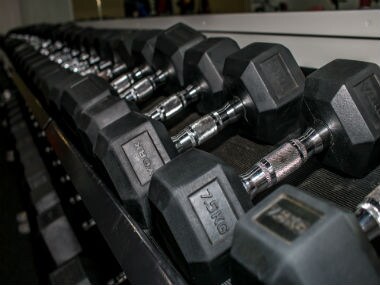 Representational image. Image source: Getty Images.[/caption]Pectoral muscles in the upper chest are the hardest to train. The pectoralis major—popularly known as the pecs—is a set of six muscle fibres that control the functions of the upper arm bone (humerus) as well as the shoulders. For this reason, upper chest workouts are designed to work with the shoulder and deltoids (triangular muscle in the upper arm). To achieve the desired results for your pecs, you also need to build up your shoulders.You can always train hard to get the body that you always desired. But before beginning a workout, always remember to warm up: do mobility exercises such as rotating your arms in the air, making big circles with your hips, stretching your chest, legs, and arms for five minutes before going full steam ahead. If you are working out early morning, make sure you get at least a minute or two of cardio in your warm-up, too. Jog on the spot, do jumping jacks or high-knees to get the heart pumping.Precaution: Do not try these exercises in the absence of a trainer or an experienced person who can correct your posture and guide you on the correct way to increase the weights.
Upper-chest workout routine
1. Decline push-upsPush-ups are one of the best exercises to pump up the pecs and warm up before a workout with weights. A push-up has many variations - conventional, diamond, incline and decline. Decline push-ups are a great way to begin an upper chest workout, as they not only work your upper chest but also activate the deltoids.Equipment required: A bench, chair or any raised platformSets & reps: 3 sets of 15 reps eachIntensity: Low (beginner)How to do it:- Stand facing away from the bench, leaving a few feet distance between you and the bench.
- Come into the plank position, by placing your palms on the floor, hands slightly wider than shoulder-width, lock your elbows and your knees. Now, one by one, take your feet up on the bench.
- Slowly do a push-up by bending the elbows until your chest nearly touches the ground.
- Now slowly push your chest away from the ground by extending the elbows. This is one rep.
- Set the bench at 15 to 30 degrees.
- Lie down with your back on the bench.
- Ask a buddy for help here: Hold the barbell rod with an underhand grip (palms facing away from your body) at shoulder-width distance.
- Push the barbell upward by extending your arms and locking your elbows.
- Now bring it down slowly with a controlled movement until it touches the upper chest region. This is one rep.
- Set the bench at 15 to 30 degrees.
- Lie down on the bench facing upward.
- Now hold the dumbbells with an underhand grip slightly above the shoulder level.
- Push the dumbbells up by extending your arms and locking your elbows.
- Now bring them down slowly with a controlled movement until you reach the level of your upper chest.
- This is one rep.
- Grab both the pulley rods with an overhand grip (palms facing your body) with elbows bent at 90-degrees.
- Facing away from the machine place one foot ahead of the other and lean forward.
- While extending the arms to straighten them, push both the pulleys forward.
- Now, while coming back to the starting position, move your arms back to your side by bending the elbows. This is one rep.
First Published:Dec 06, 2019, 13:08:31 IST
Advertisement
Advertisement

10,000 steps a day is not enough: Top doctor explains the role of timing
Walking 10,000 steps a day is beneficial, but experts say timing matters. Short walks after meals and breaking up long periods of sitting may be more effective for blood sugar control and overall metabolic health
3 min read
What happens when you stop drinking tea for 30 days? Doctor explains the effects
Thinking of quitting tea for a month? Experts explain how cutting out caffeine can affect your body, from withdrawal symptoms in the first week to better sleep and improved iron absorption over time.
2 min read
Stroke is rising among young adults. Doctor explains why it's happening and what you must do
Stroke is increasingly affecting adults in their 30s, 40s and 50s. Experts say unhealthy lifestyles, undiagnosed high blood pressure and delayed treatment are driving the rise in younger stroke cases
3 min read
Stroke in young adults, silent symptoms and late diagnosis: India's growing brain health challenge
Neurologists warn that stroke is increasingly affecting people in their 30s and 40s, while many brain disorders progress silently before symptoms appear. They say early diagnosis, timely referrals and healthier lifestyles are key to reducing India's growing neurological disease burden.
5 min read
Brain tumours aren't always fatal, but delayed diagnosis can be: Experts explain the key warning signs
Brain tumours are frequently mistaken for common headaches, stress or age-related cognitive changes. Doctors say recognising warning signs early and adopting a brain-healthy lifestyle can improve outcomes and reduce the risk of long-term neurological complications.
2 min read
Advertisement
Advertisement