
Advertisement


Sections
2019 World Trauma Day: Here's what you can do to help a person in need
These are the emergency helpline numbers you can call: 112 for pan India emergency assistance, 100 for the police, 108 for an ambulance.

Every day, more than 400 people die in road accidents across India on average. Many of these deaths can be prevented if the victim gets immediate first-aid.On World Trauma Day today, 17 October, we bring to you the stats, facts, and things you can do to help if you happen to witness a road accident.[caption id="attachment_7509811" align="alignleft" width="380"]![Representational image. Image source: Getty Images.]() Representational image. Image source: Getty Images.[/caption]
Representational image. Image source: Getty Images.[/caption]
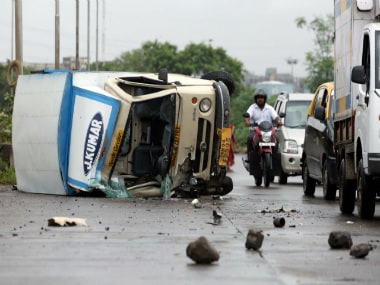 Representational image. Image source: Getty Images.[/caption]
What is trauma?
Trauma refers to any kind of injury to the body. The cause of the injury could vary from road accidents to fires, violence and hate crimes.World Health Organization (WHO) data shows that road accidents are the No. 1 cause of death among children and young adults aged 5 - 29, globally.According to WHO, trauma is a major cause of death and disability across the world.Indian scenario
Nearly 1.5 lakh people died in road accidents in India in 2015, according to the most recent Accidental Deaths and Suicides in India Report, by the National Crime Bureau Record (NCRB).The NCRB report showed that while the total number of accidents grew by over 3% to 4,64,674 in 2015, road accident deaths rose 5.1% from 1,41,526 in 2014 to 1,48,707 in 2015.In fact, accidents are a leading cause of physical, mental and financial suffering in India today.Where you come in
The Good Samaritan Law came into effect in India in 2016, so bystanders can help a road accident victim without fear of legal hassle or being asked to pay for hospital treatment.Here’s what you can do to help if you spot a road accident:- If you’re driving when you spot the accident, calmly park on the side of the road. If need be, use your car to shield the victim from oncoming traffic. Remember to turn your emergency lights on.
- Assess the situation (be mindful of your own safety first). Check for the number of victims, the nature of their injuries and call the police and ambulance services as soon as possible.
- If the victim is unconscious but is otherwise okay, the UK’s National Health Service recommends putting them in the recovery position (lying on one side, with mouth slightly open) like so: a) If the victim is lying on their back, kneel on the floor next to them. b) Gently place the victim’s arm (the one closest to you) at a right angle to their body. c) For the other arm, hold the hand and gently place it - palm down - next to the opposite cheek (the cheek closest to you). d) Bend the knee that is farther away from you at a right angle. Now gently roll the person - you can also use their bent knee to gently pull them - on to their side so that they face you. e) Tilt their head back slightly and lift their chin, to make sure the airway is open. f) Stay with them till the police or the ambulance arrives.
- If you have any reason to suspect that the victim might have a spinal injury, do not attempt to move them. As gently as possible, check that they are breathing. If not, open their mouth slightly and gently to see if there is any obvious obstruction you can easily remove to help them breathe.
- If the victim is bleeding, make sure there’s nothing embedded in their wound before using a clean cloth to apply pressure on it. If there is something embedded in the wound, avoid the entry site, and apply pressure around it to reduce the bleeding.
- Do not give water to an unconscious or semi-conscious victim of road accidents.
First Published:Oct 17, 2019, 07:00:32 IST
Advertisement
Advertisement

Stroke is rising among young adults. Doctor explains why it's happening and what you must do
Stroke is increasingly affecting adults in their 30s, 40s and 50s. Experts say unhealthy lifestyles, undiagnosed high blood pressure and delayed treatment are driving the rise in younger stroke cases
3 min read
Stroke in young adults, silent symptoms and late diagnosis: India's growing brain health challenge
Neurologists warn that stroke is increasingly affecting people in their 30s and 40s, while many brain disorders progress silently before symptoms appear. They say early diagnosis, timely referrals and healthier lifestyles are key to reducing India's growing neurological disease burden.
5 min read
Brain tumours aren't always fatal, but delayed diagnosis can be: Experts explain the key warning signs
Brain tumours are frequently mistaken for common headaches, stress or age-related cognitive changes. Doctors say recognising warning signs early and adopting a brain-healthy lifestyle can improve outcomes and reduce the risk of long-term neurological complications.
2 min read
Spices, health and the Indian plate: Why chilli can be good for you—but moderation is still key
From boosting metabolism to supporting heart health, chillies offer several surprising health benefits. But experts say the amount you eat matters, and too much spice can do more harm than good.
4 min read
Organ donation: 5 myths you need to stop believing, according to a transplant specialist
Organ donation has the power to transform and save lives, but this can happen only when myths are replaced with facts. Building awareness, having open conversations and understanding the process can help families make informed decisions.
2 min read
Advertisement
Advertisement