


Too much information make brains of elderly slow
Researchers found that standardised vocabulary tests, which are used to take account of the growth of knowledge in studies of ageing, massively underestimate the size of adult vocabularies.

Berlin: The brains of older people work slower only because they have so much information to process, much like a full-up hard drive, scientists say.Instead of finding evidence of decline, researchers led by Michael Ramscar of Tubingen University, discovered that most standard cognitive measures, which date back to the early twentieth century, are flawed.[caption id="attachment_1350995" align="alignleft" width="380"]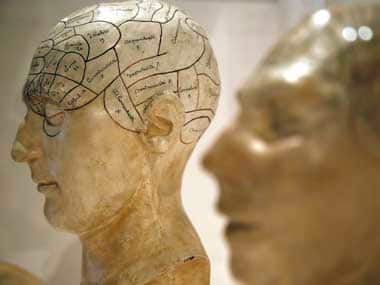 Loaded brains. Reuters[/caption]"The human brain works slower in old age but only because we have stored more information over time," said Ramscar. Computers were trained, like humans, to read a certain amount each day, and to learn new things. When the researchers let a computer "read" only so much, its performance on cognitive tests resembled that of a young adult. But if the same computer was exposed to the experiences we might encounter over a lifetime—with reading simulated over decades—its performance now looked like that of an older adult.Often it was slower, but not because its processing capacity had declined. Rather, increased "experience" had caused the computer's database to grow, giving it more data to process - which takes time, researchers said. Researchers found that standardised vocabulary tests, which are used to take account of the growth of knowledge in studies of ageing, massively underestimate the size of adult vocabularies.It takes computers longer to search databases of words as their sizes grow, which is hardly surprising but may have important implications for our understanding of age-related slowdowns. The work provides more than an explanation of why, in the light of all the extra information they have to process, we might expect older brains to seem slower and more forgetful than younger brains. Take "paired-associate learning," a commonly used cognitive test that involves learning to connect words like "up" to "down" or "necktie" to "cracker" in memory. Using Big Data sets to quantify how often different words appear together in English, the team showed that younger adults do better when asked to learn to pair "up" with "down" than "necktie" and "cracker" because "up" and "down" appear in close proximity to one another more frequently.However, whereas older adults also understand which words don't usually go together, young adults notice this less. When the researchers examined performance on this test across a range of word pairs that go together more and less in English, they found older adult's scores to be far more closely attuned to the actual information in hundreds of millions of words of English than their younger counterparts.PTI

BCCI earned more than Rs 2,400 crore in IPL 2022, reveal documents
Eight Russian judokas barred from world championships after Ukraine boycott
Old video of Donald Trump listening to Taylor Swift’s ‘Blank Space’ takes over internet; watch
SA20: Ex-New Zealand all-rounder Jacob Oram appointed MI Cape Town bowling coach
FIFA World Cup: Morgan Freeman, Jung Kook headline day one before Ecuador defeats hosts Qatar