


Taller women more prone to ovarian cancer
The research found that larger body size sees a rising risk of ovarian cancer, though this effect depends on whether women have used hormone replacement therapy (HRT) or not.

London: Taller women are at a greater risk of ovarian cancer, a research led by scientists at the University of Oxford has found after bringing together all the evidence from clinical studies carried out worldwide.The analysis found that larger body size sees a rising risk of ovarian cancer, though this effect depends on whether women have used hormone replacement therapy (HRT) or not, a university release said.[caption id="attachment_266114" align="alignleft" width="380" caption="Reuters"]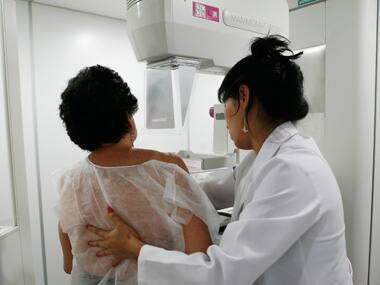 [/caption]The study published in the journal PLoS Medicine tried to find some of the factors which may influence the development of ovarian cancer.The international collaborative group, coordinated by researchers based at the Cancer Epidemiology Unit at Oxford, analysed individual patient data from 47 epidemiological studies including over 25,000 women with ovarian cancer and more than 80,000 women without.These studies, both published and unpublished, provide virtually all the relevant data on the topic worldwide, the release added.The researchers found a 7 percent increase in the risk of developing ovarian cancer for every 5 cm increase in height.For example, 165 cm-tall women have a 14 percent greater risk of ovarian cancer than those who are 155 cm. "The fact that height is clearly associated with risk may well be important for understanding how ovarian cancer develops," explained Dr Gillian Reeves of the Cancer Epidemiology Unit at Oxford University, one of the lead researchers on the study.She added: "Although we do not yet know why height is related to ovarian cancer risk, there are a number of possible explanations."For example, the association that we see may be due to the biological effects of factors associated with height – such as increased levels of insulin like growth factor (IGF-1) (which has been associated with a number of other cancers such as breast and prostate cancer), or increased numbers of cells being at risk of becoming cancerous. Future studies should clarify this." PTI

BCCI earned more than Rs 2,400 crore in IPL 2022, reveal documents
Eight Russian judokas barred from world championships after Ukraine boycott
Old video of Donald Trump listening to Taylor Swift’s ‘Blank Space’ takes over internet; watch
SA20: Ex-New Zealand all-rounder Jacob Oram appointed MI Cape Town bowling coach
FIFA World Cup: Morgan Freeman, Jung Kook headline day one before Ecuador defeats hosts Qatar