


Japan probe flays "outside our imagination" explanation for poor disaster response
There was no clear manual to follow, and the workers failed to communicate, not only with the government but also among themselves, the probe said.

Tokyo: Japan's response to the nuclear crisis that followed the 11 March tsunami was confused and riddled with problems, including an erroneous assumption an emergency cooling system was working and a delay in disclosing dangerous radiation leaks, a report has revealed.The disturbing picture of harried and bumbling workers and government officials scrambling to respond to the problems at Fukushima Dai-ichi nuclear power plant was depicted in the report detailing a government investigation.[caption id="attachment_166716" align="alignleft" width="380" caption="Power of angry water. Getty Images"]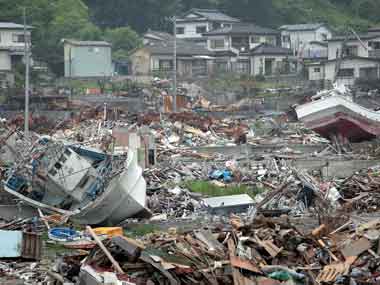 [/caption]The 507-page interim report, compiled by interviewing more than 400 people, including utility workers and government officials, found authorities had grossly underestimated tsunami risks, assuming the highest wave would be 6 meters. The tsunami hit at more than double those levels. The report criticised the use of the term "soteigai," meaning "outside our imagination," which it said implied authorities were shirking responsibility for what had happened.It said by labelling the events as beyond what could have been expected, officials had invited public distrust."This accident has taught us an important lesson on how we must be ready for soteigai," it said.The report, set to be finished by mid-2012, found workers at Tokyo Electric Power Co., the utility that ran Fukushima Dai-ichi, were untrained to handle emergencies like the power shutdown that struck when the tsunami destroyed backup generators, setting off the world's worst nuclear disastersince Chernobyl. There was no clear manual to follow, and the workers failed to communicate, not only with the government but also among themselves, it said.Finding alternative ways to bring sorely needed water to the reactors was delayed for hours because of the mishandling of an emergency cooling system, the report said. Workers assumed the system was working, despite several warning signs it had failed and was sending the nuclear core into meltdown.The report acknowledged that even if the system had kicked in properly, the tsunami damage may have been so great that meltdowns would have happened anyway.But a better response might have reduced the core damage, radiation leaks and the hydrogen explosions that followed at two reactors and sent plumes of radiation into the air, according to the report. AP

BCCI earned more than Rs 2,400 crore in IPL 2022, reveal documents
Eight Russian judokas barred from world championships after Ukraine boycott
Old video of Donald Trump listening to Taylor Swift’s ‘Blank Space’ takes over internet; watch
SA20: Ex-New Zealand all-rounder Jacob Oram appointed MI Cape Town bowling coach
FIFA World Cup: Morgan Freeman, Jung Kook headline day one before Ecuador defeats hosts Qatar