


Indian scientists sequence Pigeon Pea genome
The sequencing of the arhar genome was accomplished by a global research partnership — The International Initiative for Pigeon pea Genomics (IIPG) — led by ICRISAT and is likely to increase productivity.

New Delhi: Days after Indian scientists successfully decoded the genome of arhar, global agri research body ICRISAT has also claimed sequencing the genes of this pulse variety that would multiply its productivity.Years of genome analysis by a global research partnership led by the Hyderabad-based International Crops Research Institute for the Semi-Arid Tropics (ICRISAT) has resulted in the identification of 48,680 pigeon pea (arhar or chana dal) genes, an ICRISAT release said.The details of completed genome sequence of pigeon pea has put on the website of the reputed journal 'Nature Biotechnology' yesterday.[caption id="attachment_125412" align="alignleft" width="380" caption="Pigeon pea, grown on about 5 million hectares in Asia, sub-Saharan Africa and South-Central America, is a very important staple food for millions of the poor in the semi-arid regions. Source:Wikipedia"]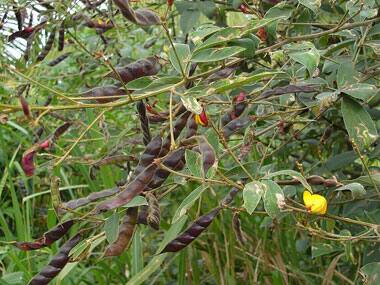 [/caption]The sequencing was accomplished by a global research partnership — The International Initiative for Pigeon pea Genomics (IIPG) — led by ICRISAT.It comprised of institutes such as BGI–Shenzhen (China), and the research laboratories of University of Georgia, University of California-Davis, Cold Spring Harbor Laboratory and National Centre for Genome Resources, all in the US.The research comes close on the heels of a historic breakthrough achieved by Indian scientists for increasing arhar production.In an entirely indigenous effort, a group of 31 scientists from the Indian Council of Agriculture Research, state agricultural universities and Banaras Hindu University (BHU), led by Nagendra Kumar Singh from ICAR's National Research Centre on Plant Biotechnology at New Delhi, decoded the genome of pigeon pea (arhar).Singh said the new variety, that would be developed from decoding of arhar genome, has potential to raise its productivity by three times to about two tonne per hectare from 650 kg per hectare at present.Pigeon pea, grown on about 5 million hectares in Asia, sub-Saharan Africa and South-Central America, is a very important staple food for millions of the poor in the semi-arid regions, the ICRISAT release added. "Now that the world is faced with hunger and famine particularly in the 'Horn of Africa' brought about by the worst drought of the decades, science-based sustainable agricultural development solutions are vital in extricating vulnerable dryland communities out of poverty and hunger for good," says ICRISAT Director General William D Dar.Rajeev Varshney, the lead scientist for ICRISAT pigeonpea genome sequencing project said "at the moment, in general, it can take 6-10 years to breed a new variety. With the use of this genome sequence data, in the future, we could be breeding a new variety in just about 3 years".Asked to comment on findings of ICRISAT, ICAR senior scientist Nagender Kumar Singh said "we welcome it"."In future, the two sequences should merge to improve the quality of pigeon pea (arhar)," he added.PTI

BCCI earned more than Rs 2,400 crore in IPL 2022, reveal documents
Eight Russian judokas barred from world championships after Ukraine boycott
Old video of Donald Trump listening to Taylor Swift’s ‘Blank Space’ takes over internet; watch
SA20: Ex-New Zealand all-rounder Jacob Oram appointed MI Cape Town bowling coach
FIFA World Cup: Morgan Freeman, Jung Kook headline day one before Ecuador defeats hosts Qatar