


Geologists pinpoint exact source of Stonehenge rocks
The discovery could put an end to the age-old debate over the source of the prehistoric monument located in Wiltshire and may throw new light on how those rocks were transported.

London: Geologists have pinpointed the exact source of the rocks believed to have been used to create the famous Stonehenge's first stone circle some 5,000 years ago.The discovery could put an end to the age-old debate over the source of the prehistoric monument located in the English county of Wiltshire and may throw new light on how those rocks were transported, they said.By comparing fragments of stone found at and around Stonehenge with rocks in south-west Wales, they have been able to identify the original rock outcrop that some of the Stonehenge material came from.[caption id="attachment_160249" align="alignleft" width="380" caption="Scientists who study the origin of the Bluestones, fall into two camps — those who believe they were transported by humans, and those who are convinced that glaciers were responsible for delivering them. Reuters"]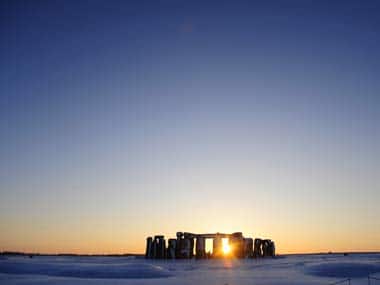 [/caption]Geologists led by Dr Robert Ixer from the University of Leicester and Richard Bevins of the National Museum of Wales identified the source as a site called Craig Rhos-y-Felin, near Pont Saeson in north Pembrokeshire, the Daily Mailreported.Controversy has raged over the origin of the Bluestones or "spotted dolerites" —the distinctive stones that form the inner circle and inner horseshoe of the Stonehenge. There is a consensus that the large stones, the sarsens, were addedhundreds of years later.Scientists who study the origin of the Bluestones, fall into two camps — those who believe they were transported by humans, and those who are convinced that glaciers were responsible for delivering them.Dr Bevins explained that his finding could help explain the method used to take the stones to Stonehenge and the reason, because the site is small enough for archaeologists to excavate to try and uncover evidence of human activity."It has been argued that humans transported the spotted dolerites from the high ground of Mynydd Preseli down to the coast at Milford Haven and then rafted them up the Bristol Channel and up the River Avon to the Stonehenge area," hesaid.However, Dr Bevins said the outcome of their research questions that route, as it is unlikely that they would have transported the Pont Saeson stones up slope and over Mynydd Preseli to Milford Haven."If humans were responsible then an alternative route might need to be considered," he said. "However, some believe that the stones were transportedby the actions of glacier sheets during the last glaciation and so the Pont Season discovery will need appraising in the context of this hypothesis."Dr Bevins describes his discovery as like "looking for a needle in a haystack", but is convinced it's correct. "We've been able to make the match on a range of features not just a single characteristic," he added.Dr Rob Ixer said: "Being able to provenance any archaeologically significant rock so precisely is remarkable, to do it for Stonehenge was quite unexpected and exciting... However, given continued perseverance, we are determinedthat we shall uncover the origins of most, if not all of the Stonehenge Bluestones so allowing archaeologists to continue their speculations well into a third century."PTI

BCCI earned more than Rs 2,400 crore in IPL 2022, reveal documents
Eight Russian judokas barred from world championships after Ukraine boycott
Old video of Donald Trump listening to Taylor Swift’s ‘Blank Space’ takes over internet; watch
SA20: Ex-New Zealand all-rounder Jacob Oram appointed MI Cape Town bowling coach
FIFA World Cup: Morgan Freeman, Jung Kook headline day one before Ecuador defeats hosts Qatar