


Explained: The abduction case of 2-yr-old Insiya Hemani that Dutch PM raised with Modi
The decade-old Insiya Hemani abduction case resurfaced during Prime Minister Narendra Modi’s recent visit to the Netherlands after Dutch PM Rob Jetten raised the issue in bilateral talks. The case, involving a Dutch child allegedly and violently taken to India by her father in 2016

The nearly decade-old Insiya Hemani abduction case was brought into the spotlight once again during Prime Minister Narendra Modi’s recent visit to the Netherlands on May 15-17, after Dutch Prime Minister Rob Jetten publicly confirmed that he had personally brought up the matter during bilateral discussions.
The issue has remained a major point of concern for Dutch authorities since 2016, when Insiya, then two years old, was allegedly abducted from Amsterdam and taken to India by her father, Shehzad Hemani, an Indian national.
Dutch courts later convicted multiple individuals linked to the operation, including the father, who was sentenced in absentia.
Speaking during joint press interactions at the Catshuis on Sunday, the official residence of the Dutch prime minister, Jetten indicated that the newly announced strategic partnership between India and the Netherlands would also create room for difficult conversations on contentious issues.
 More from Explainers
“The strategic partnership we are entering into today between India and the Netherlands also offers us opportunities to discuss sensitive topics more frequently,” Jetten said.
The Dutch Prime Minister later confirmed that the child abduction case was specifically discussed with Modi. In a social media post following the talks on Saturday, Jetten wrote, “With India, we share the importance we attach to democracy, good governance, and a world order based on rules and law.”
“I spoke with Prime Minister Modi, among other things, about the closure of the Strait of Hormuz, with high energy prices as a consequence... We also discussed the case of Insiya’s kidnapping by her father to India.”
India’s Ministry of External Affairs acknowledged that the issue had indeed been raised during the talks.
During a media briefing, MEA Secretary (West) Sibi George stated, “It is a case is in the court, it is sub judice, so I would not like to comment on this at this stage, but it was raised [by the Dutch PM].”
The issue comes amid mounting pressure from Dutch lawmakers, public demonstrations led by Insiya’s mother Nadia Rashid, and renewed demands from political leaders in the Netherlands for India to cooperate in resolving the matter.
What is the Insiya Hemani abduction case?
The case dates back to September 2016, when Insiya Hemani, a Dutch citizen, was allegedly taken from her grandmother’s residence in Amsterdam-Oost in what Dutch investigators later described as a planned and coordinated operation.
According to reports presented before Dutch courts, a group of men acting on behalf of Insiya’s father forcibly removed the child from the home in broad daylight.
During the confrontation, an electroshock weapon was allegedly used against Insiya’s aunt and a neighbour who attempted to stop the men from leaving with the toddler.
Dutch investigators concluded that the operation had been pre-arranged and involved multiple individuals assigned different responsibilities. Authorities later alleged that after the abduction, the child was transported by road to Germany before eventually being taken to India.
Since then, Insiya has reportedly remained in India with her father.
Her mother, Nadia Rashid, who had been granted custody by a Dutch court, has spent nearly ten years pursuing legal and diplomatic efforts to secure her daughter’s return.
Rashid has not physically seen her daughter since the 2016 abduction and is understood to have last spoken to her over the phone in 2018.
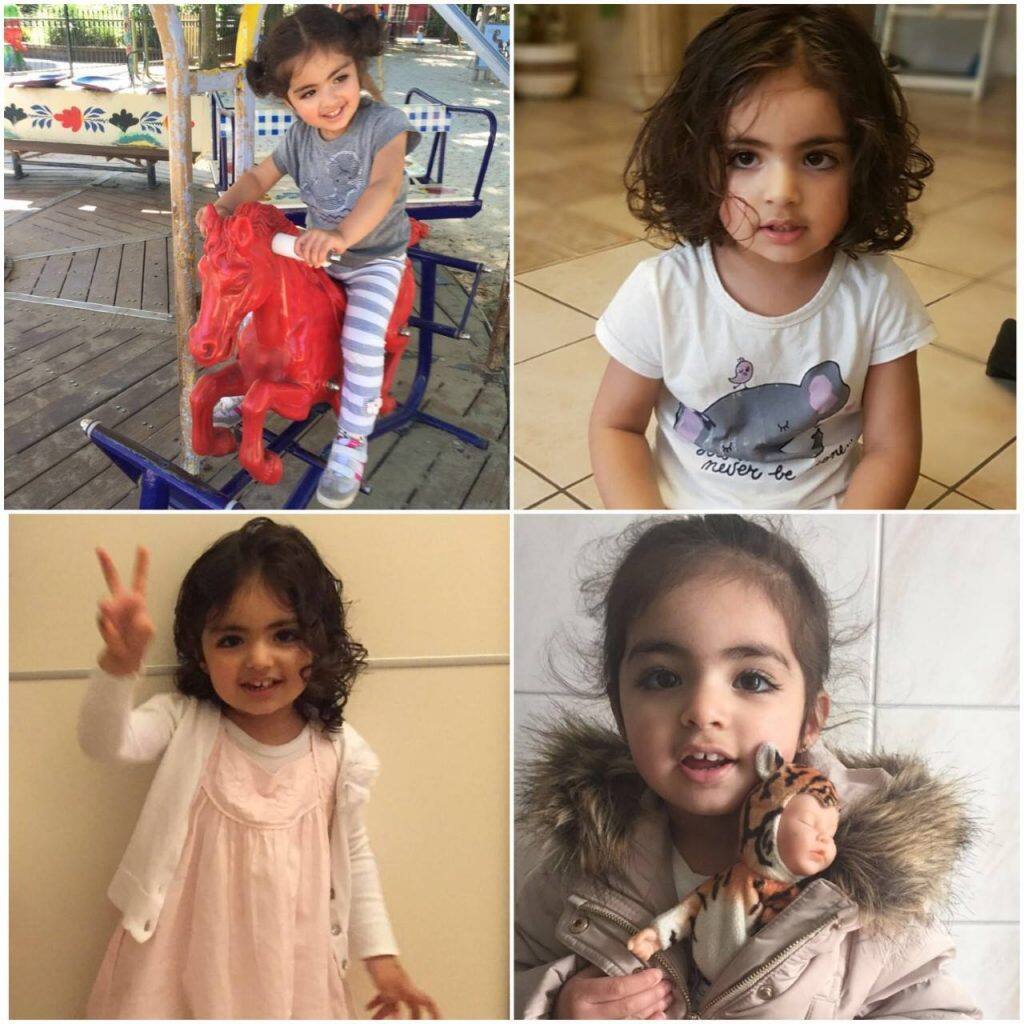
Over the years, Dutch authorities repeatedly emphasised that they do not consider the matter a simple custody disagreement between parents. Instead, prosecutors treated it as a criminal kidnapping case involving violence, surveillance, planning, cross-border movement, and multiple accomplices.
The case has steadily become one of the most prominent unresolved international parental abduction disputes in the Netherlands.
What did Dutch courts conclude in the case?
Dutch courts eventually convicted five individuals linked to the abduction operation, including Shehzad Hemani, whom prosecutors identified as the architect and financier of the plan.
Hemani was convicted in absentia and sentenced to eight-and-a-half years in prison by Dutch courts. He reportedly remains in India and is considered a fugitive under Dutch law.
His cousin, Imran S, who was accused of helping organise logistical arrangements connected to the operation, was also convicted in absentia and handed a four-year prison sentence.
Another accused individual, Erik S, identified by Dutch authorities as one of the hired abductors who transported the child to Germany, received a four-year sentence. He was reportedly arrested in Latvia in April earlier this year before being extradited to the Netherlands.
Robert B, accused of physically assaulting family members during the abduction using a stun gun, was sentenced to three years in prison.
The case also involved a former Dutch police officer, Huibert V, who was convicted and sentenced to nine months in prison after authorities concluded that he had carried out unlawful surveillance activities targeting Nadia Rashid before the kidnapping took place.
The Dutch Supreme Court later also rejected Shehzad Hemani’s final appeal, making the convictions and prison terms legally final and binding under Dutch law.
Despite the convictions, however, Dutch authorities have been unable to secure either Insiya’s return or Hemani’s extradition from India.
Why has the case remained unresolved for nearly a decade?
One of the central complications surrounding the case is India’s position regarding international parental child abduction disputes.
India is not a signatory to the 1980 Hague Convention on the Civil Aspects of International Child Abduction, an international treaty that provides a legal framework for returning children wrongfully removed across borders.
Because India is outside the convention, cases involving international parental custody disputes are generally handled within India’s domestic legal system. Such matters often proceed through family courts and parallel legal proceedings that can continue for years.
Dutch officials have repeatedly expressed frustration over the lack of movement despite continuous diplomatic engagement. The case has reportedly been raised at multiple levels over the years, including during former Dutch Prime Minister Mark Rutte’s visit to India in 2018, reported Dutch newspaper NL Times.
Successive rounds of consular engagement and political discussions also failed to produce a breakthrough.
Before Modi’s recent visit, Dutch Foreign Minister Tom Berendsen informed parliament that frustration within the Dutch government was increasing because of the prolonged absence of progress.
Dutch Deputy Prime Minister Dilan Yeşilgöz reportedly argued that approaching the matter merely as a routine “consular issue” had delivered “zero results” over almost ten years.
How did the issue dominate in the Netherlands during Modi's visit?
Every Dutch member of the European Parliament reportedly signed a letter addressed to lawmakers in Maharashtra seeking assistance in helping return Insiya to the Netherlands, reported Christian Today.
The Dutch lower house of Parliament, the Tweede Kamer, also passed a resolution on May 13 urging King Willem-Alexander to personally raise the issue with Modi during their official engagements.
As Modi arrived at the Huis ten Bosch royal palace, Nadia Rashid stood outside the gates alongside dozens of supporters holding signs and photographs of her daughter, reported NL Times.
Reports also stated that Queen Máxima briefly stopped to speak with Rashid earlier in the day while walking her dog.
At a later press interaction, Jetten stressed that although the visit was heavily focused on business and strategic cooperation, the Dutch side intended to continue pressing the matter in future engagements.
What next?
Following the bilateral discussions, Jetten indicated that the newly signed strategic partnership agreement between India and the Netherlands could open additional diplomatic channels to discuss difficult cases such as Insiya’s.
He said he wanted India to recognise “that this is very important for all Dutch people.”
“We want to intensify that cooperation, but then we also expect that something will come in return in these kinds of very heavy personal cases that have already lasted much too long,” he added.
Jetten acknowledged that India had not yet offered any commitments on the issue. Still, he stressed that the Dutch government would continue engaging India at the highest political levels.
“We will not rest until the Indians are also convinced of that importance,” Jetten said while emphasising the need for cooperation with “the largest democracy in the world,” which he argued should respect court rulings.
The Dutch Prime Minister also announced that the Netherlands would soon send a high-level ministerial and civil service delegation to India to continue discussions regarding the case.
According to Dutch officials, the immediate focus of these efforts may not necessarily centre only on extradition proceedings. One of the primary objectives is also understood to be facilitating a physical reunion between Nadia Rashid and her daughter after years of separation.
Jetten additionally said he remained in regular contact with Rashid throughout the process. “And that helps us to not forget this personal story and to put it in the spotlight with India every time,” he said.
With inputs from agencies

How a 27-year-old woman broke the internet during Mumbai's CJP protests
The Great Covid Fraud: How Indian-origin couple in UK funded lavish lifestyle through fake PPE orders
Fake jobs, tourist visas: Inside Russia’s vast network luring foreigners to fight Ukraine war
Why has Bangladesh’s choice of India spokespersons raised eyebrows?
Who is Sandeep Lamba, the Delhi cop removed from protest site duty after slapping female protester?