


Is Iran war ending? Can Trump push for a peace deal before his 80th birthday?
After threatening to hit Iran ‘very hard tonight’, US President Donald Trump called off the planned military strikes and claimed that Tehran has ‘approved’ a draft agreement that would extend the ceasefire and a deal could be signed as soon as this weekend. However, the Iranian leadership has not exactly endorsed Trump’s claim

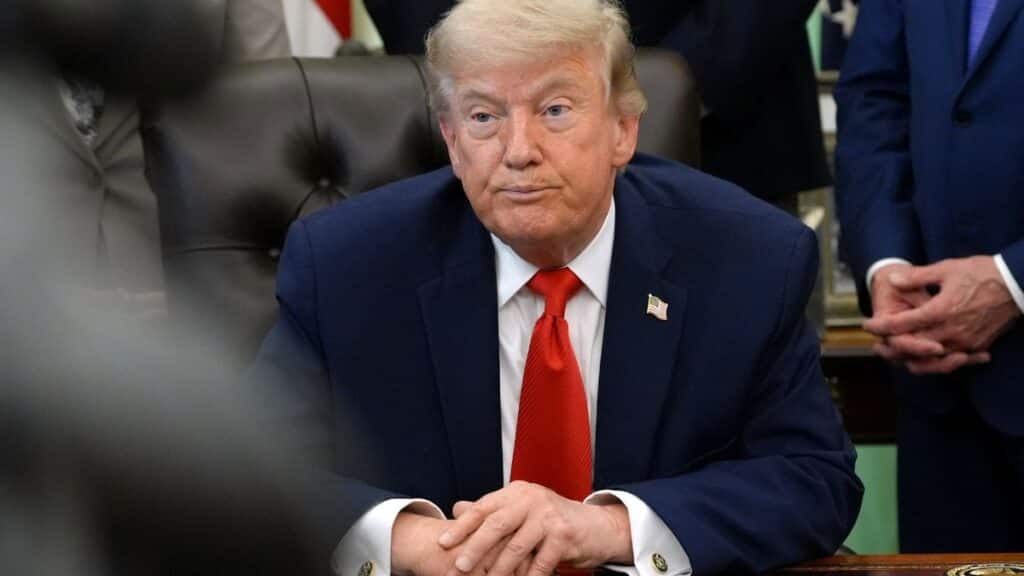
United States President Donald Trump has again taken a U-turn in the war with Iran. Hours after threatening to hit Iran "very hard tonight" and taking its oil infrastructure hub Kharg Island, he called off the planned military strikes on the Islamic Republic, citing progress in talks.
Later, he announced that the US and Iran could sign a peace deal as soon as this weekend, claiming that Iran’s leadership "approved" a draft agreement that would extend the ceasefire.
But Tehran has not exactly endorsed the US president’s remarks.
Let's take a closer look.
Trump claims Iran deal reached
President Donald Trump on Thursday (June 11) said that the US and Iran could sign a peace deal by this weekend. He claimed that Iran's leadership "approved" a draft agreement that would extend the ceasefire, reopen the Strait of Hormuz and launch 60 days of negotiations on Iran's nuclear programme.
 More from Explainers
"Based on the fact that discussions with the Islamic Republic of Iran have been brought to the highest level of Iranian leadership and approved, I have, as President of the United States of America, cancelled the scheduled strikes and bombings against Iran this evening," Trump wrote on Truth Social.
He went on to claim that final points of the deal have been, "in both concept and great detail, approved by all parties involved," including the US, Israel, Saudi Arabia, UAE, Qatar, Turkey, Pakistan, Bahrain, Kuwait, Jordan and Egypt.
Trump said the US blockade would remain "until this transaction is finalised," and that Iran would agree to never have a nuclear weapon.
The US president told reporters at the White House: "We just made a great settlement of the war with Iran."
"The strait will officially open as soon as we sign, which could be soon, very soon, maybe over the weekend in Europe," Trump was quoted as saying by Reuters.
He said that Vice President JD Vance could sign for the US.
Trump said that "I understand the answer is yes" when asked whether Iran's Supreme Leader Ayatollah Mojtaba Khamenei approved the deal.
"It's a very strong memorandum of understanding that is a little conceptual," the US president told reporters.
Trump has been claiming since mid-March that a deal with Iran to end the war was close, but talks fell through.
Even after reaching a ceasefire in April, the two sides have failed to finalise a peace deal yet. Hostilities resumed recently as Israel and Iran traded strikes, Trump ordered new strikes around the Strait of Hormuz, a US Apache helicopter was downed and Iran launched attacks on American military bases in the region.
Israel 'surprised' with Trump's deal claim
The US president said he spoke on the phone with Israeli Prime Minister Benjamin Netanyahu, Qatari Emir Tamim al-Thani and other regional leaders.
Trump's announcement that a deal with Iran has been finalised came as a surprise to Netanyahu, as per an Axios report.
"Although Israel is not a party to the memorandum of understanding, the Prime Minister expressed his appreciation for President Trump's commitment that the final agreement resulting from the negotiations will include the removal of enriched nuclear material, the dismantling of enrichment infrastructure, limits on missile production, and an end to Iran's support for its terrorist proxies in the region," the Israeli PM's office said.
Netanyahu was not informed in advance and was caught by surprise when Trump released his initial statement about the deal, a source with knowledge told Axios.
Trump told Qatar the understandings reached "have received the approval of all relevant parties," the emir's office said in a statement.
What has Iran said?
Iran's Fars news agency has rejected that a deal has been reached between Tehran and Washington, but added that there was a "possibility" Iran would consider signing off.
It quoted an "informed source close to Iran's negotiation team" as saying that "no text for a preliminary memorandum of understanding with the United States has been approved."
As per Axios, a later report claimed the US had accepted "Iran's proposed text," and thus Tehran could "reconsider and review the agreement once again."
Iran's Foreign Ministry spokesperson Esmaeil Baghaei said that large parts of the text under negotiation have been finalised, but stressed that Tehran would not compromise on its red lines, reported Iranian media.
"We have not reached a final conclusion on this matter," he said. "This is a very important issue that is currently being reviewed by the relevant decision-making bodies."
He said: "Most of the text had already been finalised, but the Americans kept changing their positions."
"Iran has demonstrated that it does not compromise on what it has defined as its red lines," Baghaei added. "Iran has not yet reached a final decision regarding an agreement."
What’s in the MOU?
The memorandum of understanding that Trump claims will soon be signed between the US and Iran calls for reopening the Strait of Hormuz immediately without tolls, Axios reported, citing a diplomat from one of the mediating countries and a US official.
In return, the US has promised to lift its blockade. Iran will also receive temporary sanctions relief that would allow it to sell oil for 60 days.
As per the MOU cited by Axios, the ceasefire will extend for 60 days, including in Lebanon. During this period, Iran and the US will hold nuclear negotiations. The text also includes a framework for addressing Iran's enriched uranium stockpile. However, any action on Iran's nuclear programme would depend on a second, more detailed accord.
The diplomat from one of the mediating countries said "the US and Iran have agreed on the text of a deal," but admitted that a deal still needed final sign-off.
As of Thursday evening, the deal had been approved on the Iranian side at high levels but likely not by Supreme Leader Mojtaba Khamenei, two sources with knowledge said.
Two diplomats from two mediating countries and two US officials said that the tentative agreement was reached on Wednesday (June 10) night after hours of discussions between Qatari mediator Ali Al-Thawadi and Iranian Foreign Minister Abbas Araghchi in Tehran.
During the talks, Al-Thawadi spoke on the phone several times with Trump's envoys, Steve Witkoff and Jared Kushner, as per sources.
The deal was mediated jointly by Qatar and Pakistan and will be called the Islamabad agreement if both sides agree to sign.
"We are working with the parties to put the final touches on the deal and set a date for the signing ceremony," the diplomat from one of the mediating countries was quoted as saying.
With inputs from agencies

How a 27-year-old woman broke the internet during Mumbai's CJP protests
The Great Covid Fraud: How Indian-origin couple in UK funded lavish lifestyle through fake PPE orders
Fake jobs, tourist visas: Inside Russia’s vast network luring foreigners to fight Ukraine war
Why has Bangladesh’s choice of India spokespersons raised eyebrows?
Who is Sandeep Lamba, the Delhi cop removed from protest site duty after slapping female protester?