
Advertisement


Sections
One year of the war: Why 2023 will be crucial for the Russia-Ukraine war
What happens in Ukraine during 2023 will be crucial. It will reveal whether victory for either side is possible, or whether a 'frozen' conflict is more likely

Wars are world-shaping. Beyond their immediate human and physical tolls, wars alter the fates of societies and states; of clans, cultures and leaders. They establish new lines of access to resources and influence, determining who has what — and who doesn’t.They set precedents for how future wars are justified and, in the case of attempted conquest, wars can ultimately redraw the map of world politics.One year after its unprovoked invasion on 24 February, 2022, Russia’s war against Ukraine encompasses all these dangers.With Ukraine waging an existential battle for its very survival, and Russia seemingly happy to settle for destroying Ukraine if it fails to conquer it, neither side has any incentive to stop fighting.Absent the complete collapse of either the Ukrainian or Russian armed forces, the grim reality is that the war will likely drag on throughout 2023 — and potentially beyond it.2023 will be crucialBut what happens in Ukraine during 2023 will be crucial. For a start, it will reveal whether victory for either side is possible, or whether a “frozen” conflict is more likely.It will test the resolve of all the main protagonists and their supporters:![]() At present, Ukraine continues to have the upper hand, even if Russia’s armed forces have lately wrested back some momentum. AP[/caption]Failing to achieve that will ultimately rebound on Putin. To maintain social order he has become increasingly repressive, banning books, engaging in shadow conscription campaigns, and imprisoning many of those who speak out against the war.And while the bitter infighting between the armed forces and paramilitary organisation the Wagner Group seems to have been settled for the moment, the fact that it was conducted so publicly suggests Putin no longer enjoys the same iron control amongst Russia’s leaders that he once did.Of course, another Russian revolution (either from above or below) is still far off. There’s no alternative value proposition for Russia’s political elites to remove Putin, and the personal risks for trying it remain very high. For its part, Russian society remains effectively apathetic — if no longer very enthusiastic — about the war.Yet that might change. Putin can’t endure unscathed by forever blaming the West, or purging his security services for his own bad choices. His longevity has relied on the bargain he made with Russians: to protect them, and offer them stable lives with gradually improving living standards.In the last 12 months he has broken both parts of that bargain, drafting large numbers of Russians to fight in Ukraine, and causing tough sanctions in response to his actions.By using mobilised Russians as cannon fodder, and having emptied much of Russia’s sovereign wealth fund in 2022 to blunt damage to its economy, Putin has created dual pressures on Russian society.
At present, Ukraine continues to have the upper hand, even if Russia’s armed forces have lately wrested back some momentum. AP[/caption]Failing to achieve that will ultimately rebound on Putin. To maintain social order he has become increasingly repressive, banning books, engaging in shadow conscription campaigns, and imprisoning many of those who speak out against the war.And while the bitter infighting between the armed forces and paramilitary organisation the Wagner Group seems to have been settled for the moment, the fact that it was conducted so publicly suggests Putin no longer enjoys the same iron control amongst Russia’s leaders that he once did.Of course, another Russian revolution (either from above or below) is still far off. There’s no alternative value proposition for Russia’s political elites to remove Putin, and the personal risks for trying it remain very high. For its part, Russian society remains effectively apathetic — if no longer very enthusiastic — about the war.Yet that might change. Putin can’t endure unscathed by forever blaming the West, or purging his security services for his own bad choices. His longevity has relied on the bargain he made with Russians: to protect them, and offer them stable lives with gradually improving living standards.In the last 12 months he has broken both parts of that bargain, drafting large numbers of Russians to fight in Ukraine, and causing tough sanctions in response to his actions.By using mobilised Russians as cannon fodder, and having emptied much of Russia’s sovereign wealth fund in 2022 to blunt damage to its economy, Putin has created dual pressures on Russian society.![]() What happens in Ukraine during 2023 will be crucial. AP[/caption]With the exception of Hungary, the Bucharest Nine Group — formed in 2015 in response to Russian aggression in Crimea — has emerged as a powerful voice within NATO, advocating for the transfer of more sophisticated weapons systems to Ukraine.In January 2023, Poland announced it was increasing its military spending to four per cent of GDP, and it has been placing numerous orders for weapons, including from the US and South Korea.Policy coordination between Warsaw and Washington has increased as well, especially on stationing NATO systems, personnel, and providing training for Ukrainian forces — including US president Joe Biden’s surprise visit to Kyiv on Monday to announce a new military aid package, ahead of a visit to Poland to mark the anniversary of Russia’s invasion.The challenge for NATO is that a two-speed approach to Ukraine within the alliance increases the potential for disagreement and fracture. Conversely, given the reticence of some West European nations to lead the response to Russian aggression, it’s incumbent on the Baltic States, Poland and others to do so.Ultimately, those predicting a swift end to Russia’s war in Ukraine are likely to be as disappointed in 2023, as they were 12 months earlier. The past year has taught us much: about how the weak can resist the powerful; about the dangers of peace at any price; and about the hubris of believing autocrats can be bought off with inducements.But perhaps most importantly it has taught us to question our assumptions about war. Now, one year into a conflict in Europe that many thought impossible, we are likely about to rediscover just how world-shaping wars can be.
What happens in Ukraine during 2023 will be crucial. AP[/caption]With the exception of Hungary, the Bucharest Nine Group — formed in 2015 in response to Russian aggression in Crimea — has emerged as a powerful voice within NATO, advocating for the transfer of more sophisticated weapons systems to Ukraine.In January 2023, Poland announced it was increasing its military spending to four per cent of GDP, and it has been placing numerous orders for weapons, including from the US and South Korea.Policy coordination between Warsaw and Washington has increased as well, especially on stationing NATO systems, personnel, and providing training for Ukrainian forces — including US president Joe Biden’s surprise visit to Kyiv on Monday to announce a new military aid package, ahead of a visit to Poland to mark the anniversary of Russia’s invasion.The challenge for NATO is that a two-speed approach to Ukraine within the alliance increases the potential for disagreement and fracture. Conversely, given the reticence of some West European nations to lead the response to Russian aggression, it’s incumbent on the Baltic States, Poland and others to do so.Ultimately, those predicting a swift end to Russia’s war in Ukraine are likely to be as disappointed in 2023, as they were 12 months earlier. The past year has taught us much: about how the weak can resist the powerful; about the dangers of peace at any price; and about the hubris of believing autocrats can be bought off with inducements.But perhaps most importantly it has taught us to question our assumptions about war. Now, one year into a conflict in Europe that many thought impossible, we are likely about to rediscover just how world-shaping wars can be.![The Conversation]() This article is republished from The Conversation under a Creative Commons license. Read the original article.Read all the Latest News, Trending News, Cricket News, Bollywood News,India News and Entertainment News here. Follow us on Facebook, Twitter and Instagram.
This article is republished from The Conversation under a Creative Commons license. Read the original article.Read all the Latest News, Trending News, Cricket News, Bollywood News,India News and Entertainment News here. Follow us on Facebook, Twitter and Instagram.
- Ukraine’s ability to repel Russian onslaughts and recapture territory
- the extent to which Vladimir Putin can command domestic obedience
- and even of China’s intentions, as it mulls supplying Moscow with weapons.
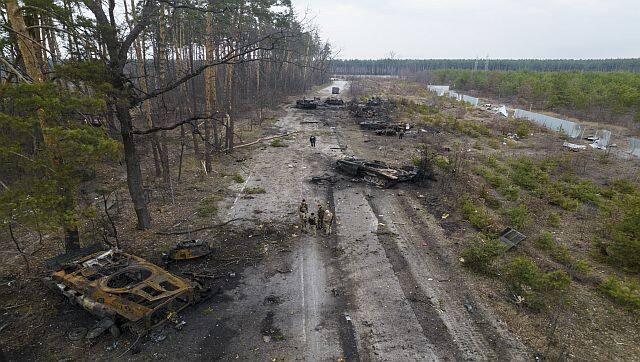 At present, Ukraine continues to have the upper hand, even if Russia’s armed forces have lately wrested back some momentum. AP[/caption]Failing to achieve that will ultimately rebound on Putin. To maintain social order he has become increasingly repressive, banning books, engaging in shadow conscription campaigns, and imprisoning many of those who speak out against the war.And while the bitter infighting between the armed forces and paramilitary organisation the Wagner Group seems to have been settled for the moment, the fact that it was conducted so publicly suggests Putin no longer enjoys the same iron control amongst Russia’s leaders that he once did.Of course, another Russian revolution (either from above or below) is still far off. There’s no alternative value proposition for Russia’s political elites to remove Putin, and the personal risks for trying it remain very high. For its part, Russian society remains effectively apathetic — if no longer very enthusiastic — about the war.Yet that might change. Putin can’t endure unscathed by forever blaming the West, or purging his security services for his own bad choices. His longevity has relied on the bargain he made with Russians: to protect them, and offer them stable lives with gradually improving living standards.In the last 12 months he has broken both parts of that bargain, drafting large numbers of Russians to fight in Ukraine, and causing tough sanctions in response to his actions.By using mobilised Russians as cannon fodder, and having emptied much of Russia’s sovereign wealth fund in 2022 to blunt damage to its economy, Putin has created dual pressures on Russian society.
First, the demand for fresh recruits has become recurrent, mandatory and inexhaustible.Second, sanctions are about to bite much harder. And instead of being able to direct mobilisation campaigns at Russia’s marginalised and minority groups, affluent and influential areas like Moscow and St. Petersburg will for the first time find their livelihoods affected by the war in 2023.If the war escalates, it will likely happen this yearIf maintaining control at home becomes more challenging for Putin, a new round of brinkmanship will look increasingly attractive. In turn, that elevates the risks of conflict escalation.Already the past 12 months have witnessed the Kremlin flirting with global hunger games, hinting at nuclear annihilation, raising the spectre of “dirty bombs”, and branding virtually anyone who opposes Moscow as a Nazi.So far, the West has responded tactfully and proportionately to the Kremlin’s threats. It largely weaned itself off Russian energy over the past year, removing a key part of Russian strategic leverage. But in 2023 we should expect a redoubling of Moscow’s efforts to fracture Western unity.Putin’s propensity for risk means any action short of war in the so-called “grey zone” is possible, as demonstrated by reports the Kremlin has been supporting a coup attempt in Moldova and aiding Serbian nationalists protesting against closer ties with Kosovo.More broadly that list could include blackmail, cyberattacks, sabotage, and even assassinations on NATO territory, coupled to posturing and provocations by Russia’s armed forces.Similar efforts will likely be made to try and sway Western populations.True, Russia’s previous attempts to enlist gullible and/or reflexively suspicious Western citizens with false narratives about NATO enlargement have only enjoyed limited success, mainly because it’s painfully obvious Russia is engaged in a war of imperial expansion.But just like prohibition-era Baptists and bootleggers, it will continue trying to exert pressure by seeking to unite seemingly disparate groups, such as the anti-war campaigns which have brought together the anti-globalist Far Left with the conspiracy theory-laden Far Right.NATO’s centre of gravity will continue to shift eastwardThe centre of NATO gravity will likely continue to shift further east. Both Poland and Estonia have emerged as strong champions of Ukrainian sovereignty, and have been particularly instrumental in pushing more reticent European nations, including Germany and France, towards a firmer stance. NATO aspirant members Finland and Sweden have been busy too, with both nations increasing their 2022 defence expenditure by between 10 per cent and 20 per cent.[caption id="attachment_12184452" align="alignnone" width="640"]
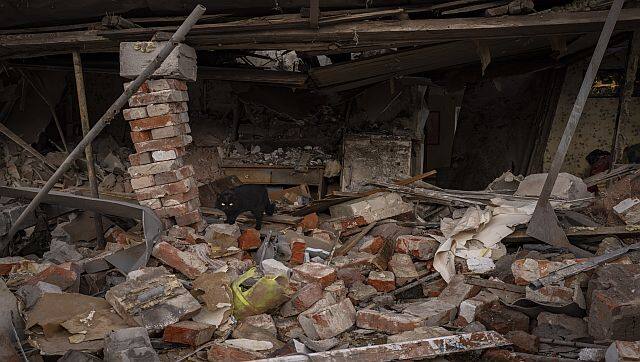 What happens in Ukraine during 2023 will be crucial. AP[/caption]With the exception of Hungary, the Bucharest Nine Group — formed in 2015 in response to Russian aggression in Crimea — has emerged as a powerful voice within NATO, advocating for the transfer of more sophisticated weapons systems to Ukraine.In January 2023, Poland announced it was increasing its military spending to four per cent of GDP, and it has been placing numerous orders for weapons, including from the US and South Korea.Policy coordination between Warsaw and Washington has increased as well, especially on stationing NATO systems, personnel, and providing training for Ukrainian forces — including US president Joe Biden’s surprise visit to Kyiv on Monday to announce a new military aid package, ahead of a visit to Poland to mark the anniversary of Russia’s invasion.The challenge for NATO is that a two-speed approach to Ukraine within the alliance increases the potential for disagreement and fracture. Conversely, given the reticence of some West European nations to lead the response to Russian aggression, it’s incumbent on the Baltic States, Poland and others to do so.Ultimately, those predicting a swift end to Russia’s war in Ukraine are likely to be as disappointed in 2023, as they were 12 months earlier. The past year has taught us much: about how the weak can resist the powerful; about the dangers of peace at any price; and about the hubris of believing autocrats can be bought off with inducements.But perhaps most importantly it has taught us to question our assumptions about war. Now, one year into a conflict in Europe that many thought impossible, we are likely about to rediscover just how world-shaping wars can be.
 This article is republished from The Conversation under a Creative Commons license. Read the original article.Read all the Latest News, Trending News, Cricket News, Bollywood News,India News and Entertainment News here. Follow us on Facebook, Twitter and Instagram.
First Published:Feb 21, 2023, 10:45:00 IST
Advertisement
Advertisement

How a 27-year-old woman broke the internet during Mumbai's CJP protests
Rhiya Ahir blocked a police van by standing in front of it during the CJP protests, gaining instant fame for her defiant stance. The 27-year-old is model, actor and digital content creator, and comes from a defence family
3 min read
The Great Covid Fraud: How Indian-origin couple in UK funded lavish lifestyle through fake PPE orders
Indian-origin couple Jogesh Bhandari and his wife Meenakashi Bhandari have bee convicted of carrying out a personal protective equipment (PPE) scam alongside associate Craig Morris in the United Kingdom. The investigation found bank records showing Bhandari and his wife used the money to purchase Rolex watches, jewellery, holiday packages and luxury cars
3 min read
Fake jobs, tourist visas: Inside Russia’s vast network luring foreigners to fight Ukraine war
Russia is accused of using fake job offers, tourist visas and lucrative military contracts to recruit thousands of foreign nationals for the Ukraine war. Investigations reveal how poverty, deception and coercion have drawn people from Asia, Africa and Latin America into one of the world's deadliest conflicts
8 min read
Why has Bangladesh’s choice of India spokespersons raised eyebrows?
Bangladesh’s appointment of journalists Md Saidur Rahman and Umme Marufa to media roles in New Delhi and Kolkata has triggered controversy over their past anti-India social media posts, many of which were later deleted, prompting diplomatic scrutiny as India and Bangladesh seek to improve bilateral ties
6 min read
Who is Sandeep Lamba, the Delhi cop removed from protest site duty after slapping female protester?
Sandeep Lamba, an Additional Deputy Commissioner of Police (DCP) (North East District), was seen slapping a female CJP protester in a video on July 20. Lamba has now been removed from the protest site and sent back to his original station. In 2021, Lamba was awarded the Union Home Minister’s medal for excellent investigation
4 min read
Advertisement
Advertisement