


Krishan Nagar in Lahore: Why the city is returning to pre-Partition roots by changing street names
Pakistan’s Lahore has started replacing official signboards in the city bearing Islamic names with older Hindu, Sikh, Jain and colonial ones. Islampura is now Krishan Nagar, while Babri Masjid Chowk is being called Jain Mandir Chowk. But what’s behind the renaming?

Pakistan’s Lahore is embracing its pre-Partition roots. The official signboards in the city featuring Islamised names have been replaced with older Hindu, Sikh, and colonial ones.
Nine locations have reportedly been renamed in just the past two months. The move is part of the Pakistani Punjab government’s efforts to restore Lahore's pre-Partition heritage, which its residents have preserved even after Independence.
Let’s take a closer look.
Lahore renames signboards
Pakistan’s cultural capital, Lahore, is bringing its pre-Partition era names back to its streets, alleys and roads.
Over the decades, British-era and Hindu-linked names were replaced with Islamic, Pakistani or local figures. Now, the government is re-establishing their pre-Independence names. Official signboards now bear Hindu, Sikh, Jain and colonial-era names.
 More from Explainers
Islampura has become Krishan Nagar, Babri Masjid Chowk is again Jain Mandir Chowk. Sunnatnagar has been changed to Santnagar, Mustafaabad is now called Dharampura, Sir Aga Khan Chowk has officially become Davis Road, Maulana Zafar Ali Khan Chowk has been reverted to Lakshmi Chowk, Allama Iqbal Road is known as Jail Road again, Fatima Jinnah Road is now called Queens Road, and Bagh-e-Jinnah is again referred to as Lawrence Gardens.
As per ThePrint, these changes have not been met with nearly any organised opposition.
Why is Lahore changing street names?
The initiative can be credited to former Pakistan Prime Minister Nawaz Sharif. It is his dream to restore Lahore to its “old glory”, reported ThePrint.
The renaming plan is part of the broader urban conservation push known as Lahore Authority for Heritage Revival (LAHR), a PKR 50 billion project aimed at restoring the city's architectural and cultural identity. It was started by Punjab Chief Minister Maryam Nawaz last year.
The campaign to rename signboards had recently been approved.
"The Punjab Cabinet meeting, chaired by Chief Minister Maryam Nawaz, a few days ago had approved a plan to restore the original and historical names of various streets and roads in Lahore and its neighbourhood," a Punjab government official told news agency PTI.
“The entire thing is part of revival or restoration. Mian Nawaz Sharif keeps mentioning why names should not change when the history or the original names, which are so common, popular and depict a certain time frame, should remain intact. And then we all agreed because in many cases, even when the names have been officially changed, the people still call them by the old names,” former Director-General of Walled City of Lahore, Kamran Lashari told ThePrint.
According to the Punjab government official, Sharif, who is also the head of LAHR, proposed the plan to restore the names of streets and roads in Lahore. It got the Punjab Cabinet's nod last week.
"The decision has been taken to revive the cultural identity and heritage of this historical city," he said to PTI.
Restoring Lahore’s ‘glory’
Lahore's historic sites are being revamped. The ongoing projects include the restoration of churches, gurdwaras, temples and other 19th-century Sikh structures linked to the empire of Maharaja Ranjit Singh, as per ThePrint report.
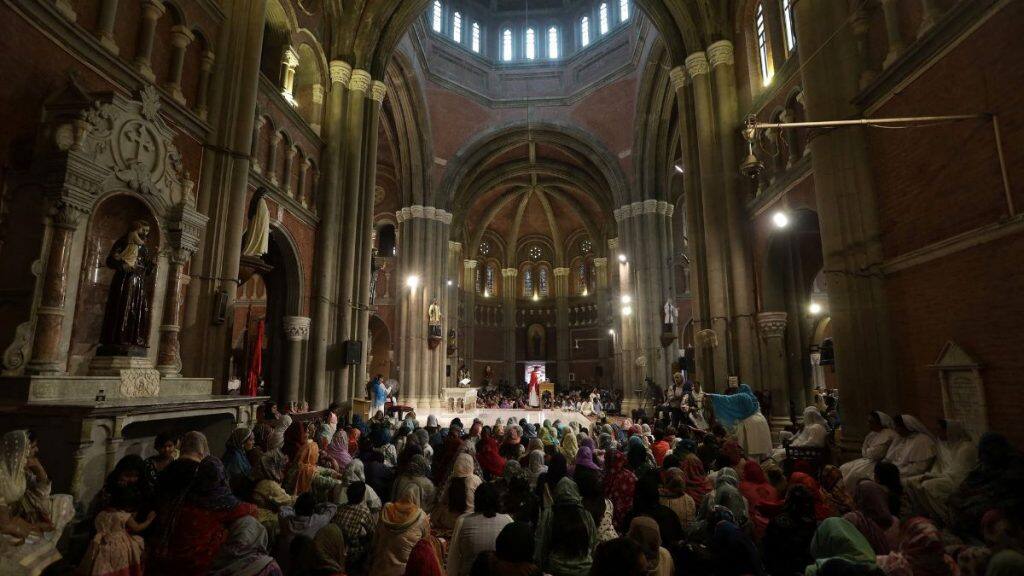
“This earlier project was maybe 15 or 20 per cent of the walled city. Now the model is being replicated to the whole city,” Lashari, who is also the secretary of LHAR, said.
As per him, two years ago, the restoration initiative was expanded after Nawaz Sharif's intervention. Before this, it focused mainly on parts of the walled city and monuments like the Lahore Fort.
Lashari said the intention was not only to conserve monuments, but to bring back Lahore's layered identity — Muslim, Sikh, Hindu, Christian, colonial and Mughal at once.
“Whether it is Christian, Sikh, Hindu or Parsi, it doesn’t matter. Inside the fort, there are many names of non-Muslims. We take them with great joy and enthusiasm,” he added
During the formation of LAHR last March, Sharif reportedly emphasised that rehabilitating Lahore’s historical identity would be beneficial to people across Pakistan. He also pointed out that before the Partition in August 1947, Lahore was considered the cultural hub of Indo-Pakistan.
“Anarkali Bazaar, Neela Gumbad, Mall Road, these names are famous even in India. Nawaz Sharif told me that whenever he visited India, people remembered these places,” Lashari said.
The painting of Princess Bamba Sutherland, the last descendant of the Sikh royal family, has been restored at the Sikh gallery in Lahore Fort. The Kharak Singh Haveli, named after Ranjit Singh’s eldest son, has been restored under its original title.
Lashari also said the restoration of churches signals changing attitudes in Lahore.
With inputs from agencies
Tags

How a 27-year-old woman broke the internet during Mumbai's CJP protests
The Great Covid Fraud: How Indian-origin couple in UK funded lavish lifestyle through fake PPE orders
Fake jobs, tourist visas: Inside Russia’s vast network luring foreigners to fight Ukraine war
Why has Bangladesh’s choice of India spokespersons raised eyebrows?
Who is Sandeep Lamba, the Delhi cop removed from protest site duty after slapping female protester?