


Why are Iran and Israel trading strikes again? Will this derail peace talks?
Israel and Iran carried out tit-for-tat strikes on Monday (June 8) despite US President Donald Trump reportedly telling Israeli Prime Minister Benjamin Netanyahu to refrain from further attacks. This is the worst flare-up since the US reached a ceasefire with Tehran on April 8. Will the escalation upend peace talks between the US and Iran?

Israel and Iran are attacking each other again, the worst flare-up since the April 8 ceasefire was reached in the West Asia war. The tit-for-tat strikes threaten to pull the region back into a full-scale war.
Israel’s attack on Iran comes despite United States President Donald Trump reportedly telling Israeli Prime Minister Benjamin Netanyahu to refrain from such attacks. The renewed fighting could derail the peace talks between the US and Iran.
We take a look.
Iran, Israel trade strikes
Israel and Iran have been trading strikes since last night.
The Israeli Defence Forces (IDF) said on Monday (June 8) that Iran launched missiles towards Israel "a short while ago".
"Defense systems are operating to intercept the threat" and members of the public living "in the relevant areas" have been alerted, as per its statement.
 More from Explainers
Earlier, the Islamic Revolutionary Guards Corps (IRGC) claimed to have targeted two Israeli air bases in Nevatim and Tel Nof, reported Iranian state media.
According to the Islamic Republic News Agency, the IRGC said it was responding to missiles Israel had fired "against several radar sites in three locations" in Iran.
Israel hit a petrochemical plant in Iran's southwest, the IDF said on Monday. It launched an aerial strike on Karun Petrochemical Company in Iran’s southwestern city of Bandar-e Mahshar, damaging parts of the plant, a provincial official told Iran's semi-official Fars.
The Petrochemical Special Economic Zone Organization directed the evacuation of its workers, reported Tasnim news agency.
The IDF said earlier that it was attacking “military targets” in central and western Iran. Explosions were reported in several Iranian cities, including Tehran, Isfahan, Tabriz and Najafabad.
Iran has closed the airspace around Tehran’s Imam Khomeini International Airport, the country’s main airfield. It has also shut down the Mehrabad airport as the conflict with Israel escalates, CNN reported, citing Iranian state media.
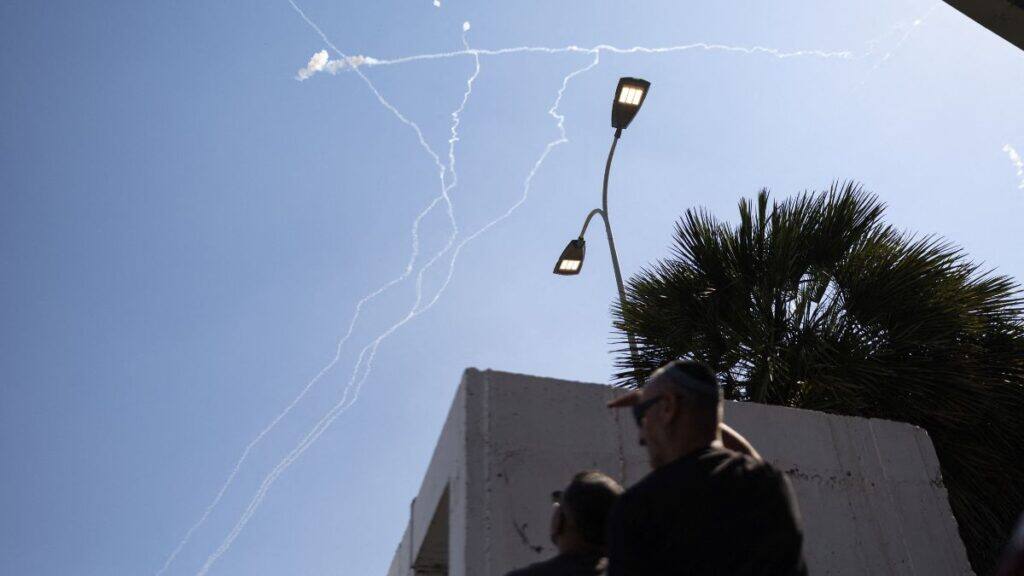
Last night, Iran launched a barrage of missiles at northern Israel. This came after Israel launched air strikes on Beirut for the first time since the US announced a truce plan for Lebanon last week. Israel claimed it had struck Hezbollah targets in southern Beirut.
Tehran had fired 11 ballistic missiles at Israel, its ambassador to the United States, Yechiel Leiter, wrote on X, adding, "Everyone has had enough of this maniacal Iranian regime."
He announced that Israel was targeting Iran's surface-to-surface missile launch sites and infrastructure facilities. "No self-respecting country in the world would tolerate such an attack, and neither will Israel," Leiter added.
Meanwhile, Houthi rebels claimed responsibility for a missile strike launched from Yemen toward Israel.
The group said it launched “a missile barrage targeting sensitive Israeli enemy targets”. They further said the strikes “achieved their objectives with precision.” The Houthis also threatened to target Israel-affiliated ships in the Red Sea.
Earlier Monday, Israel Defense Forces said it had successfully intercepted a missile from Yemen.
Israel attacks Iran despite Trump’s no
Tensions seem to be brewing between Trump and Netanyahu over Israel's attacks on Lebanon.
A US official told Axios News that the US president told Israel's PM to hold off on retaliating against Iran because, in his words, "we are close to doing something good in terms of a deal".
Speaking to Financial Times, Trump said that Netanyahu would have to accept any deal that the US secures with Iran because he "won't have any choice". Referring to Netanyahu, he said: "I call all the shots. He doesn’t call the shots."
Is full-scale war inevitable?
Today is the 100th day of the Iran war. Israel and Iran's retaliatory strikes are the worst escalation since the US reached a ceasefire deal with Iran in April.
Washington has been pushing Israel to defer its attacks in Lebanon so that it can secure a peace deal with Iran. Trump is worried that Israel’s actions could upend the ongoing talks between the US and Iran.
Hours before Israel’s attack on Iran, the US president said new strikes by Israel and Iran would not impact his administration's peace negotiations with Tehran.
The latest escalation is a major test for negotiations that Trump claimed were “very close” before the attacks, predicting an announcement on a deal this week.
Israel's actions indicate that Netanyahu is worried about the potential deal between the US and Iran, which he believes is unfavourable for Israel. Many suspect the Israeli PM is trying to create a situation for the war to resume, as per BBC.
A senior American official, as cited by Associated Press (AP), said that Trump had called Netanyahu to urge him not to retaliate immediately for the Iranian attack. The official said that Trump believed he had convinced Netanyahu.
Trump “got Bibi to hold off for the time being,” the official said.
Experts say reining in Netanyahu is key to any potential deal between Iran and the US.
Danny Citrinowicz, senior fellow from the Institute for National Security Studies in Israel, told CNN that if Trump wants to reach a deal with Iran and reopen the Strait of Hormuz, he will have to pressure Israel to stop targeting Iran.
If Trump fails to put pressure on Netanyahu to stop strikes, the confrontation “can be quickly escalated into something more broader than we have seen in the last hours,” he warned.
As the conflict in West Asia resumes, India has advised its nationals to “avoid any travel” to Iran and those in the Islamic Republic to leave “by available means of transport”.
Efforts are on to de-escalate the flare-up between Israel and Iran.
As per AP, officials from Egypt, Saudi Arabia, Turkey, Pakistan and Qatar have urged the US administration to pressure Israel to halt its strikes on Iran and Beirut. They have also called on Iranian officials to stop attacks on Israel, they said.
Pakistan-led mediators reportedly told the American administration that Israel's attack on Beirut meant “to disrupt our efforts to reach a deal” and that “Trump has to stop Netanyahu’s reckless manoeuvres.”
With inputs from agencies

How a 27-year-old woman broke the internet during Mumbai's CJP protests
The Great Covid Fraud: How Indian-origin couple in UK funded lavish lifestyle through fake PPE orders
Fake jobs, tourist visas: Inside Russia’s vast network luring foreigners to fight Ukraine war
Why has Bangladesh’s choice of India spokespersons raised eyebrows?
Who is Sandeep Lamba, the Delhi cop removed from protest site duty after slapping female protester?