


Flower Power: How cherry blossoms season is a boon for Japan's economy
Hanami or cherry blossom season is more than a national obsession in Japan. It brings an influx of revellers from the world over and this year is estimated to have a positive economic impact of 615.8 billion yen (Rs 38,312 crore)

It is not dumplings over blossoms in Japan this spring.
Record numbers of tourists from all over the world are arriving in the Asian country to enjoy the iconic "hanami festival," often known as cherry blossom season.
Notably, this is the ideal time to celebrate Japan’s favourite nationwide party, which coincides with the blooming forecast.
In addition to being a national obsession, hanami season is regarded as a boost to the Japanese economy.
Here’s how.
Hanami season kicks off
As per AFP, starting from mid-March until the beginning of May, cherry blossoms – sakura, as well as plum trees – ume are in blossom all around the country.
 More from Explainers
This year, Japan announced the official start of Tokyo’s cherry blossom season on Tuesday, 10 days earlier than usual and tied with a record early start seen only twice before.
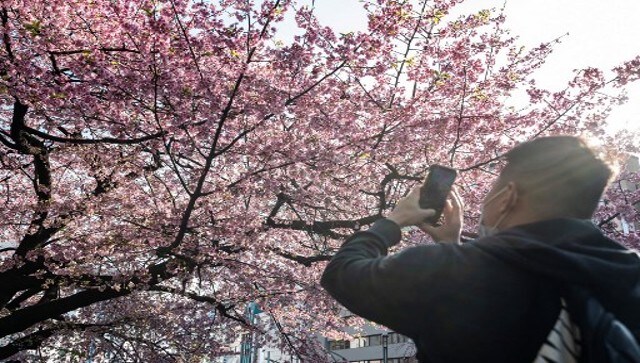
In past years the country’s meteorologists have linked the increasingly early blooms to climate change, and temperatures in Tokyo have been unseasonably mild in recent days, according to the news agency.
Tokyo’s official cherry bloom records go back 70 years and the delicate white-pink flowers have only appeared this early in 2021 and 2020, according to the weather agency.
The nationwide party
Japan’s sakura or cherry blossom season is feverishly anticipated by locals and visitors alike.
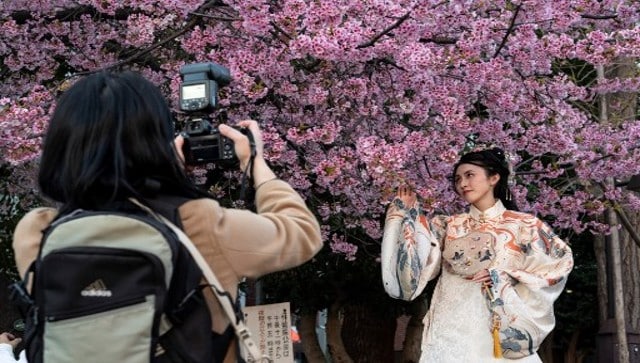
The blooms are traditionally celebrated with hanami, or viewing parties, with picnics — and sometimes boozy festivities — organised beneath the trees.
But the public had been asked not to throw parties during the pandemic, and the tourists that usually flood into the country for the season were kept out with strict border closures.
The last week of April is when northern cities like Hirosaki in Aomori Prefecture experience their greatest blossoms. Sometime in May, Sapporo. While Osaka and Kyoto are typically a week to 10 days earlier than Tokyo, according to Huffpost.
Japan’s economy to bloom
The Japan Times quoted Katsuhiro Miyamoto, a professor emeritus at Kansai University as predicting that cherry blossom viewing, or hanami, is anticipated to bring an influx of revellers estimated to have a positive economic impact of 615.8 billion yen (~Rs 38,312 crore).
This is the first time since the start of the pandemic when large gatherings were discouraged and occasionally blocked by local authorities.
According to Miyamoto’s latest study, this year’s projection is three times higher than the 201.6 billion yen (~ Rs 12.45 million) estimates from the previous year.
Miyamoto predicts that the majority of the economic impact will come from Japanese citizens, with only 2.29 million foreign visitors making up the entire hanami participant population and spending a total of 65.4 billion yen (~ Rs 40.67 billion) on goods and services.
As of Tuesday, according to sightseeing bus provider Hato Bus, 15,500 passengers had already made bus reservations expressly for cherry blossom sightseeing. This covers day vacations to and overnight stays in neighbouring prefectures, as well as guided tours to see the cherry blossoms in the national capital.
According to Nippon Travel Agency, the proportion of foreign visitors who have made bookings through the business for travel in March and April is 70 per cent more than it was before the pandemic.
Before the pandemic, up to 800 individuals would attend one of Welcome Tokyo company’s hanami parties, but after the COVID-19 pandemic, that number was closer to 100. This year, the firm anticipates a larger turnout, The Japan Times quoted Kentaro Imagawa, a representative of the company that manages paid social events, as saying.
According to the report, food and beverages companies are likewise ready to capitalise on the cherry blossom frenzy.
With inputs from agencies
Read all the Latest News, Trending News, Cricket News, Bollywood News,
India News and Entertainment News here. Follow us on Facebook, Twitter and Instagram.

How a 27-year-old woman broke the internet during Mumbai's CJP protests
The Great Covid Fraud: How Indian-origin couple in UK funded lavish lifestyle through fake PPE orders
Fake jobs, tourist visas: Inside Russia’s vast network luring foreigners to fight Ukraine war
Why has Bangladesh’s choice of India spokespersons raised eyebrows?
Who is Sandeep Lamba, the Delhi cop removed from protest site duty after slapping female protester?