


First grain ship leaves Ukraine since war began: Where it is heading, why this is significant
Ukraine and Russia are major global suppliers of wheat, barley, corn and sunflower oil, with the fertile Black Sea region long known as the breadbasket of Europe. The holdup of shipments has worsened rising food prices worldwide and threatened hunger and political instability in developing nations

The first ship carrying Ukrainian grain left from the Black Sea port of Odesa for the first time since the Russian invasion.
“The first grain ship since Russian aggression has left port,” Ukrainian Minister of Infrastructure Oleksandr Kubrakov declared on Twitter.
The long-awaited development comes under an internationally brokered deal to unblock the embattled country’s agricultural exports and ease the growing global food crisis.
Let’s take a closer look at where the ship is heading, how the agreement was reached and why it is significant:
Where is the ship heading?
The Sierra Leone-flagged cargo ship Razoni sounded its horn as it departed on Monday with over 26,000 tons of corn headed to Lebanon.
As per Al Jazeera, the Turkish defence ministry says the Chinese-built ship left Odesa shortly after 06:00 GMT.
 More from Explainers
Data from the Razoni’s Automatic Identification System, a safety tracker for ships at sea, showed the vessel slowly coming out from its berth at Odesa alongside a tug boat, as per the report.
The ship's progress has been slow due to mines in the Black Sea placed by Ukrainian forces to prevent the Russians advancing towards Odesa. Ukrainian, Turkish and UN staff monitored the ship's loading, as per Al Jazeera.
The Razoni anchored near the Bosphorus entrance off Turkey’s coast on Tuesday and was cleared for further voyage after inspection, as per Indian Express.
How was the agreement reached?
Russia and Ukraine signed separate agreements in Istanbul with Turkey and the UN on 22 July, clearing the way for Ukraine to export 22 million tons of grain and other agricultural products that have been stuck in Black Sea ports because of Russia’s invasion of Ukraine more than five months ago.

As per Indian Express, the Black Sea Grain Initiative allows exports from Odesa, Chornomorsk and Yuzhny.
Ships are to be guided through the Black Sea waters by Ukraine’s navy to avoid mined areas. The vessels will then proceed to Turkey’s Bosphorus Strait along an agreed corridor and, from there, to various ports around the world.
The ships are to also be inspected (to ensure only commercial foodstuffs and fertiliser are carried) by teams from a Joint Coordination Centre set up in Istanbul with representatives of the UN, Ukraine, Russia and Turkey.
The deal is valid for 120 days and will be automatically renewed unless the war ends, as per Al Jazeera.
Why is this significant?
Ukraine and Russia are major global suppliers of wheat, barley, corn and sunflower oil, with the fertile Black Sea region long known as the breadbasket of Europe.
The holdup of shipments because of the war has worsened rising food prices worldwide and threatened hunger and political instability in developing nations.
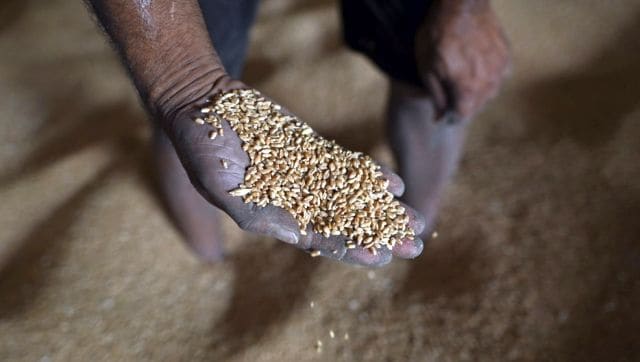
As per Al Jazeera, the UN’s World Food Programme estimates that some 47 million people are now in a stage of “acute hunger” due to the fallout from the war.
More ships are expected to leave from Ukraine’s ports through the safe corridors. At Odesa, 16 more vessels, all blocked since Russia’s invasion on 24 February are waiting their turn, with others to follow, Ukrainian authorities said.
Lebanon, the corn’s destination, is in the grip of a severe financial crisis. A 2020 explosion at its main port in Beirut shattered its capital city and destroyed grain silos. Lebanon imports mostly wheat from Ukraine but also buys its corn for making cooking oil and animal feed.
The deals also allow Russia to export grain and fertiliser.
The target is the pre-war level of 5 million metric tonnes of grain exported each month, as per Al Jazeera.
Will it have any impact on India?
Yes.
As per Indian Express, Ukraine is a major supplier of sunflower oil to India, which is Undia’s fourth largest consumed vegetable oil (22-23 lt), after palm (80-85 lt), soyabean (45 lt) and mustard/rapeseed (30 lt).
Around 70 per cent of sunflower oil consumption comes is in the South, with Maharashtra (10-12 per cent) and the rest of India accounting for the balance, as per the newspaper.
Will the deal hold up?
No one knows.
President Volodymyr Zelenskyy sounded a cautious note.

Calling the shipment “the first positive signal that there is a chance to stop the spread of a food crisis in the world,” he also urged international partners to closely monitor Moscow’s compliance with the deal.
“We cannot have the illusions that Russia will simply refrain from trying to disrupt Ukrainian exports,” Zelenskyy said.
In Moscow, Kremlin spokesman Dmitry Peskov hailed the ship’s departure as “very positive,” saying it would help test the “efficiency of the mechanisms that were agreed to during the talks in Istanbul.”
But some shipping companies are not yet rushing to export food across the Black Sea as they assess the danger of mines and the risk of Russian rockets hitting grain warehouses and ports.
As per Al Jazeera, since the deal was signed Russian forces attacked in Odesa region three times – the latest reported shelling on Sunday.
Analysts warned that the continuing fighting could still upend the grain deal.
“The departure of the first vessel doesn’t solve the food crisis; it’s just the first step that could also be the last if Russia decides to continue attacks in the south,” said Volodymyr Sidenko, an expert with the Kyiv-based Razumkov Center think-tank.
UN Secretary-General Antonio Guterres, who proposed the grain deal in April, said the Razoni was “loaded with two commodities in short supply: corn and hope.”
“Hope for millions of people around the world who depend on the smooth running of Ukraine’s ports to feed their families,” he said.
Kubrakov said the shipments will also help Ukraine’s war-shattered economy.
“Unlocking ports will provide at least $1 billion in foreign exchange revenue to the economy and an opportunity for the agricultural sector to plan for next year,” he said.
Hearing the ship sound its horn as it left port delighted Olena Vitalievna, an Odesa resident.
“Finally, life begins to move forward and there are some changes in a positive direction,” she said. “In general, the port should live its own life because Odesa is a port city. We live here. We want everything to work for us, everything to bustle.”
The resumption of the grain shipments came as fighting raged elsewhere in Ukraine, with Russia pressing its offensive in the east while Ukraine tries to retake territory in the Russian-occupied south.
Ukraine’s presidential office said at least three civilians were killed and 16 wounded by Russian shelling in the Donetsk region over the past 24 hours. Donetsk Gov. Pavlo Kyrylenko repeated a call for all residents to evacuate, emphasizing the need to remove about 52,000 children still there.
Two civilians were killed and two seriously wounded when Russian forces fired missiles at a bus evacuating people from a village in the southern Kherson region, according to Oleksandr Vilkul, head of the military administration in the city of Kryvyi Rih.
Ukrainian authorities have been calling on civilians in that region, which was overrun by Russian troops early in the war, to evacuate ahead of a planned counteroffensive.
More shelling was reported in Kharkiv in the northeast and Mykolaiv in the south.
With inputs from agencies
Read all the Latest News, Trending News, Cricket News, Bollywood News,
India News and Entertainment News here. Follow us on Facebook, Twitter and Instagram.

How a 27-year-old woman broke the internet during Mumbai's CJP protests
The Great Covid Fraud: How Indian-origin couple in UK funded lavish lifestyle through fake PPE orders
Fake jobs, tourist visas: Inside Russia’s vast network luring foreigners to fight Ukraine war
Why has Bangladesh’s choice of India spokespersons raised eyebrows?
Who is Sandeep Lamba, the Delhi cop removed from protest site duty after slapping female protester?