


When ancient Europeans ate the dead at funerals
Scientists have found that cannibalism was a common funeral ritual in Europe around 15,000 years ago. Experts say the people at the time likely had a very different view of cannibalism than we do today

These people, known as Magdalenias, lived between 11,000 and 17,000 years ago.Experts from London’s National History Museum, combing literature on the Magdalenians, found 59 such sites with human remains – mainly in France but also in Germany, Spain, Russia, the United Kingdom, Belgium, Poland, the Czech Republic and Portugal.The experts, examining 25 Magdalenians sites, found that 15 showed signs of cannibalism being practiced.The signs included
- Chewing marks on human remains
- Skulls showing cut marks
- Bones being broken in a way that allows marrow to be sucked out for nutrients.
"That in itself is interesting, because it is the oldest evidence of cannibalism as a funerary practice,” Bello added."The fact that we find cannibalism being practiced often on multiple occasions in over a short period of time, in a fairly localized area and solely by individuals attributed to the Magdalenian culture, means we believe this behaviour was one that was performed widely by the Magdalenian, and was therefore a funerary behavior in itself," Dr William Marsh, a researcher at the Natural History Museum who has been studying the human remains that have been found in Gough’s Cave, told Phys.org.‘Shift towards burying dead’The good news is that the practice likely occurred for a short period of time.As per CNN, the study found two dominant groups in that period – the Magdalenians and the Epigravettians.The former favoured cannibalism upon death, while the latter would bury the bodies.
As per Phys.org, the two groups were differentiated by the stone and bone tools they created.“There was a shift towards people burying their dead, a behaviour seen widely across south central Europe and attributed to a second distinct culture, known as the Epigravettian,” the Natural History Museum said in the release.“At this time, during the terminal period of the Palaeolithic, you actually see a turnover in both genetic ancestry and funerary behaviour,” Marsh said in the press release.[caption id="attachment_13213492" align="alignnone" width="640"]
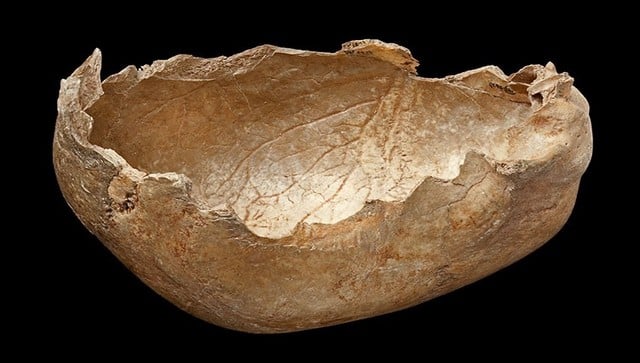
A human skull from Gough's Cave was deliberately shaped into a cup after having its flesh removed. Image courtesy: The Trustees of the Natural History Museum, London[/caption]“The Magdalenian associated ancestry and funerary behaviour is replaced by Epigravettian associated ancestry and funerary behaviour, indicative of population replacement as Epigravettian groups migrated into north-western Europe.”“We believe that the change in funerary behaviour identified here is an example of demic diffusion where essentially one population comes in and replaces another population and that brings about a change in behaviour.”In short, the Epigravettians replaced the Magdalenians – and one culture replaced the other.What do experts say?They say that the evidence is rather convincing.As Thomas Booth, a senior laboratory research scientist at the Francis Crick Institute, told CNN, “We’re missing the remains of most people who lived in Europe during the Palaeolithic and so it can always be tricky to be sure of what people did with their dead.”“However, this study provides pretty convincing evidence that ritual funerary cannibalism was practiced by people across Europe 20,000-14,000 years ago.”They also say the people at the time – and those that continued to practice cannibalism in certain places during the 20th Century including Papua New Guinea and the Brazilian and Peruvian Amazon – may have viewed cannibalism very differently than we do today.“This is not, as we may instinctively imagine, morbid and repulsive,” the University of Manchester’s Sarah-Louise Flowers was quoted as saying by The Smithsonian Magazine. “But is instead an act of affection and respect for the dead person, as a well as being a means of helping survivors to cope with their grief.”
This doesn’t seem to be an isolated instance either.As per The Smithsonian Magazine, a 1999 Science piece quoted paleontologists in France as saying that 100,000-year-old bones from six Neanderthals found in the Moula-Guercy displayed signs of being broken in a manner to remove the marrow and brains.Markings also indicated that meat from tongues and thighs was removed to be eaten.With inputs from agencies

How a 27-year-old woman broke the internet during Mumbai's CJP protests
The Great Covid Fraud: How Indian-origin couple in UK funded lavish lifestyle through fake PPE orders
Fake jobs, tourist visas: Inside Russia’s vast network luring foreigners to fight Ukraine war
Why has Bangladesh’s choice of India spokespersons raised eyebrows?
Who is Sandeep Lamba, the Delhi cop removed from protest site duty after slapping female protester?