



Vistara places orders for 19 Airbus and Boeing planes worth $3.1 billion as it embarks on ambitious expansion plans
Vistara said it has agreed to place firm orders with Airbus for 13 aircraft from the A320 neo family and with Boeing for six 787-9 Dreamliner

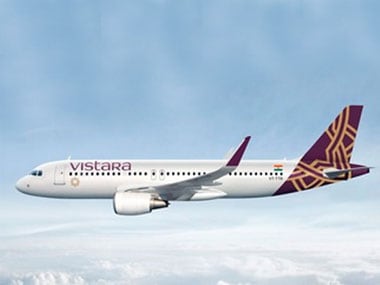
Representational image. Reuters[/caption]The airline has selected the LEAP 1-A engines from CFM International for the A320 neo and A321 neo aircraft, which are to be delivered be between 2019 and 2023.These aircraft would be used to strengthen its domestic network and to support its international operations planned for later this year, the statement said.The letter of intent signed with Boeing comprises six firm-ordered 787-9 Dreamliner and purchase rights for four more aircraft from the 787 Dreamliner family, it added.For these planes, the airline has selected General Electric GEnx-1B engines, and delivery is scheduled between 2020 and 2021. “The 787-9s are intended for use on medium-haul and long-haul international routes,” it added.Vistara CEO Leslie Thng said, India's position as the world's fastest-growing domestic aviation market and its impressive growth in air passenger traffic that has more than doubled over the last decade, makes the airline confident of aggressive plans for domestic expansion and international foray.“We are delighted to further deepen our relationship with Airbus and to join hands with Boeing to strengthen our modern and fuel-efficient fleet that will help achieve our thought-through ambitions,” he said.Vistara is a joint venture between Tata Sons and Singapore Airlines. At present, the airline serves 22 destinations with over 800 flights a week.

Bharat Forge, Flying Whales sign pact to develop 60-tonne airships for India’s defence logistics
Air India to cut Delhi-Toronto flight time by 3 hours, resume non-stop services from August 1
South Korea economy grows faster than expected in Q2 as chip exports power recovery
India remains among fastest-growing major economies despite global uncertainty, says RBI Bulletin
Iran war could cut global growth by more than half: World Bank’s chief economist Indermit Gill