
Advertisement
Co Presented By
Co Presented By


Sections
Twitter user highlights security flaws in UIDAI's mAadhaar app for Android devices, user data could be compromised
With this leaked database password, anyone with access to your phone can potentially steal your mAadhaar password and thus steal your identity.

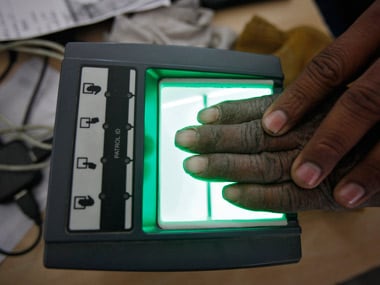
A Twitter user going by the name Elliot Alderson has reported a potentially serious security flaw in UIDAI’s mAadhaar app for Android devices.The username would be familiar to Mr. Robot fans, but the name will also be familiar because Elliot Alderson is the same person who reported on the presence of a backdoor in OnePlus software. The backdoor, programmer speak for a method of bypassing regular authentication methods, would have let a random user access and misuse any affected OnePlus device. Coming back to mAadhaar, Alderson somehow managed to access the coding for the app itself. This, we’re given to understand, is possible using various techniques and isn’t in itself an issue. On analysing the code, he found several vulnerabilities.A more security conscious app developer would have gone to greater lengths to obfuscate the code and make it harder to unravel the core of the app. Alderson has confirmed that part of the code was obfuscated, but that didn’t stop Alderson — or anyone else for that matter — from extracting a database password from the code. Better yet, this database password is apparently common to all instances of the app.Information stored in a database, especially sensitive information, should be protected by a password and various other techniques. If you have the database password, you can compromise the database. Replying to Alderson’s tweets, UIDAI has confirmed that the app creates a local database with innocuous data like user preferences. They add that since the app doesn’t ask for any biometric data, such data can’t be compromised. The revealed database password could unlock that local database.Scarily enough, Alderson points out that the revealed database password can be used to access the user-created account password, thereby giving access to the Aadhaar account of the user and all the data stored inside. Also, as per the documentation for the mAadhaar app, the app will store personal information and the user’s photo in a database on your phone. If stored, this data could be compromised. With this leaked database password, anyone with access to your phone can potentially steal your mAadhaar password — which you created when setting up the app — and thus steal your identity.[caption id="attachment_4248619" align="alignright" width="380"]![Representational image. Reuters]() Representational image. Reuters[/caption]One can also potentially spoof the app into displaying the Aadhaar information of someone else. Given that Aadhaar details and the TOTP (Time-based One-Time Password) can be accessed via mAadhaar even when offline, there is potential for serious harm if the app is compromised. In fact, if you have the TOTP, you don't need an authentication SMS for verifying something like, say, a bank transaction.On the same thread, another Twitter user going by the name Anand V claims to have sent an email to the UIDAI CEO in October last year, where he highlighted various vulnerabilities in the app. He received no response. He claims to have had to send an email to the CEO because UIDAI doesn’t yet have a usable bug-reporting infrastructure in place.Again, the all-important Aadhaar database itself isn’t vulnerable. The only thing that’s vulnerable is your identity, which is no less important. But then again, that information may have already been sold away for Rs 500 to an untold number of people. We will be updating the story with more developments as events unfold.Note: While we haven’t been able to independently verify the claims ourselves, and UIDAI hasn’t yet issued an official statement on the matter, UIDAI’s response to Alderson’s tweets suggests an implicit acknowledgement that a flaw exists in the mAadhaar app. However, the severity of the flaw cannot be accurately gauged at this time.
Representational image. Reuters[/caption]One can also potentially spoof the app into displaying the Aadhaar information of someone else. Given that Aadhaar details and the TOTP (Time-based One-Time Password) can be accessed via mAadhaar even when offline, there is potential for serious harm if the app is compromised. In fact, if you have the TOTP, you don't need an authentication SMS for verifying something like, say, a bank transaction.On the same thread, another Twitter user going by the name Anand V claims to have sent an email to the UIDAI CEO in October last year, where he highlighted various vulnerabilities in the app. He received no response. He claims to have had to send an email to the CEO because UIDAI doesn’t yet have a usable bug-reporting infrastructure in place.Again, the all-important Aadhaar database itself isn’t vulnerable. The only thing that’s vulnerable is your identity, which is no less important. But then again, that information may have already been sold away for Rs 500 to an untold number of people. We will be updating the story with more developments as events unfold.Note: While we haven’t been able to independently verify the claims ourselves, and UIDAI hasn’t yet issued an official statement on the matter, UIDAI’s response to Alderson’s tweets suggests an implicit acknowledgement that a flaw exists in the mAadhaar app. However, the severity of the flaw cannot be accurately gauged at this time.
 Representational image. Reuters[/caption]One can also potentially spoof the app into displaying the Aadhaar information of someone else. Given that Aadhaar details and the TOTP (Time-based One-Time Password) can be accessed via mAadhaar even when offline, there is potential for serious harm if the app is compromised. In fact, if you have the TOTP, you don't need an authentication SMS for verifying something like, say, a bank transaction.On the same thread, another Twitter user going by the name Anand V claims to have sent an email to the UIDAI CEO in October last year, where he highlighted various vulnerabilities in the app. He received no response. He claims to have had to send an email to the CEO because UIDAI doesn’t yet have a usable bug-reporting infrastructure in place.Again, the all-important Aadhaar database itself isn’t vulnerable. The only thing that’s vulnerable is your identity, which is no less important. But then again, that information may have already been sold away for Rs 500 to an untold number of people. We will be updating the story with more developments as events unfold.Note: While we haven’t been able to independently verify the claims ourselves, and UIDAI hasn’t yet issued an official statement on the matter, UIDAI’s response to Alderson’s tweets suggests an implicit acknowledgement that a flaw exists in the mAadhaar app. However, the severity of the flaw cannot be accurately gauged at this time.
First Published:Jan 12, 2018, 07:33:31 IST
Advertisement
Advertisement

Brent crude flirts with $100, reigniting inflation and forex concerns for India
Experts say a prolonged rally above $100 per barrel is unlikely, but sustained high oil prices could push up inflation, widen the current account deficit and pressure the rupee.
2 min read
Can a record May offset a shrunk international schedule and help IndiGo turn a profit?
Record domestic market share boosts operating performance, but forex losses, rising oil prices and geopolitical disruptions could weigh on IndiGo's bottom line.
3 min read
China has dominated Myanmar’s rare earth mines — now India eyes deal to harness country’s critical minerals
India is deepening rare earth cooperation with Myanmar as New Delhi seeks alternative sources of critical minerals dominated by China, including dysprosium and terbium used in EVs, defence systems and clean energy technologies
6 min read
JPMorgan to hire 1,000 technology professionals for India GCCs amid AI-led transformation
Wall Street banking giant to expand hiring across cloud, cybersecurity and AI data pipeline roles as it strengthens its India Global Capability Centres despite AI-driven workforce optimisation.
1 min read
BOJ seen raising interest rates by December as weak yen fuels inflation risks
Majority of economists expect Japan's central bank to deliver a 25-basis-point rate hike by year-end, with further policy tightening likely through 2027.
2 min read
Advertisement
Advertisement