



Stealing dustbins, mugs: Why passengers also need to be responsible for preventing stinking rail toilets
On paper, the installation of bio toilets sounds like an ideal solution to adhere to the Prime Minister’s Swachh Bharat slogan. But on the ground, things have not quite moved according to plan.

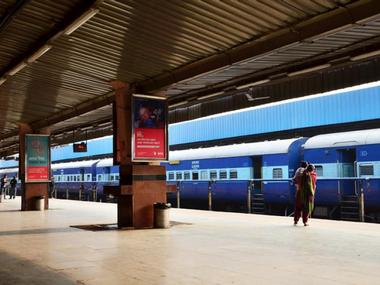
Representational image. Courtesy- News18.[/caption]Sealdah, Bilaspur and Porbander coaching depots reported the maximum loss (or theft?) of these dustbins. The Bilaspur coaching depot held the dubious distinction of having 817 bio toilets and 3,601 missing steel dustbin complaints! The Sealdah coaching depot had 1,304 such toilets in 26 trains but reported 3,536 complaints of missing dustbins! In Gujarat also, passengers seemed to like these dustbins, as the Porbander depot reported that of the 846 bio toilets in 14 trains, 2,933 complaints or instances were of missing dustbins. Of course, maximum instances of toilet choking were not due to dustbin theft but working features such as ball valve failure. The Bengaluru depot saw the maximum complaints under this head at 5,036 but not a single instance of dustbin theft. Gorakhpur in Uttar Pradesh held the dubious distinction of the maximum number of missing mugs which are placed near the bio toilets – 2,200 such toilets and almost 16,000 complaints of missing mugs!In all, the CAG said that of the 613 trains being handled in 32 coaching depots that it audited, 160 trains did not have bio-toilets. “In the remaining 453 trains having 25,080 bio-toilets, 1,99,689 instances of deficiencies or complaints were noticed.” With 1,02,792 complaints, choking seemed to be the most common problem for passengers regarding bio-toilets, followed by complains of foul smell (16,375), non-functional toilets (11,462), non-availability of dustbins (21,181), non-availability of mugs (22,899) and other complaints like ball valve failure and wire ropes (24,980).Remember, the Railways operates 13,313 passenger trains with a large fleet of 54,506 coaches, carrying 22.21 million passengers daily across its network. The toilet system conventionally used in passenger coaches was flush-type. This involved untreated human waste being discharged directly onto the tracks and platform aprons. A bio-toilet is an eco-friendly waste management solution which reduces solid human waste to bio-gas and water with the help of a bacterial inoculum through biological degradation of human waste. It eliminates direct discharge of human waste from coach toilets onto railway tracks and platform aprons in stations and help avoid manual scavenging while keeping the platform aprons and trains clean. Anaerobic bacteria inoculums used in the bio-toilets digest human waste, converting it into water and gases (Methane and Carbon dioxide). Put simply, this means bio toilets = end to open defecation across the Railways network.On paper, the installation of bio toilets sounds like an ideal solution to adhere to the Prime Minister’s Swachh Bharat slogan. But on the ground, things have not quite moved according to plan. When the Railways initially thought of installing bio toilets, they farmed out the contract to nine different suppliers and obviously suffered inconsistencies in quality, deliveries and maintenance under warranty periods.The CAG observed that due to inadequate progress of retro-fitment of bio-toilets in passenger coaches for 2015-16 (33.52 percent up to September 2015), the Railway Board decided to place bulk order for supply, installation and commissioning of approximately 80,000 bio-toilets in in-service coaches. This tender was floated in June 2016; and the Railway Board awarded the contract in August last year to nine different firms. “It was observed that out of the nine firms on which orders were placed by Railway Board for supply of 20,000 coach sets, seven firms JSL Life Style Limited, Omax Auto Limited, Mohan Rail Components Private Limited, Rail Fab, Amit Engineers, Hindustan Fibre Glass Works and Rail Tech, had complaints pending against them regarding quantity and quality of material supplied against purchase orders placed by the Zonal Railways during 2015-16 and 2016-17.” The Railways does not seem to have learnt from this fiasco, since for future supplies it says it has identified some two dozen suppliers!Lets now come to the part where the Railway supervisors are expected to maintain the toilets which did get installed, straight away or through retro fitment. The CAG found only 36.62 percent supervisory and 23.21 percent non-supervisory staff was trained in maintenance of bio-toilets, since the issue of orders for imparting training. That means only one in three supervisors and one in four other workers responsible for such toilets were at all trained. It is apparent from the CAG’s findings that a lot of work needs to be done by the Railways in not juts improving the upkeep of installed bio toilets but in also procuring them and generating awareness about their use.

Google burns cash for first time as AI spending pushes 2026 capex to $205 billion
Tesla sells more cars but makes less money: Why Musk’s AI pivot is squeezing profits
No premium queues, 30-minute target: What changes for Indian passport applicants in UAE
Bharat Forge, Flying Whales sign pact to develop 60-tonne airships for India’s defence logistics
Air India to cut Delhi-Toronto flight time by 3 hours, resume non-stop services from August 1