
Advertisement
Co Presented By
Co Presented By


Sections
Sebi issues framework on total expenses, performance disclosure of mutual funds in a bid towards transparency
Sebi said that all scheme-related expenses including commission paid to distributors will have to be paid from the scheme only within the regulatory limits

New Delhi: To bring transparency in expenses and reduce portfolio churning and misspelling in mutual funds, Sebi on Monday asked asset management companies to adopt full trail model of commission in all schemes without payment of any upfront commission.However, upfronting of trail commission will be allowed only in case of inflows through Systematic Investment Plans (SIPs), the Securities and Exchange Board of India (Sebi) said in a circular.Besides, the regulator has issued a framework for transparency in TER (total expense ratio) for mutual fund (MF)schemes, limiting the additional incentives for B-30 cities based on inflows from retail investors and performance disclosure of mutual fund schemes.Sebi said that all scheme-related expenses including commission paid to distributors will have to be paid from the scheme only within the regulatory limits and not from the books of the Asset Management Companies (AMC), its associate, sponsor, trustee or any other entity through any route.![Sebi logo. Reuters image.]() Sebi logo. Reuters image.[/caption]With regard to inflows through SIPs into MF schemes, a carve-out has been considered only for new investors to the MF industry. The upfronting of trail commissions, based on SIP inflows, will be up to one percent payable yearly in advance, for a maximum period of three years.Implementation of this would require system integration at RTA's end and a detailed guideline would be issued in this regard, Sebi noted.However, in the interim, upfronting of trail commission based on SIP inflows at mutual fund level would be available subject to certain conditions. This included upfronting of trail commission will be for total SIP inflows of up to Rs 5,000 per month, per investor, across all schemes of an MF.In case of misuse of the carve-out for SIPs, the same would be discontinued and appropriate action would be taken against the errant participants. Further, the need of this carve-out would be reviewed by Sebi as and when required.With regard to additional total expenses, Sebi said that additional TER can be charged up to 30 basis points on daily net assets of the scheme based, on inflows from beyond top 30 cities (B 30 cities) subject to certain conditions."It has been decided that the additional TER can be charged based on inflows only from retail investors from B 30 cities," the regulator said.Till the time the term 'retail investor' is defined, as an interim measure, the additional TER will be based on inflows from individual investors from B 30 cities and inflows from corporates and institutions will not be considered for computing for additional expenses.TER is a percentage of a scheme's corpus that a mutual fund house charges towards expenses, including administrative and management.In respect of disclosure of scheme performance, Sebi asked AMCs to disclose the performance of all schemes on the website of industry body Association of Mutual Funds in India (Amfi).All the MF scheme returns vis-a-vis the benchmark return will have to be disclosed, in terms of CAGR for various periods such as 1 year, 3 years, 5 years, 10 years and since inception.In case of schemes falling in categories such as overnight, liquid, ultra-short duration, low duration and money market funds categorization and rationalization of MFs, scheme performance will have to to be disclosed for a period of 7 days, 15 days, 1 month, 3 months and 6 months.All the new framework will be applicable with immediate effect while the disclosure of scheme performance will be within 30 days from date of issuance of the circular, the regulator noted.
Sebi logo. Reuters image.[/caption]With regard to inflows through SIPs into MF schemes, a carve-out has been considered only for new investors to the MF industry. The upfronting of trail commissions, based on SIP inflows, will be up to one percent payable yearly in advance, for a maximum period of three years.Implementation of this would require system integration at RTA's end and a detailed guideline would be issued in this regard, Sebi noted.However, in the interim, upfronting of trail commission based on SIP inflows at mutual fund level would be available subject to certain conditions. This included upfronting of trail commission will be for total SIP inflows of up to Rs 5,000 per month, per investor, across all schemes of an MF.In case of misuse of the carve-out for SIPs, the same would be discontinued and appropriate action would be taken against the errant participants. Further, the need of this carve-out would be reviewed by Sebi as and when required.With regard to additional total expenses, Sebi said that additional TER can be charged up to 30 basis points on daily net assets of the scheme based, on inflows from beyond top 30 cities (B 30 cities) subject to certain conditions."It has been decided that the additional TER can be charged based on inflows only from retail investors from B 30 cities," the regulator said.Till the time the term 'retail investor' is defined, as an interim measure, the additional TER will be based on inflows from individual investors from B 30 cities and inflows from corporates and institutions will not be considered for computing for additional expenses.TER is a percentage of a scheme's corpus that a mutual fund house charges towards expenses, including administrative and management.In respect of disclosure of scheme performance, Sebi asked AMCs to disclose the performance of all schemes on the website of industry body Association of Mutual Funds in India (Amfi).All the MF scheme returns vis-a-vis the benchmark return will have to be disclosed, in terms of CAGR for various periods such as 1 year, 3 years, 5 years, 10 years and since inception.In case of schemes falling in categories such as overnight, liquid, ultra-short duration, low duration and money market funds categorization and rationalization of MFs, scheme performance will have to to be disclosed for a period of 7 days, 15 days, 1 month, 3 months and 6 months.All the new framework will be applicable with immediate effect while the disclosure of scheme performance will be within 30 days from date of issuance of the circular, the regulator noted.
"MFs/ AMCs shall adopt full trail model of commission in all schemes, without payment of any upfront commission or upfronting of any trail commission, directly or indirectly, in cash or kind, through sponsorships, or any other route," Sebi said.A trail-fee model benefits distributors if their clients stay invested in schemes for a longer period. At present, mutual funds pay distributors upfront commission as high as 2 percent against the one percent recommended by Amfi.[caption id="attachment_4279131" align="alignleft" width="380"]
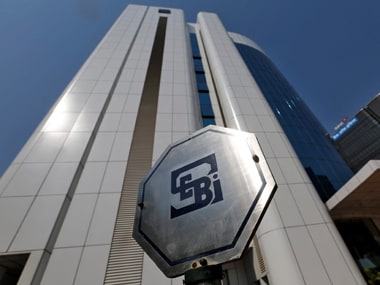 Sebi logo. Reuters image.[/caption]With regard to inflows through SIPs into MF schemes, a carve-out has been considered only for new investors to the MF industry. The upfronting of trail commissions, based on SIP inflows, will be up to one percent payable yearly in advance, for a maximum period of three years.Implementation of this would require system integration at RTA's end and a detailed guideline would be issued in this regard, Sebi noted.However, in the interim, upfronting of trail commission based on SIP inflows at mutual fund level would be available subject to certain conditions. This included upfronting of trail commission will be for total SIP inflows of up to Rs 5,000 per month, per investor, across all schemes of an MF.In case of misuse of the carve-out for SIPs, the same would be discontinued and appropriate action would be taken against the errant participants. Further, the need of this carve-out would be reviewed by Sebi as and when required.With regard to additional total expenses, Sebi said that additional TER can be charged up to 30 basis points on daily net assets of the scheme based, on inflows from beyond top 30 cities (B 30 cities) subject to certain conditions."It has been decided that the additional TER can be charged based on inflows only from retail investors from B 30 cities," the regulator said.Till the time the term 'retail investor' is defined, as an interim measure, the additional TER will be based on inflows from individual investors from B 30 cities and inflows from corporates and institutions will not be considered for computing for additional expenses.TER is a percentage of a scheme's corpus that a mutual fund house charges towards expenses, including administrative and management.In respect of disclosure of scheme performance, Sebi asked AMCs to disclose the performance of all schemes on the website of industry body Association of Mutual Funds in India (Amfi).All the MF scheme returns vis-a-vis the benchmark return will have to be disclosed, in terms of CAGR for various periods such as 1 year, 3 years, 5 years, 10 years and since inception.In case of schemes falling in categories such as overnight, liquid, ultra-short duration, low duration and money market funds categorization and rationalization of MFs, scheme performance will have to to be disclosed for a period of 7 days, 15 days, 1 month, 3 months and 6 months.All the new framework will be applicable with immediate effect while the disclosure of scheme performance will be within 30 days from date of issuance of the circular, the regulator noted.
First Published:Oct 23, 2018, 07:31:26 IST
Advertisement
Advertisement

Bharat Forge, Flying Whales sign pact to develop 60-tonne airships for India’s defence logistics
Bharat Forge has signed an MoU with Flying Whales to jointly develop and manufacture 60-tonne heavy-lift airships in India for defence logistics, strategic mobility and disaster response
3 min read
Air India to cut Delhi-Toronto flight time by 3 hours, resume non-stop services from August 1
Air India will resume non-stop Delhi-Toronto flights from August 1, cutting travel time by nearly three hours and deploying its new Boeing 787-9 Dreamliner on the route
2 min read
South Korea economy grows faster than expected in Q2 as chip exports power recovery
South Korea’s economy grew 0.6% in the second quarter, beating expectations as strong semiconductor exports offset weakness in construction investment and domestic demand
2 min read
India remains among fastest-growing major economies despite global uncertainty, says RBI Bulletin
RBI says industrial and services activity stayed resilient through June, while strong trade, stable external sector and improving foreign investment continue to support economic growth.
1 min read
Iran war could cut global growth by more than half: World Bank’s chief economist Indermit Gill
Prolonged US-Iran conflict could fuel inflation, push up borrowing costs and deepen debt distress across developing economies, says Indermit Gill
2 min read
Advertisement
Advertisement