
Advertisement
Co Presented By
Co Presented By


Sections
Rs 500, Rs 1,000 notes crackdown: To think your currency is now worthless paper is foolish
After PM Modi’s announcement, social media is having a field day showing images of Rs 500 and Rs 1,000 notes being used to wrap food items and even as toilet paper.

If some of you think that the Rs 500, Rs 1,000 notes have no value after Prime Minister Narendra Modi’s surprise announcement to ban these notes, you are making a fool of yourself. As long as the money you possess isn’t acquired by illegal means, you can exchange these notes in your bank branches when the banks open tomorrow.[caption id="attachment_2791746" align="alignleft" width="380"]![AFP]() AFP[/caption]After PM Modi’s announcement, social media is having a field day showing images of Rs 500 and Rs 1,000 notes being used to wrap food items and even as toilet paper.However, do not view the currency notes in Rs 500 and Rs 1,000 denomination in your possession as trivial paper. The social media jokes exhibit the ignorance and confusion in dealing with banned currencies even among educated youth, needless to talk about those living in remote villages.What you should doPlease don't panic. That's the first rule. And also the last one.What you should do is count the number of Rs 500, Rs 1000 notes in your possession and approach your bank beginning 10 November to get the tender exchanged in permitted denominations. However, there is a caveat. The government has stipulated certain limitations on such transactions. A customer can change only Rs 4,000 per day. This facility is on till 31 December.According to government notification, the limit of Rs 4,000 for exchange of old high denomination bank notes at bank branches or at issue offices of Reserve Bank of India will be reviewed after 15 days and appropriate notification issued, as may be necessary.Also, there will be no restriction on the use of any non-cash method of operating the account which include cheques, demand drafts, credit/debit cards, mobile wallets and electronic fund transfer mechanisms. The withdrawal from ATMs would be restricted to Rs 2,000 per day per card up to November 18, 2016. The limit will be raised to Rs 4,000 per day per card from November 19, 2016 onwards.Even if you fail to exchange all your old high denomination bank notes or deposit the same in bank accounts on or before December 30, 2016, an opportunity will be given to you to do so at specified offices of the RBI on later dates along with necessary documentation as may be specified by the RBI, the notification said.The point here is that currency crackdown doesn’t mean that your Rs 500, Rs 1000 notes have lost their value. If you fall prey to the rumors and damage the currency, you are only making yourself a fool.
AFP[/caption]After PM Modi’s announcement, social media is having a field day showing images of Rs 500 and Rs 1,000 notes being used to wrap food items and even as toilet paper.However, do not view the currency notes in Rs 500 and Rs 1,000 denomination in your possession as trivial paper. The social media jokes exhibit the ignorance and confusion in dealing with banned currencies even among educated youth, needless to talk about those living in remote villages.What you should doPlease don't panic. That's the first rule. And also the last one.What you should do is count the number of Rs 500, Rs 1000 notes in your possession and approach your bank beginning 10 November to get the tender exchanged in permitted denominations. However, there is a caveat. The government has stipulated certain limitations on such transactions. A customer can change only Rs 4,000 per day. This facility is on till 31 December.According to government notification, the limit of Rs 4,000 for exchange of old high denomination bank notes at bank branches or at issue offices of Reserve Bank of India will be reviewed after 15 days and appropriate notification issued, as may be necessary.Also, there will be no restriction on the use of any non-cash method of operating the account which include cheques, demand drafts, credit/debit cards, mobile wallets and electronic fund transfer mechanisms. The withdrawal from ATMs would be restricted to Rs 2,000 per day per card up to November 18, 2016. The limit will be raised to Rs 4,000 per day per card from November 19, 2016 onwards.Even if you fail to exchange all your old high denomination bank notes or deposit the same in bank accounts on or before December 30, 2016, an opportunity will be given to you to do so at specified offices of the RBI on later dates along with necessary documentation as may be specified by the RBI, the notification said.The point here is that currency crackdown doesn’t mean that your Rs 500, Rs 1000 notes have lost their value. If you fall prey to the rumors and damage the currency, you are only making yourself a fool.
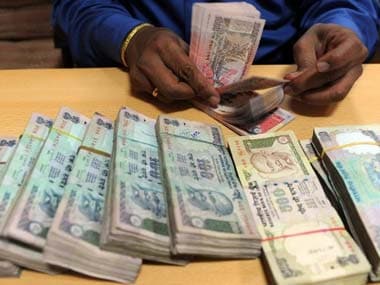 AFP[/caption]After PM Modi’s announcement, social media is having a field day showing images of Rs 500 and Rs 1,000 notes being used to wrap food items and even as toilet paper.However, do not view the currency notes in Rs 500 and Rs 1,000 denomination in your possession as trivial paper. The social media jokes exhibit the ignorance and confusion in dealing with banned currencies even among educated youth, needless to talk about those living in remote villages.What you should doPlease don't panic. That's the first rule. And also the last one.What you should do is count the number of Rs 500, Rs 1000 notes in your possession and approach your bank beginning 10 November to get the tender exchanged in permitted denominations. However, there is a caveat. The government has stipulated certain limitations on such transactions. A customer can change only Rs 4,000 per day. This facility is on till 31 December.According to government notification, the limit of Rs 4,000 for exchange of old high denomination bank notes at bank branches or at issue offices of Reserve Bank of India will be reviewed after 15 days and appropriate notification issued, as may be necessary.Also, there will be no restriction on the use of any non-cash method of operating the account which include cheques, demand drafts, credit/debit cards, mobile wallets and electronic fund transfer mechanisms. The withdrawal from ATMs would be restricted to Rs 2,000 per day per card up to November 18, 2016. The limit will be raised to Rs 4,000 per day per card from November 19, 2016 onwards.Even if you fail to exchange all your old high denomination bank notes or deposit the same in bank accounts on or before December 30, 2016, an opportunity will be given to you to do so at specified offices of the RBI on later dates along with necessary documentation as may be specified by the RBI, the notification said.The point here is that currency crackdown doesn’t mean that your Rs 500, Rs 1000 notes have lost their value. If you fall prey to the rumors and damage the currency, you are only making yourself a fool.
First Published:Nov 09, 2016, 16:23:07 IST
Advertisement
Advertisement

US jobless claims fall to 187,000, signalling resilient labour market ahead of Fed meeting
US jobless claims fall to 187,000 as strong labour market reinforces Fed's inflation focus
1 min read
NDTA asks Connaught Place shops, offices and restaurants to close by 6:30 pm today
NDTA says move follows advisory from NDMC Chairman and Vice Chairman amid prevailing security situation in Connaught Place
1 min read
EU slaps Google with $1 billion antitrust fine over Play Store and Search practices
European Commission says Google unfairly favoured its own services on Search and the Play Store, violating the Digital Markets Act; the company calls the decision harmful to businesses and consumers.
1 min read
Brent crude flirts with $100, reigniting inflation and forex concerns for India
Experts say a prolonged rally above $100 per barrel is unlikely, but sustained high oil prices could push up inflation, widen the current account deficit and pressure the rupee.
2 min read
Can a record May offset a shrunk international schedule and help IndiGo turn a profit?
Record domestic market share boosts operating performance, but forex losses, rising oil prices and geopolitical disruptions could weigh on IndiGo's bottom line.
3 min read
Advertisement
Advertisement