
Advertisement
Co Presented By
Co Presented By


Sections
After Raghuram Rajan's policy, getting budget math right will be a lot tougher for Arun Jaitley
RBI policy statement is a direct message to Arun Jaitely

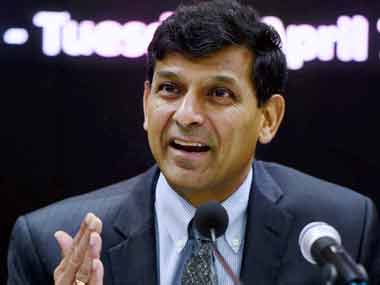 RBI governor Raghuram Rajan[/caption]If Jaitley manages to take Rajan into confidence with a good budget 'package' — something that absorbs the fiscal shock on account of a higher wage bill — and if oil remains where it is and monsoon favour, Rajan would deliver the next rate cut, else will remain on hold. That's the short message from the sixth bi-monthly monetary policy.The big take away from the monetary policy, a non-event otherwise, is the emphasis central bank has attached on growth-oriented structural reforms from the Narendra Modi-government. It has warned the government not to pin hopes solely on the monetary policy to work wonders for Asia’s third largest economy.So far, the Modi government hasn’t managed to pull off large ticket reforms such as passage of GST even though it has introduced a slew of incremental reform steps.Following are the key messages from Rajan to Jaitley:For one, Rajan wants Jaitley to list out measures in the budget to revive the growth drivers in the economy. “Underlying growth drivers need to be rekindled to place the economy durably on a higher growth trajectory. The revival of private investment, in particular has a crucial role, especially as the climate for business improves and fiscal policy continues to consolidate,” Rajan said.As Firstpost has highlighted in the past, rate cuts have hardly contributed to high growth so far as banks have been reluctant to cut their rates.Despite a 125 bps rate cut by the RBI since January, banks have passed on only less than half of this headroom to the end borrower, resulting in higher cost of bank money. The RBI, arguably, has failed to force banks to make monetary transmission effective in the banking system, despite the liquidity remaining tight.Secondly, there is clear warning to Jaitley on the persisting stress on the ground and the reversal in the larger trend of stalled projects, even though the RBI expects growth to happen shouldered by lower input costs, improving real incomes of households (as inflation declines) and expected normal monsoon after two consecutive seasons of failed monsoons that hit the farm sector hard.Citing the data from the Centre for Monitoring Indian Economy (CMIE) Rajan has worried on the increase in the stalled projects in recent quarters. According to the CMIE data, the chunk of stalled projects increase to Rs 10.7 lakh crore as of end-December as compared with Rs 10.5 lakh crore as of end-September.
Another set of data from CMIE said fresh investments in projects fell 74 percent in the December quarter to Rs 1.05 lakh crore from Rs 4.06 lakh crore in the corresponding period last year, putting the onus on the government to keep pumping in money to maintain the growth momentum. “Public spending is important,” Rajan said.
Thirdly, even while acknowledging that public spending is important, the RBI warns the government on the need to stick to the fiscal consolidation path, making Jaitley’s budget arithmetic a lot more complex. “The Indian economy is currently being viewwed as a beacon of stability because of the steady disinflation, a modest current account deficit and the commitment to fiscal rectitude. This needs to be maintained so that the foundations of stable and sustainable growth are strengthened,” Rajan said.The government, which is running on a delayed fiscal consolidation path, wants to bring down country’s fiscal deficit to 3.9 percent in the current fiscal year and the further to 3.5 percent in 2016-17 and 3 per cent by fiscal year 2018.For Jaitley, meeting the fiscal deficit targets will be a tough task on account of higher spending on account of 7th Pay Commission payout in 2016-17 (which will put an additional burden of Rs 1.02 lakh crore on the government’s finances). Also, the government hasn’t managed to progress much on the disinvestment programme (it has raised Rs 12,700 crore in the current fiscal as against a target of Rs 70,000 crore).There aren’t many options for Jaitley to meet the fiscal deficit target under check. Jaitley will need to either aggressively cut down public expenditure (which isn’t good for a struggling economy) or increase resources by increasing taxes on individual segments and pushing divestments. Rajan will keenly look at how wisely Jaitley does his fiscal math.In the presser that followed the monetary policy, Rajan didn’t specifically answer to a question on what is the fiscal deficit number he is looking for from the budget. “The budget has to be viewed as a package. It’s hard to say this number (is what the RBI is watching for),” Rajan said.But, the monetary policy statement makes it crystal clear what Rajan wants from Jaitley to effect further rate cuts. “Structural reforms in the forthcoming union budget that boosts growth while controlling spending will create more space for monetary policy to support growth.” That’s a direct message to Jaitley.Data support by Kishor Kadam
First Published:Feb 03, 2016, 11:05:46 IST
Advertisement
Advertisement

Google burns cash for first time as AI spending pushes 2026 capex to $205 billion
Google parent Alphabet reported negative free cash flow of $5.9 billion in the second quarter for the first time since going public, as surging AI infrastructure spending pushed its 2026 capital expenditure forecast to as much as $205 billion
6 min read
Tesla sells more cars but makes less money: Why Musk’s AI pivot is squeezing profits
Tesla’s record Q2 deliveries failed to translate into higher profits as price cuts, falling regulatory-credit revenue and Elon Musk’s aggressive AI spending squeezed margins and pushed the EV maker into negative free cash flow
5 min read
No premium queues, 30-minute target: What changes for Indian passport applicants in UAE
Indian passport applicants in the UAE can now access passport, visa and attestation services through Alhind’s 16 centres, with no premium queues, a Dh19 service fee and a target of completing applications within 30 minutes
4 min read
Bharat Forge, Flying Whales sign pact to develop 60-tonne airships for India’s defence logistics
Bharat Forge has signed an MoU with Flying Whales to jointly develop and manufacture 60-tonne heavy-lift airships in India for defence logistics, strategic mobility and disaster response
3 min read
Air India to cut Delhi-Toronto flight time by 3 hours, resume non-stop services from August 1
Air India will resume non-stop Delhi-Toronto flights from August 1, cutting travel time by nearly three hours and deploying its new Boeing 787-9 Dreamliner on the route
2 min read
Advertisement
Advertisement