
Advertisement
Co Presented By
Co Presented By


Sections
RBI issues guidelines for tokenisation of card transactions to make contactless payments safer
Tokenisation and de-tokenisation shall be performed only by the authorised card network and recovery of original Primary Account Number (PAN) should be feasible for the authorised card network only

Mumbai: The Reserve Bank of India on Tuesday released guidelines on tokenisation for various card transactions, including from debit and credit cards.![Representational image. Reuters]() Representational image. Reuters[/caption]At present, tokenised card transaction facility would be offered through mobile phones or tablets only and will be extended to other devices later based on experience, the central bank said.Tokenisation and de-tokenisation shall be performed only by the authorised card network and recovery of original Primary Account Number (PAN) should be feasible for the authorised card network only, the release said.The request for tokenisation and de-tokenisation should be logged by the card network and available for retrieval. A customer would not have to pay any charges for availing this service, it said."Card networks shall get the card issuers/acquirers, their service providers and any other entity involved in payment transaction chain, certified in respect of changes done for processing tokenised card transactions by them," the release said.RBI said before providing card tokenisation services, authorised card payment networks shall put in place a mechanism for periodic system audit, at least annually, of all entities involved in providing card tokenisation services to customers.The central bank also asked card issuers to ensure easy access to customers for reporting loss of 'identified device' or any other such event which may expose tokens to unauthorised usage.Registration of a card on token requestor's app shall be done only with explicit customer consent through Additional Factor of Authentication (AFA), and not by way of a forced/default/automatic selection of check box, radio button, the release said.
Representational image. Reuters[/caption]At present, tokenised card transaction facility would be offered through mobile phones or tablets only and will be extended to other devices later based on experience, the central bank said.Tokenisation and de-tokenisation shall be performed only by the authorised card network and recovery of original Primary Account Number (PAN) should be feasible for the authorised card network only, the release said.The request for tokenisation and de-tokenisation should be logged by the card network and available for retrieval. A customer would not have to pay any charges for availing this service, it said."Card networks shall get the card issuers/acquirers, their service providers and any other entity involved in payment transaction chain, certified in respect of changes done for processing tokenised card transactions by them," the release said.RBI said before providing card tokenisation services, authorised card payment networks shall put in place a mechanism for periodic system audit, at least annually, of all entities involved in providing card tokenisation services to customers.The central bank also asked card issuers to ensure easy access to customers for reporting loss of 'identified device' or any other such event which may expose tokens to unauthorised usage.Registration of a card on token requestor's app shall be done only with explicit customer consent through Additional Factor of Authentication (AFA), and not by way of a forced/default/automatic selection of check box, radio button, the release said.
Tokenisation, which aims at improving safety and security of the payment system, refers to replacement of actual card details with an unique alternate code called the 'token', which shall be unique for a combination of card, token requestor and identified device.Instead of using actual card details, this token is used to perform card transactions in contactless mode at point of sale(POS) terminals, quick response(QR) code payments.RBI has given permission to offer tokenised card transactions services to all channels such as near field communication (NFC), magnetic secure transmission (MST)-based contactless transactions, in-app payments, QR code-based payments or token storage mechanisms, including cloud, secure element and trusted execution environment.[caption id="attachment_772733" align="alignleft" width="380"]
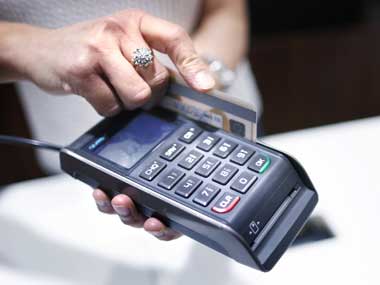 Representational image. Reuters[/caption]At present, tokenised card transaction facility would be offered through mobile phones or tablets only and will be extended to other devices later based on experience, the central bank said.Tokenisation and de-tokenisation shall be performed only by the authorised card network and recovery of original Primary Account Number (PAN) should be feasible for the authorised card network only, the release said.The request for tokenisation and de-tokenisation should be logged by the card network and available for retrieval. A customer would not have to pay any charges for availing this service, it said."Card networks shall get the card issuers/acquirers, their service providers and any other entity involved in payment transaction chain, certified in respect of changes done for processing tokenised card transactions by them," the release said.RBI said before providing card tokenisation services, authorised card payment networks shall put in place a mechanism for periodic system audit, at least annually, of all entities involved in providing card tokenisation services to customers.The central bank also asked card issuers to ensure easy access to customers for reporting loss of 'identified device' or any other such event which may expose tokens to unauthorised usage.Registration of a card on token requestor's app shall be done only with explicit customer consent through Additional Factor of Authentication (AFA), and not by way of a forced/default/automatic selection of check box, radio button, the release said.
First Published:Jan 09, 2019, 07:35:38 IST
Advertisement
Advertisement

Brent crude flirts with $100, reigniting inflation and forex concerns for India
Experts say a prolonged rally above $100 per barrel is unlikely, but sustained high oil prices could push up inflation, widen the current account deficit and pressure the rupee.
2 min read
Can a record May offset a shrunk international schedule and help IndiGo turn a profit?
Record domestic market share boosts operating performance, but forex losses, rising oil prices and geopolitical disruptions could weigh on IndiGo's bottom line.
3 min read
China has dominated Myanmar’s rare earth mines — now India eyes deal to harness country’s critical minerals
India is deepening rare earth cooperation with Myanmar as New Delhi seeks alternative sources of critical minerals dominated by China, including dysprosium and terbium used in EVs, defence systems and clean energy technologies
6 min read
JPMorgan to hire 1,000 technology professionals for India GCCs amid AI-led transformation
Wall Street banking giant to expand hiring across cloud, cybersecurity and AI data pipeline roles as it strengthens its India Global Capability Centres despite AI-driven workforce optimisation.
1 min read
BOJ seen raising interest rates by December as weak yen fuels inflation risks
Majority of economists expect Japan's central bank to deliver a 25-basis-point rate hike by year-end, with further policy tightening likely through 2027.
2 min read
Advertisement
Advertisement