
Advertisement
Co Presented By
Co Presented By


Sections
RBI autonomy: Why Urjit Patel must stand up now to reclaim central bank's integrity
For the sake of India’s aspiring economy and its larger democratic ideals, it is vital that the RBI’s autonomy is protected

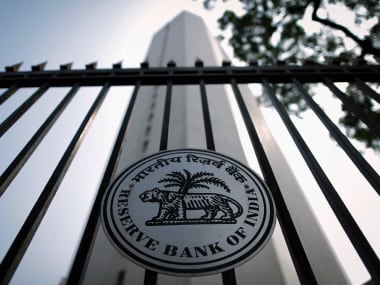 Reuters[/caption]“An image of efficiency and independence that RBI assiduously built up over decades by the strenuous efforts of its staff and judicious policy making has gone into smithereens in no time. We feel extremely pained,” the letter says. This isn’t the first instance someone is raising the issue of RBI autonomy in connection with the demonetisation.Many other noted personalities, including former RBI top brass, have cited the problem of RBI being forced to toe the Modi-government’s line and the danger of an RBI sans its integrity. The chorus began with former deputy governor, Usha Thorat, who in her Op-ed in The Indian Express, wrote. “ “There have been times when the Old Lady of Mint Street was criticised for being too conservative and cautious — for not being able to keep up with innovation and markets — never has she been accused of not knowing her job. Never has she been the butt of as many jokes as in the last few days.” Similarly, Y V Reddy and Bimal Jalan, former RBI governors, too have spoken out in support of central bank’s autonomy.In separate media interactions, both of them highlighted why the government must strive to maintain RBI’s autonomy in the interest of the larger economy. Jalan was RBI governor between 1997 and 2003, succeeded by Reddy till 2008, followed by D Subbarao and Raghuram Rajan.
The other prominent voice who raised this issue was Nobel laureate Amartya Sen, who in his interview to India Today TV, said “I don’t think this is RBI’s decision (demonetisation). This must be Prime Minister’s ...I don’t think RBI decides anything at this time." This is, in other words, Sen’s way of saying that the central bank has been reduced to an institution operating at the instructions of the central government. Such an image of the RBI wouldn’t help the Indian economy to emerge stronger.But, demonetisation has probably been only a trigger to expose the change in the working style of the central bank post the Raghuram Rajan era. The RBI leadership under Urjit Patel has so far been a near-failure to carry forward the virtues the central bank has guarded over several decades. There have been major shortcomings on many accounts, some of which Thorat has mentioned in her piece.As this writer argued in an earlier Firstpost column, the issues that led to the deterioration in RBI’s credibility can be summarised mainly into two issues — lack of transparency and absence of effective communication. Beginning late evening of 8 November, government functionaries have dominated the demonetisation scene with the RBI largely reduced to an agency whose job is to only notify what is already there in public domain.At a time when the common man was gripped with panic seeing closed ATMs/ bank branches, long queues (which continues to an extent even now) and uncertainty regarding how long the cash crunch situation will continue, the RBI should have addressed the public to calm nerves and offer firm guidance, but Patel chose to remain silent for a long time. About 60-circulars in just one month of demonetisation doesn’t give a sense to the public that the RBI had any plan or conviction about the demonetisation rollout.Recently, the Bloomberg news reported that the RBI refused to share “specific details” on the government's decision to recall high-value banknotes, citing threat to the country's sovereignty, integrity and security besides danger to life.This response is perplexing since RBI is the guardian of sovereign currency and the only authority equipped to respond on the details of demonetisation, though note ban was largely a political decision. An RTI query on the same subject filed by Firstpost is yet to yield any response. Theoretically, the central bank is not an absolutely independent organisation, it is answerable to the finance ministry.As former finance minister, P Chiidambaram writes in his Indian Express column, “The word ‘autonomous’ does not occur in the Act but, over the years, the principle of Central Bank autonomy has been raised to the level of an immutable law. Under Section 7 of the Act, the Central government may give such directions to the RBI as it may consider necessary in the public interest, but the power has never been exercised in the 83 years of the Act.”For the sake of India’s aspiring economy and its larger democratic ideals, it is vital that the RBI’s autonomy is protected. This is the reason some of the former RBI governors, including those who came from North Block, have had to lock horns with finance ministry in the past on matters pertaining to RBI’s independence. Right now, the duty of regaining the central bank’s lost glory primarily rests with current governor, Urjit Patel, who has so far largely remained silent on the issue. Patel must stand up now to save the stature of the central bank and ensure, the RBI doesn’t become just another extended division of the central government, dancing to its whims.
First Published:Jan 14, 2017, 11:58:31 IST
Advertisement
Advertisement

US jobless claims fall to 187,000, signalling resilient labour market ahead of Fed meeting
US jobless claims fall to 187,000 as strong labour market reinforces Fed's inflation focus
1 min read
NDTA asks Connaught Place shops, offices and restaurants to close by 6:30 pm today
NDTA says move follows advisory from NDMC Chairman and Vice Chairman amid prevailing security situation in Connaught Place
1 min read
EU slaps Google with $1 billion antitrust fine over Play Store and Search practices
European Commission says Google unfairly favoured its own services on Search and the Play Store, violating the Digital Markets Act; the company calls the decision harmful to businesses and consumers.
1 min read
Brent crude flirts with $100, reigniting inflation and forex concerns for India
Experts say a prolonged rally above $100 per barrel is unlikely, but sustained high oil prices could push up inflation, widen the current account deficit and pressure the rupee.
2 min read
Can a record May offset a shrunk international schedule and help IndiGo turn a profit?
Record domestic market share boosts operating performance, but forex losses, rising oil prices and geopolitical disruptions could weigh on IndiGo's bottom line.
3 min read
Advertisement
Advertisement