



Passenger vehicle sales log steepest decline in nearly 18 years, industry seeks govt support to stimulate growth
Passenger vehicle sales in India witnessed the steepest decline in nearly 18 years, dropping by over 20 percent in May, as continued weakness in retail offtake forced manufacturers to cut production in order to adjust to market demand

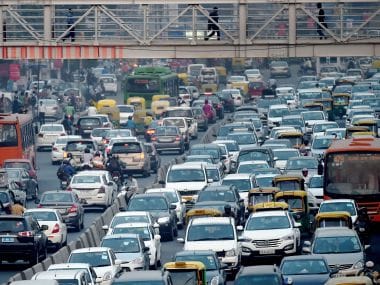
Representational image. AFP.[/caption]Domestic car sales declined 26.03 percent to 1,47,546 units as against 1,99,479 units in May 2018. Motorcycle sales last month were down 4.89 percent to 11,62,373 units as against 12,22,164 units a year earlier. Total two-wheeler sales in May declined 6.73 percent to 17,26,206 units compared to 18,50,698 units in the year-ago month. Sales of commercial vehicles were down 10.02 percent to 68,847 units in May, SIAM said. Vehicle sales across categories registered a decline of 8.62 percent to 20,86,358 units from 22,83,262 units in May 2018, it added. "The downhill drive continues in May. Retail sales figures are comparatively better than wholesales which show that the industry is taking steps to cut production. Inventory correction is taking place. We have not witnessed such slowdown in the last 15 years," SIAM Director General Vishnu Mathur told reporters here. With this kind of market situation, now is the time for the government to step in and come in with some steps to stimulate growth, he added. The government had helped the industry recover previously in 2011-12 and 2008-9 with various policy measures including cut in excise duty, Mathur said. Terming the situation as "unprecedented", SIAM Deputy Director General Sugato Sen said the industry body has asked the government to reduce goods and services tax (GST) on all categories of vehicles from 28 percent to 18 percent. "The government should also come up with a vehicle scrappage policy. It would help create market for new vehicles. Also we are seeking from government to restore incentives given on research and development in the form of weighted tax deduction to previous level (200 percent)," he added. Faced with low demand, the industry has been cutting production across segments. In May, the cut across segments stood at 7.97 percent. "We are hoping that the situation may improve in the second half with pre-buy happening before the BS VI change. Every sector is down and the government should recognise that slowdown is for real and they need to address it," Mathur said. Sen further said, "Time has come for some serious intervention to be made by the government for stimulating demand in the market. We though that post election we will see some revival but that has not happened. This is unprecedented". On government's plan to ban internal combustion engine three-wheelers and two-wheelers to adopt electric ones by 2025, he added that there should be an intergrated and practical approach for the matter and not deadlines to convert into electric vehicles (EVs). Market leader Maruti Suzuki India (MSI) reported a 25.06 percent decline in its PV sales at 1,21,018 units in May. Rival Hyundai Motor India Ltd (HMIL) also reported a 5.57 percent dip at 42,502 units. Homegrown utility vehicles major Mahindra & Mahindra saw a marginal decline in its PV sales at 20,607 units last month. TVS Motor Company reported 3.79 percent dip in sales at 2,36,897 In the two-wheeler segment, market leader Hero MotoCorp's domestic bike sales last month were down 7.98 percent at 6,37,319 units. Rival Bajaj Auto, however, posted a growth rate of 6.84 percent at 2,05,721 units last month. Honda Motorcycle and Scooter India's total sales stood at 4,59,923 units, down 11.4 percent. TVS Motor company reported 3.79 percent dip in domestic sales at 2,36,897 units.

Bharat Forge, Flying Whales sign pact to develop 60-tonne airships for India’s defence logistics
Air India to cut Delhi-Toronto flight time by 3 hours, resume non-stop services from August 1
South Korea economy grows faster than expected in Q2 as chip exports power recovery
India remains among fastest-growing major economies despite global uncertainty, says RBI Bulletin
Iran war could cut global growth by more than half: World Bank’s chief economist Indermit Gill