



Govt panel proposes to regulate prices of patented drugs
A panel formed under the ministry of chemicals and fertilizers has recommended setting up a committee to negotiate with drugmakers to fix prices of costly drugs used to treat deadly diseases such as cancer, HIV and hepatitis.

A government panel has proposed that prices of patented medicines be based on the country's per capita income, a move that would substantially reduce prices of costly drugs made by global pharmaceutical firms.
The proposal, which seeks the input of other government agencies as well as industry groups, could provoke the ire of Big Pharma, which has clashed with India over protection of intellectual property, price regulations for generic drugs, and compulsory licenses for costly medicines.
A panel formed under the ministry of chemicals and fertilizers has recommended setting up a committee to negotiate with drugmakers to fix prices of costly drugs used to treat deadly diseases such as cancer, HIV and hepatitis.
[caption id="attachment_641185" align="alignleft" width="380"]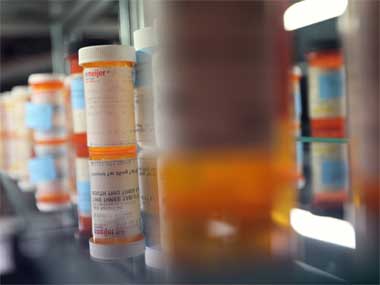
The proposal, which seeks the input of other government agencies as well as industry groups, could provoke the ire of Big Pharm. Getty Images[/caption]
The proposal is the latest in a series of measures taken by India to make medicines more affordable for the country's 1.2 billion population.
 More from Business
"If we compare the per-capita income with the prices of patented medicines in countries like Australia or France, prices in India are comparatively high and hence, they need to be regulated," a senior ministry official told Reuters, declining to be identified because he was not authorised to speak with media.
Generic medicines account for more than 90 percent of India's $13 billion pharmaceuticals market. U.S.-based Abbott Laboratories has the largest share of the overall Indian drug market followed by Cipla.
The proposal, posted late on Monday on the ministry website, cites as an example the lung-cancer drug erlotinib HCL, sold by Roche Holding as Tarceva. In India, it costs 35,450 rupees for one month of 100 mg tablets, equivalent to 121,085 rupees in France and 121,650 rupees in Australia.
Based on per-capita gross national incomes, if the drug costs 35,450 rupees in India, its respective cost would be just 11,643 rupees in France and 10,309 rupees in Australia based on per capita income in the respective countries, the report said.
The Organization of Pharmaceutical Producers of India, which represents foreign drugmakers in India, did not reply to questions from Reuters.
"If stringent price regulations are enforced then latest drugs will not be made available in India," said Ameet Hariani, managing partner at Hariani & Co, a Mumbai-based law firm that advises drugmakers and other companies.
Reuters

No premium queues, 30-minute target: What changes for Indian passport applicants in UAE
Bharat Forge, Flying Whales sign pact to develop 60-tonne airships for India’s defence logistics
Air India to cut Delhi-Toronto flight time by 3 hours, resume non-stop services from August 1
South Korea economy grows faster than expected in Q2 as chip exports power recovery
India remains among fastest-growing major economies despite global uncertainty, says RBI Bulletin