
Advertisement
Co Presented By
Co Presented By


Sections
Market rout: Modi magic is all but gone, welcome to the real economy
The Modi magic that worked wonders for stock markets is long dead and gone. It’s time for the government to acknowledge the actual state of the economy and work on solutions

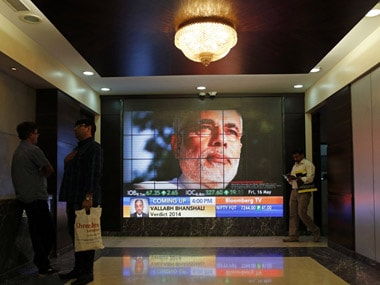
The fall in financial markets was coming as the Modi wave, which spiked the markets post May, 2014, has been fading fast. It was just a matter of time investors came to terms with what is happening on the ground. Growth hasn’t picked up as expected. The stress in the corporate sector and banking industry, and slowing manufacturing activities throw signals that are hard to ignore. Logically, the government has sharply revised downward the growth target for the current fiscal year to just above 7 percent from an ambitious 8-8.5 percent expected earlier.Devil in the detailsThough India continues to be the fastest growing major world economy at even 7 percent, stress points are emerging on the ground. Most of the major economic indicators that should ideally support the high GDP number wouldn’t do so. “Weak private sector participation, sluggish credit growth and banks’ stretched balance sheets continue to be the main pressure points,” Rao of DBS said.Why is the economy struggling? There are a few reasons:For one, the stress on the bank balance sheets due to high amount of sticky assets and paucity of capital have clearly impacted banks’ ability to lend further, in particular to industries, which is critical to reboot the economy. This is a jolt to companies since bank funding constitutes the major source of funds to small and medium companies. Going by the latest RBI data, bank lending to industries has grown by 4.6 percent in the 12 months till October 2015 compared with 7.8 percent in the corresponding period in the previous year.In the March-October period of the current fiscal year, credit growth to industries has languished at negative 0.3 percent compared with 0.7 percent in the previous year. The worst hit has been medium-sized companies, where bank lending has contracted by 10.9 percent as against a contraction of 1.1 per cent in the same period last year. Clearly, the health of the banking sector doesn’t look good so far.Arguably, the Modi government has woken up to the banking sector problems (dominated by public sector banks with 70 percent of the market share) quite late, on issues of bank capitalisation and reforms pertaining to the sector. The government remains skeptical about the privatisation of state-run banks. On the other hand, it doesn’t have the ability to feed these banks with capital.The government’s promised capital infusion of Rs 70,000 crore in the state-run banks wouldn’t suffice to meet their requirements on mandatory bad loan provisions, Basel-III requirements and further credit expansion.Secondly, the government has failed to revive the manufacturing sector so far with growth across all key verticals experiencing prolonged slowdown. The tepid growth in factory output, also reflected in the core sector growth (fell 1.3 percent in November) and monthly PMI data (to 49.1 from 50.3 in November) indicate that revival in manufacturing activity has remained elusive.
Even though one can partly attribute the recent sharp contraction in IIP to seasonal factors (like that of November when it fell to a four-year low of negative 3.2 percent), economists fear that a visible drop in capital goods production and sequential contraction in most of the manufactured products sub-components raise doubts on the durability of the recent robustness in the industrial output.
Thirdly, reviving the over-leveraged corporate sector is another major challenge for the Modi government. The overleveraged corporate sector is facing severe stress on profitability. A recent note from rating agency Crisil forecast corporate earnings to grow by mere 2 percent in the three months ending December compared with 5 percent in the corresponding period in the previous fiscal year on account of plunging commodity prices coupled with weak investments in the economy.Fourthly, the fact is Modi is yet to make a significant progress in kickstarting investment cycle. Indeed, FDI has gone up but not as much to boost his flagship ‘Make in India’ and ‘Starup India schemes, let alone his dream of transforming India to a global manufacturing hub.In a recent note, StanChart spelled out this problem. "We expect investment to slow in Q4, as the private sector investment on the same scale is unlikely and the government is likely to trim capex to meet its fiscal year 16 fiscal deficit target,” StanChart economists said. More worryingly, they warn stalled projects to increase for the second consecutive quarter.Separately, data from the Centre for Monitoring Indian Economy (CMIE) too warn that fresh investments in projects fell 74 percent in the December quarter to Rs 1.05 lakh crore from Rs 4.06 lakh crore in the corresponding period last year. This leaves the government to take the lead with continued higher spending even at the cost of breaching the fiscal deficit numbers.Indeed the government has progressed on several small ticket reforms such liberalisation of FDI in certain segments, improving social security network through welfare schemes, promoting financial inclusion of poor through Jan Dhan Yojna coverage, plugging the leakage by covering most of the subsidies under the direct benefit transfer (DBT) and progressing on the bankruptcy code.But the missing part, so far, is the large ticket reforms such as the crucial Goods and Services Tax (GST) Bill. Though the government has set April 2016 target for the roll out of GST, it appears difficult because the government doesn’t have the numbers in Rajya Sabha to push the Bill and a consensus with the Congress is still not in sight. It is almost sure that the government is likely to miss the April 1 deadline. The inability of Modi government, which is about to enter the third year, to push big reforms has been a major turn off for investors.The windfall gains from low oil prices have tremendously helped the Modi-government in the last one year to manage the import bill and inflation. But, a prolonged crash in oil prices would impact inward remittances and exports that have fallen for 13 consecutive months, which isn’t good news for the economy.The bottomline is this: what one is witnessing in the financial markets is the reflection of the weak global (mainly China worries) and domestic growth fundamentals. The Modi magic that worked wonders for stock markets is long dead and gone. It’s time for the government to acknowledge the actual state of the economy and work on solutions.
First Published:Jan 21, 2016, 13:48:12 IST
Advertisement
Advertisement

US jobless claims fall to 187,000, signalling resilient labour market ahead of Fed meeting
US jobless claims fall to 187,000 as strong labour market reinforces Fed's inflation focus
1 min read
NDTA asks Connaught Place shops, offices and restaurants to close by 6:30 pm today
NDTA says move follows advisory from NDMC Chairman and Vice Chairman amid prevailing security situation in Connaught Place
1 min read
EU slaps Google with $1 billion antitrust fine over Play Store and Search practices
European Commission says Google unfairly favoured its own services on Search and the Play Store, violating the Digital Markets Act; the company calls the decision harmful to businesses and consumers.
1 min read
Brent crude flirts with $100, reigniting inflation and forex concerns for India
Experts say a prolonged rally above $100 per barrel is unlikely, but sustained high oil prices could push up inflation, widen the current account deficit and pressure the rupee.
2 min read
Can a record May offset a shrunk international schedule and help IndiGo turn a profit?
Record domestic market share boosts operating performance, but forex losses, rising oil prices and geopolitical disruptions could weigh on IndiGo's bottom line.
3 min read
Advertisement
Advertisement