



India has highest incidence of bribery in Asia Pacific: Transparency International Survey
Transparency International survey says 69% in India said they had to pay bribe to get public services. Japan had the lowest incidence of bribery in the region: 0.2%

Berlin/New Delhi: India has got the dubious distinction of having the highest bribery rate in the Asia Pacific, with a survey showing that more than two-thirds of Indians had to pay ‘tea money’ or fork out other forms of bribe to get public services.[caption id="attachment_3129382" align="alignleft" width="380"]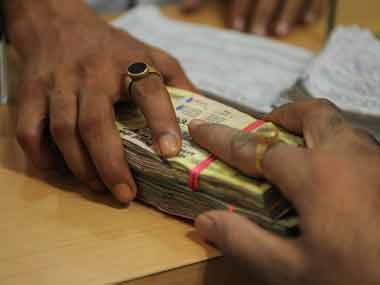 Representational image. AFP[/caption]The survey, conducted by international anti-graft rights group Transparency International, found 69 percent in India as saying they had to pay a bribe, followed by 65 percent in Vietnam.China was much lower at 26 percent while the same for Pakistan was 40 percent. Japan had the lowest incidence of bribery—at 0.2 percent. South Korea also fared well at a mere 3 percent. However, it is China which seems to have seen the highest increase, with 73 percent in the survey saying the bribery has gone up in their country over the past year while India comes in at seventh place (41 percent)—higher than countries such as Pakistan, Australia, Japan, Myanmar, Sri Lanka and Thailand.In the survey of more than 20,000 people in 16 countries spanning the Asia-Pacific region, an estimated 900 million said they had to pay a bribe at least once in the past one year.The police topped the list of public services most often demanding a bribe while 38 percent of the poorest surveyed said they paid a bribe, which is the highest proportion of any income group.The survey asked people how often they had to pay a bribe, give a gift, or do a favour, including for the police, judge or court officials, teachers, hospital staff or a government official for getting some documents or services.“Governments must do more to deliver on their anti-corruption commitments. It’s time to stop talking and act. Millions of people are forced to pay bribes for public services and it is the poor who are most vulnerable,” said Jose Ugaz, chair of Transparency International.The results show that lawmakers across the region need to do much more to support whistleblowers and governments must keep promises to combat corruption, including their commitments to meet the Sustainable Development Goals, Transparency International said.Ugaz further added that “without proper law enforcement corruption thrives. Bribery is not a small crime, it takes food off the table, it prevents education, it impedes proper healthcare and ultimately it can kill”.As part of a regional series for the Global Corruption Barometer, Transparency International spoke to nearly 22,000 people about their recent experiences with corruption in 16 countries and territories in the Asia-Pacific region.

Tesla sells more cars but makes less money: Why Musk’s AI pivot is squeezing profits
No premium queues, 30-minute target: What changes for Indian passport applicants in UAE
Bharat Forge, Flying Whales sign pact to develop 60-tonne airships for India’s defence logistics
Air India to cut Delhi-Toronto flight time by 3 hours, resume non-stop services from August 1
South Korea economy grows faster than expected in Q2 as chip exports power recovery