
Advertisement
Co Presented By
Co Presented By


Sections
Hero, Bajaj, TVS strongly object Niti Aayog's move for all electric two-wheelers, say 'black or white, zero-one change' not possible
Last week, Niti Aayog had asked auto industry body Society of Indian Automobile Manufacturers (SIAM) along with conventional two-and three-wheeler makers to suggest within two weeks, concrete steps towards transition to electric mobility keeping in mind the 2025 deadline.

New Delhi: India's big three two-wheeler maker—Hero MotoCorp, Bajaj Auto and TVS Motor Co— on Monday hit out at Niti Aayog's plan to push for 100 percent electric vehicle, saying such a transition is completely uncalled for and could jeopardise the industry.Arguing that changing from conventional two-wheelers to 100 percent electric is "not like Aadhaar, not a software and print cards", the companies said concerns of all stakeholders must be taken into consideration instead of imposing adoption of EVs.![Electric scooter. Representative image. Reuters]() Electric scooter. Representative image. Reuters[/caption]"Instead of imposing the adoption of EVs (electric vehicles), it would be ideal to have a healthy mix of policy, market dynamics, and customer acceptability," the country's largest two-wheeleler maker said.Bajaj Auto Managing Director Rajiv Bajaj also said, "we believe 100 percent transition is completely uncalled for".Earlier, he had also asserted that the move was impractical and ill-timed, considering the scale involved when stakeholders do not have "any meaningful experience with any of the pieces of the EV puzzle" and that too a date so close to BS VI implementation.Besides, he had argued that "to target two and three wheelers but not cars, etc., makes it an incomplete initiative".Asserting that a "black or white, zero-one change" is not possible "with 20 million vehicles, $15 billion in sales, one million employees", Srinivasan added that "the whole thing is not thought through. I hope saner thoughts will prevail and people will think through the real implications of all this".Hero MotoCorp also said mandating a new technology by banning the existing one is likely to jeopardise the industry.Considering the significance of the automotive industry that provides employment to millions and is a significant contributor to the country's GDP, the proposed ban could also have massive consequences on the economy, the company added."An abrupt and sudden changeover will disrupt the entire eco-system of vendors, OEMs, dealers, spare parts manufacturers, and mechanics, as well as other stakeholders, thereby impacting the livelihoods of millions of people dependent on the industry," it said.Appealing to the government and relevant authorities "to be cautious in their approach and take into consideration the concerns of all the stakeholders", Hero MotoCorp said. "A phase-wise introduction will not only allow for a smooth transition but also enable all involved parties to understand, accept and if required, make course-corrections in their approach towards EVs".
Electric scooter. Representative image. Reuters[/caption]"Instead of imposing the adoption of EVs (electric vehicles), it would be ideal to have a healthy mix of policy, market dynamics, and customer acceptability," the country's largest two-wheeleler maker said.Bajaj Auto Managing Director Rajiv Bajaj also said, "we believe 100 percent transition is completely uncalled for".Earlier, he had also asserted that the move was impractical and ill-timed, considering the scale involved when stakeholders do not have "any meaningful experience with any of the pieces of the EV puzzle" and that too a date so close to BS VI implementation.Besides, he had argued that "to target two and three wheelers but not cars, etc., makes it an incomplete initiative".Asserting that a "black or white, zero-one change" is not possible "with 20 million vehicles, $15 billion in sales, one million employees", Srinivasan added that "the whole thing is not thought through. I hope saner thoughts will prevail and people will think through the real implications of all this".Hero MotoCorp also said mandating a new technology by banning the existing one is likely to jeopardise the industry.Considering the significance of the automotive industry that provides employment to millions and is a significant contributor to the country's GDP, the proposed ban could also have massive consequences on the economy, the company added."An abrupt and sudden changeover will disrupt the entire eco-system of vendors, OEMs, dealers, spare parts manufacturers, and mechanics, as well as other stakeholders, thereby impacting the livelihoods of millions of people dependent on the industry," it said.Appealing to the government and relevant authorities "to be cautious in their approach and take into consideration the concerns of all the stakeholders", Hero MotoCorp said. "A phase-wise introduction will not only allow for a smooth transition but also enable all involved parties to understand, accept and if required, make course-corrections in their approach towards EVs".
"This is not like Aadhaar, not a software and print cards. You have to set up a whole supply chain, and migrate from the current supply chain," TVS Motor Co Chairman & Managing Director Venu Srinivasan said.Expressing similar sentiments, Hero MotoCorp said it was "deeply concerned by the potential repercussions of Niti Aayog's approach of completely banning two-wheelers up to 150cc that are powered by Internal Combustion Engines (ICE)".Last week, Niti Aayog had asked auto industry body Society of Indian Automobile Manufacturers (SIAM) along with conventional two-and three-wheeler makers to suggest within two weeks, concrete steps towards transition to electric mobility keeping in mind the 2025 deadline.Hero MotoCorp said the move by Niti Aayog is being at a time "when two-wheelers manufactured in India will have the world's cleanest emissions, along with the world's highest fuel-efficiencies, effective 1 April 2020".[caption id="attachment_4494727" align="alignleft" width="380"]
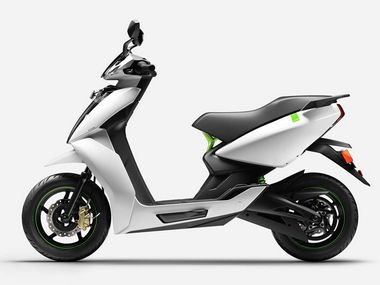 Electric scooter. Representative image. Reuters[/caption]"Instead of imposing the adoption of EVs (electric vehicles), it would be ideal to have a healthy mix of policy, market dynamics, and customer acceptability," the country's largest two-wheeleler maker said.Bajaj Auto Managing Director Rajiv Bajaj also said, "we believe 100 percent transition is completely uncalled for".Earlier, he had also asserted that the move was impractical and ill-timed, considering the scale involved when stakeholders do not have "any meaningful experience with any of the pieces of the EV puzzle" and that too a date so close to BS VI implementation.Besides, he had argued that "to target two and three wheelers but not cars, etc., makes it an incomplete initiative".Asserting that a "black or white, zero-one change" is not possible "with 20 million vehicles, $15 billion in sales, one million employees", Srinivasan added that "the whole thing is not thought through. I hope saner thoughts will prevail and people will think through the real implications of all this".Hero MotoCorp also said mandating a new technology by banning the existing one is likely to jeopardise the industry.Considering the significance of the automotive industry that provides employment to millions and is a significant contributor to the country's GDP, the proposed ban could also have massive consequences on the economy, the company added."An abrupt and sudden changeover will disrupt the entire eco-system of vendors, OEMs, dealers, spare parts manufacturers, and mechanics, as well as other stakeholders, thereby impacting the livelihoods of millions of people dependent on the industry," it said.Appealing to the government and relevant authorities "to be cautious in their approach and take into consideration the concerns of all the stakeholders", Hero MotoCorp said. "A phase-wise introduction will not only allow for a smooth transition but also enable all involved parties to understand, accept and if required, make course-corrections in their approach towards EVs".
First Published:Jun 25, 2019, 07:17:56 IST
Advertisement
Advertisement

'From make in India to launch from India': Skyroot COO on why Vikram-1 could change India’s space sector
Skyroot Aerospace’s successful Vikram-1 mission marks a major milestone for India’s private space sector, as the country seeks to shift from “Make in India” to “Launch from India” and compete in the global commercial satellite launch market
8 min read
Google burns cash for first time as AI spending pushes 2026 capex to $205 billion
Google parent Alphabet reported negative free cash flow of $5.9 billion in the second quarter for the first time since going public, as surging AI infrastructure spending pushed its 2026 capital expenditure forecast to as much as $205 billion
6 min read
Tesla sells more cars but makes less money: Why Musk’s AI pivot is squeezing profits
Tesla’s record Q2 deliveries failed to translate into higher profits as price cuts, falling regulatory-credit revenue and Elon Musk’s aggressive AI spending squeezed margins and pushed the EV maker into negative free cash flow
5 min read
No premium queues, 30-minute target: What changes for Indian passport applicants in UAE
Indian passport applicants in the UAE can now access passport, visa and attestation services through Alhind’s 16 centres, with no premium queues, a Dh19 service fee and a target of completing applications within 30 minutes
4 min read
Bharat Forge, Flying Whales sign pact to develop 60-tonne airships for India’s defence logistics
Bharat Forge has signed an MoU with Flying Whales to jointly develop and manufacture 60-tonne heavy-lift airships in India for defence logistics, strategic mobility and disaster response
3 min read
Advertisement
Advertisement