



Govt refuses to disclose details on RBI Governor Shaktikanta Das' appointment
The Centre has refused to share details related to the appointment of RBI Governor Shaktikanta Das citing a clause in the transparency law which bars disclosure of information, including "records of deliberations of the council of ministers, secretaries and other officers"

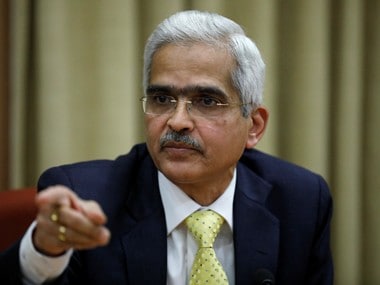
File image of RBI governor Shaktikanta Das. Reuters.[/caption]The DFS was also asked to provide details on the composition of the search committee to short-list candidates and a copy of minutes of meetings held on deciding the RBI Governor. In its reply, the DFS said the selection of Governor, RBI is done by the Appointments Committee of the Cabinet on the basis of a recommendation made by the Financial Sector Regulatory Appointments Search Committee (FSRASC). The committee is headed by cabinet secretary as its chairperson and has an additional principal secretary to Prime Minister and secretary of the department concerned besides three outside experts as its members, the DFS said, without giving the names of the experts. It had then forwarded the application to the cabinet secretariat. "In this regard, it is informed that the requisite information about appointment of Shaktikanta Das as Governor, Reserve Bank of India, being Appointments Committee of the Cabinet (ACC) related file notings/documents/records, is exempted from disclosure under Section 8 (1) (i) of the Right to Information Act 205," the cabinet secretariat said in its reply to the RTI application. The section bars disclosure of "cabinet papers, including records of deliberations of the council of ministers, secretaries and other officers". The section, however, says that the decisions of the council of ministers, the reasons thereof, and the material on the basis of which the decisions were taken shall be made public after the decision has been taken, and the matter is complete, or over. Das, a 1980-batch IAS officer of Tamil Nadu cadre, retired as Economic Affairs Secretary in May 2017 and was since appointed India's Sherpa to the G-20 and a member of the Finance Commission. Urjit Patel, who initially appeared to have toed the government line on issues like demonetisation, clashed with the Finance Ministry last year over issues of liquidity, reserves of the central bank and lending norms. The face-off had led to the government invoking a never-used-before provision of the RBI Act to bring the Governor to the negotiating table on these issues. After Das' appointment was announced, Indian-American economist Abhijit Banerjee flayed the government for appointing the retired bureaucrat as the RBI Governor. He also warned that the decision leaves a lot of "frightening" questions about governance issues at key public institutions. Banerjee, Professor of Economics at the Massachusetts Institute of Technology (MIT), had made a strong pitch for strengthening the credibility of all key institutions like the RBI. On Patel's sudden resignation, he had said, "We should all worry if this is a sign of institutional stress." Addressing a function a day after Das' appointment, former chief economic advisor Arvind Subramanian said the central bank's autonomy was "sacred" which should not be compromised.

US jobless claims fall to 187,000, signalling resilient labour market ahead of Fed meeting
NDTA asks Connaught Place shops, offices and restaurants to close by 6:30 pm today
EU slaps Google with $1 billion antitrust fine over Play Store and Search practices
Brent crude flirts with $100, reigniting inflation and forex concerns for India
Can a record May offset a shrunk international schedule and help IndiGo turn a profit?