
Advertisement
Co Presented By
Co Presented By


Sections
Govt proposes easing local data storage rules for foreign payment firms after intense lobbying by US firms
Easing the proposal would be a relief for firms including MasterCard, Visa, and American Express, which fear the country's data onshoring move could cost them millions of dollars and set a precedent for other major governments to implement similar rules at a time when there is heightened scrutiny of how companies globally handle their customers’ data.

New Delhi: The finance ministry has proposed relaxing a directive from the central bank that would compel global payment firms to store customer data only locally, following weeks of intense lobbying by US companies and trade bodies.![RBI logo. AFP.]() RBI logo. AFP.[/caption]At the June meeting, RBI executive director S Ganesh Kumar said the central bank had been approached about the companies’ concerns and was in the process of issuing a circular to clarify the rules, according to the minutes. Suggestions made at the meeting would be helpful in deciding the matter, Kumar said.The meeting was chaired by the Economic Affairs Secretary Subhash Chandra Garg and attended by other ministry and RBI officials, as well as executives from companies including MasterCard, Visa and American Express.MasterCard and American Express declined to comment. Visa and RBI did not respond to an email seeking comment.“This is a big step and shows India has a progressive outlook towards businesses,” said an executive with one of the payment companies, adding that the ministry had tried to address some of the industry’s biggest grouses.“This will hopefully serve as a precedent for other regulators who might be thinking of data localisation,” said a lawyer familiar with the matter, adding that this would also allow for data processing and analytics - which is currently done offshore - to continue.Main concernsThe RBI had initially resisted a joint lobbying effort by the foreign payment companies, with sources with direct knowledge of the matter telling Reuters in May that the central bank was telling the firms to comply, not complain.The industry’s main concerns have been over restricting data storage to India, a lack of clarity on the type of data that needed to be stored and the timeline to implement the rules.During the June meeting, representatives from the US lobby group US-India Business Council (USIBC) said that storing the data only in India would be a security risk, as in the event of a natural disaster no one would have access to it if it was all stored in one place.The representatives also said that only after understanding the kind of data that needed to be stored would they be able to estimate the time needed to set up the necessary infrastructure.Global payment firms currently store and process Indian transactions outside the country. The RBI’s directive comes as more people in India are switching to plastic, partly driven by the Modi government’s decision to replace high-value currency notes in November 2016, since when the government has aggressively discouraged cash transactions.In March, citizens clocked transactions worth $52 billion using their 900 million credit and debit cards, nearly double the amount recorded in November 2016, data from the RBI showed.But rising fraud is a concern too. The RBI in April said the payment ecosystem in India had “expanded considerably”, making it necessary to ensure “the safety and security” of data.
RBI logo. AFP.[/caption]At the June meeting, RBI executive director S Ganesh Kumar said the central bank had been approached about the companies’ concerns and was in the process of issuing a circular to clarify the rules, according to the minutes. Suggestions made at the meeting would be helpful in deciding the matter, Kumar said.The meeting was chaired by the Economic Affairs Secretary Subhash Chandra Garg and attended by other ministry and RBI officials, as well as executives from companies including MasterCard, Visa and American Express.MasterCard and American Express declined to comment. Visa and RBI did not respond to an email seeking comment.“This is a big step and shows India has a progressive outlook towards businesses,” said an executive with one of the payment companies, adding that the ministry had tried to address some of the industry’s biggest grouses.“This will hopefully serve as a precedent for other regulators who might be thinking of data localisation,” said a lawyer familiar with the matter, adding that this would also allow for data processing and analytics - which is currently done offshore - to continue.Main concernsThe RBI had initially resisted a joint lobbying effort by the foreign payment companies, with sources with direct knowledge of the matter telling Reuters in May that the central bank was telling the firms to comply, not complain.The industry’s main concerns have been over restricting data storage to India, a lack of clarity on the type of data that needed to be stored and the timeline to implement the rules.During the June meeting, representatives from the US lobby group US-India Business Council (USIBC) said that storing the data only in India would be a security risk, as in the event of a natural disaster no one would have access to it if it was all stored in one place.The representatives also said that only after understanding the kind of data that needed to be stored would they be able to estimate the time needed to set up the necessary infrastructure.Global payment firms currently store and process Indian transactions outside the country. The RBI’s directive comes as more people in India are switching to plastic, partly driven by the Modi government’s decision to replace high-value currency notes in November 2016, since when the government has aggressively discouraged cash transactions.In March, citizens clocked transactions worth $52 billion using their 900 million credit and debit cards, nearly double the amount recorded in November 2016, data from the RBI showed.But rising fraud is a concern too. The RBI in April said the payment ecosystem in India had “expanded considerably”, making it necessary to ensure “the safety and security” of data.
Easing the proposal would be a relief for firms including MasterCard, Visa, and American Express, which fear the country's data onshoring move could cost them millions of dollars and set a precedent for other major governments to implement similar rules at a time when there is heightened scrutiny of how companies globally handle their customers’ data.Prime Minister Narendra Modi has been aggressively pushing digital and cashless modes of payment that leave an electronic trail as part of a campaign to crack down on the black economy.Foreign payment companies were caught off guard in April by the Reserve Bank of India’s (RBI) one-page directive that said all payments data should, within six months, be stored only in the country for “unfettered supervisory access”.The finance ministry, in a meeting held in June with RBI officials and executives from payment firms, said that a possible solution could be that companies would be allowed to store data offshore, as long as a copy was kept in India.The companies had opposed the restriction on storing data overseas and had lobbied for its removal.The ministry has also proposed clarifying the kind of data that needed to be stored and the time given to implement the directive, according to a copy of the minutes of the meeting reviewed by Reuters.[caption id="attachment_4495023" align="alignleft" width="380"]
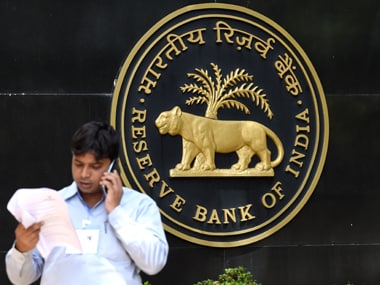 RBI logo. AFP.[/caption]At the June meeting, RBI executive director S Ganesh Kumar said the central bank had been approached about the companies’ concerns and was in the process of issuing a circular to clarify the rules, according to the minutes. Suggestions made at the meeting would be helpful in deciding the matter, Kumar said.The meeting was chaired by the Economic Affairs Secretary Subhash Chandra Garg and attended by other ministry and RBI officials, as well as executives from companies including MasterCard, Visa and American Express.MasterCard and American Express declined to comment. Visa and RBI did not respond to an email seeking comment.“This is a big step and shows India has a progressive outlook towards businesses,” said an executive with one of the payment companies, adding that the ministry had tried to address some of the industry’s biggest grouses.“This will hopefully serve as a precedent for other regulators who might be thinking of data localisation,” said a lawyer familiar with the matter, adding that this would also allow for data processing and analytics - which is currently done offshore - to continue.Main concernsThe RBI had initially resisted a joint lobbying effort by the foreign payment companies, with sources with direct knowledge of the matter telling Reuters in May that the central bank was telling the firms to comply, not complain.The industry’s main concerns have been over restricting data storage to India, a lack of clarity on the type of data that needed to be stored and the timeline to implement the rules.During the June meeting, representatives from the US lobby group US-India Business Council (USIBC) said that storing the data only in India would be a security risk, as in the event of a natural disaster no one would have access to it if it was all stored in one place.The representatives also said that only after understanding the kind of data that needed to be stored would they be able to estimate the time needed to set up the necessary infrastructure.Global payment firms currently store and process Indian transactions outside the country. The RBI’s directive comes as more people in India are switching to plastic, partly driven by the Modi government’s decision to replace high-value currency notes in November 2016, since when the government has aggressively discouraged cash transactions.In March, citizens clocked transactions worth $52 billion using their 900 million credit and debit cards, nearly double the amount recorded in November 2016, data from the RBI showed.But rising fraud is a concern too. The RBI in April said the payment ecosystem in India had “expanded considerably”, making it necessary to ensure “the safety and security” of data.
First Published:Jul 12, 2018, 08:29:15 IST
Advertisement
Advertisement

'From make in India to launch from India': Skyroot COO on why Vikram-1 could change India’s space sector
Skyroot Aerospace’s successful Vikram-1 mission marks a major milestone for India’s private space sector, as the country seeks to shift from “Make in India” to “Launch from India” and compete in the global commercial satellite launch market
8 min read
Google burns cash for first time as AI spending pushes 2026 capex to $205 billion
Google parent Alphabet reported negative free cash flow of $5.9 billion in the second quarter for the first time since going public, as surging AI infrastructure spending pushed its 2026 capital expenditure forecast to as much as $205 billion
6 min read
Tesla sells more cars but makes less money: Why Musk’s AI pivot is squeezing profits
Tesla’s record Q2 deliveries failed to translate into higher profits as price cuts, falling regulatory-credit revenue and Elon Musk’s aggressive AI spending squeezed margins and pushed the EV maker into negative free cash flow
5 min read
No premium queues, 30-minute target: What changes for Indian passport applicants in UAE
Indian passport applicants in the UAE can now access passport, visa and attestation services through Alhind’s 16 centres, with no premium queues, a Dh19 service fee and a target of completing applications within 30 minutes
4 min read
Bharat Forge, Flying Whales sign pact to develop 60-tonne airships for India’s defence logistics
Bharat Forge has signed an MoU with Flying Whales to jointly develop and manufacture 60-tonne heavy-lift airships in India for defence logistics, strategic mobility and disaster response
3 min read
Advertisement
Advertisement