



Economic Survey 2019 says airports, monuments, trains, roads could be named after highest taxpayers over decade
To improve tax compliance, the Economic Survey 2018-19 on Thursday suggested that the government could consider giving top-10 taxpayers in each district recognition by way of "diplomatic"-type privileges at the immigration counter, express boarding at airports, and even naming of roads, buildings and schools

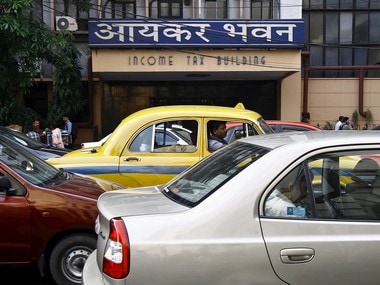
Representational image. Reuters.[/caption]"The idea is to create exclusive membership of 'clubs' that exude not only social status but also honour. Such steps can also help propagate the social norm that 'paying taxes honestly is honourable'," the Survey said. The Survey, tabled in Parliament by Finance Minister Nirmala Sitharaman, also suggested propagating the social norm that 'paying taxes honestly is honourable' by way of displaying signboards showing 'tax money at work' in construction projects could lower perceptions of 'vertical unfairness'. "Similarly, highlighting the tax paid by other taxpayers, especially self-employed individuals, in the panchayat/ district through SMS, billboards etc, can correct perceptions of horizontal unfairness," the Survey added. It said across countries, researches have highlighted that tax evasion is driven significantly by tax morale -- the intrinsic motivation of taxpayers in a country to pay taxes. Tax morale itself is driven primarily by two perceptive factors: (i) vertical fairness, i.e. what I pay in taxes is commensurate to the benefits I receive as services from the government; and (ii) horizontal fairness, i.e., differences in the taxes paid by various sections of society. For instance, citizens perceive vertical fairness to be low if they find their tax payments being squandered in wasteful public expenditure or by corruption. Similarly, perceptions of horizontal fairness suffer when the employee class is forced to contribute disproportionately to income taxes while the class of self-employed gets away paying minimal taxes. Both perceptions contribute to high tax evasion in a country, the Survey said. "In order to enhance tax compliance, behavioural insights need to be employed to modify the social norm from 'evading taxes is acceptable' to 'paying taxes honestly is honourable'. A start has been made through the budget speech of February 2019, which publicly and explicitly thanked taxpayers, perhaps for the first time, thereby seeking to honour honest taxpayers," said the Survey. "I thank the honest taxpayers of India for reposing faith in our government. Let me assure them that we have used their contribution to serve the poor and create better infrastructure," Piyush Goyal, the then finance minister, had said in 2019-20 Interim Budget speech.

Tesla sells more cars but makes less money: Why Musk’s AI pivot is squeezing profits
No premium queues, 30-minute target: What changes for Indian passport applicants in UAE
Bharat Forge, Flying Whales sign pact to develop 60-tonne airships for India’s defence logistics
Air India to cut Delhi-Toronto flight time by 3 hours, resume non-stop services from August 1
South Korea economy grows faster than expected in Q2 as chip exports power recovery