



Budget 2020-21: Finance Ministry seeks suggestions for rationalising income tax, other duties
In perhaps the first instance, the finance ministry has kicked off the exercise to formulate the next budget by seeking suggestions on changes in direct and indirect taxes from industry and trade associations

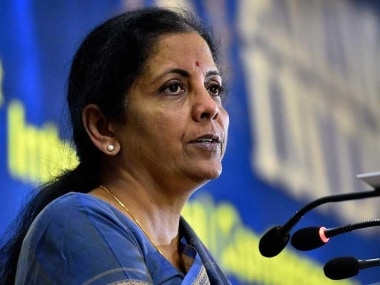
File image of finance minister Nirmala Sitharaman. PTI[/caption]The 11 November circular asked industry and trade associations to give "suggestions for changes in the duty structure, rates and broadening of tax base on both direct and indirect taxes giving economic justification for the same.""Your suggestions and views may be supplemented and justified by relevant statistical information about the production, prices, revenue implication of the changes suggested and any other information to support your proposal," it said.After her maiden Budget on 5 July, Sitharaman on 20 September announced a cut in corporate income taxes for domestic companies to 22 percent from 30 percent previously. This would bring effective corporate tax rate, including all additional levies, to about 25.2 percent, for companies which are not receiving any incentives or exemptions.New manufacturing companies formed after 1 October will enjoy a 15 percent (effective rate of 17 percent) corporate income tax rate, against 25 percent previously.The move is estimated to result in Rs 1.45 lakh crore in revenue loss for the government during 2019-20.Subsequent to this, there have been demands for a reduction in income tax rates for individuals as well so as to put more money in the hands of the common man for a consumption-led revival of the economy. India's economic growth had slipped to a six-year low of 5 percent in the April-June quarter and the revival may take a few quarters despite announcements to boost real estate and financial sectors."As regards direct taxes, while forwarding your proposals, please take into consideration the recent initiatives of the government to reduce corporate tax rates applicable to domestic companies" provided they do not avail of any other tax rebate or concession, the orders said."The government policy with reference to direct taxes in the medium term is to phase out tax incentives, deductions, and exemptions while simultaneously rationalising the rates of tax. It would be also desirable that while forwarding the suggestions/ recommendations, positive externalities arising out of the said recommendations and their quantification are also indicated," it said.With the GST Council, an umbrella body comprising of central and state ministers, the final decision-making authority on the goods and services tax (GST), the order said that GST-related requests are not examined as part of the annual Budget.It, however, sought suggestions related to customs and central excise duty.The suggestions have been sought by 21 November."The request for correction of inverted duty structure, if any for a commodity, should necessarily be supported by value addition at each stage of manufacturing of the commodity. It would not be feasible to examine suggestions that are either not clearly explained or which are not supported by adequate justification/statistics," the order said.Follow full coverage of Union Budget 2020-21 here

No premium queues, 30-minute target: What changes for Indian passport applicants in UAE
Bharat Forge, Flying Whales sign pact to develop 60-tonne airships for India’s defence logistics
Air India to cut Delhi-Toronto flight time by 3 hours, resume non-stop services from August 1
South Korea economy grows faster than expected in Q2 as chip exports power recovery
India remains among fastest-growing major economies despite global uncertainty, says RBI Bulletin