



Budget 2018: Why Narendra Modi government should focus on policymaking, not policing
The government has already announced that rural India and infrastructure as the focus areas in the upcoming budget.

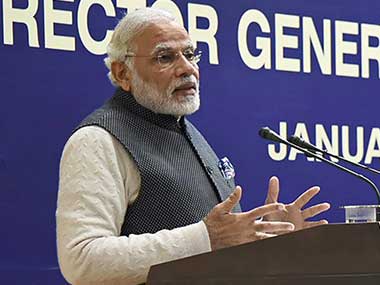
Narendra Modi. PTI[/caption]As far as the GST is concerned the ammunition, the policy, is indeed appropriate. The aim was double-fold: First, bring millions of businesses into the tax net and thereby raise tax collection. Second, improve the efficiency of the production process and lower cost of doing business for entrepreneurs.GST removes the discrepancy between indirect taxes among different states, streamlines business records and tax payment systems, reduces the overheads such as logistics costs and eventually should result in more economic activity. The policy shift was long over-due and much needed. But, was there a case of a mistaken identity that left the cop unable to judge the disruption that its policy implementation will create?Most of the Indian businesses are in the informal sector and employ over 70 percent of total workforce in the economy. Agreed that we need to lower tax evasion in the informal sector by creating incentives to improve the compliance. If voluntary compliance is not rising, the policymakers need to raise it forcefully.But when would the force work with the least amount of disruption to the society? By putting in place a less cumbersome system for relatively tech non-savvy small scale businesses to record their transactions and pay taxes. The preparedness of the informal sector businesses to cope up with a regime shift is very different than that of businesses in the formal sector. The policymakers perhaps misjudged this impact. Now we have a court-like system, GST anti-profiteering body, to investigate if boons of lowering of tax under GST were passed on by companies in terms of lower prices to consumers.Now, if the retail outlet such as Lifestyle does not lower their prices in response to a lower tax rate, but if people continue to flock to the shop, why should the company lower the price? And if enough people aren’t purchasing their goods, wouldn’t firms automatically lower the price or offer discounts? Should the government interfere in the pricing of private goods and that begs a related question too, do we still need the MRP law?In another policy move, a ban was announced on charging prices higher than the government prescribed limit for knee implants and cardiac stents. Apparently, there is a talk of another 20 medical devices to be brought under the price cap. While on the face of it, these might appear to be welfare-enhancing policies, such policing of an industry rarely works giving rise to a number of unintended consequences.Another key policy of the government is the Swatch Bharat Abhiyan with an aim of making India open-defecation free. The government is keeping a watchful eye on the progress of this noble initiative in terms of number of toilets built, but will building toilets solve India’s sanitation problem? What about the access, usability and maintenance of toilets, especially when there is a severe shortage of piped water in most places?The biggest lesson in economics and policy making is that good intentions can have unintended consequences. The government policies and programs should not be judged by the intentions, but by their outcomes, so said Milton Friedman, the Noble laureate economist.The government has already announced that rural India and infrastructure as the focus areas in the upcoming budget. Numerous earlier budgets from different political parties have had the same focus, but little impact. What matters for the success of policy initiatives is that they create right incentives for all stakeholders and improve their decision making. Public policies should reform, and not raid. Hopefully, the policymakers will keep this in mind while framing the next budget.For full coverage of Union Budget 2018, click here.The writer is associate professor, economics, at Great Lakes Institute of Management, Chennai

Brent crude flirts with $100, reigniting inflation and forex concerns for India
Can a record May offset a shrunk international schedule and help IndiGo turn a profit?
China has dominated Myanmar’s rare earth mines — now India eyes deal to harness country’s critical minerals
JPMorgan to hire 1,000 technology professionals for India GCCs amid AI-led transformation
BOJ seen raising interest rates by December as weak yen fuels inflation risks