
Advertisement
Co Presented By
Co Presented By


Sections
Budget 2018: At Arun Jaitley's 5th pre-Budget talks, leading economists draw road map for major tax reform
At pre-Budget meet, Arun Jaitley said country was able to achieve these fiscal targets due to focus on expenditure rationalisation and plugging of loopholes in public expenditure

Finance Minister Arun Jaitley on Monday chaired his 5th pre-Budget consultation meeting with the stakeholders groups from IT sector in connection with the forthcoming Union Budget 2018-19 in New Delhi. He said India has recorded an average growth of 7.5 percent from 2014-15 to 2016-17, significantly higher as compared to the growth in the previous two years. The Finance Minister was making the opening remarks during his 5th pre-budget consultation meeting with the leading economists here in New Delhi. ![Arun Jaitley addresses a Press Conference]() The Finance Minister said despite subdued global economic growth, India’s growth remains impressive and one of the best in the world during the last 3 years. "The Finance Minister further said: "we are following the roadmap of fiscal consolidation under which the fiscal deficit as a ratio of GDP stood at 3.9 percent in 2015-16 and 3.5 percent in 2016-17 and is budgeted to be 3.2 percent for the current financial year 2017-18."Growth of second quarter of the current financial year 2017-18 marks the reversal of the declining trend of growth witnessed in the last few quarters. We are following the roadmap of fiscal consolidation," Arun Jaitley said. According to Jaitley, country was able to achieve these fiscal targets due to focus on expenditure rationalisation, plugging of loopholes in public expenditure through Direct Benefit Transfer Scheme (DBT) and Public Financial Management System (PFMS), and by making innovative revenue raising efforts among others. The pre-Budget consultative meeting was attended by Dr Rajiv Kumar, vice-chairman, NITI Ayog, Bibek Debroy, member, Niti Ayog and chairman, economic advisory council to the prime minister (EAC-PM), Dr Hasmukh Adhia, finance secretary, AN Jha, secretary, expenditure, Subhash Chandra Garg, secretary (economic affairs), Dr Arvind Subramanian, chief economic adviser (CEA), Sushil Kumar Chandra, chairman, CBDT and other senior officers of the ministry of finance.A number of suggestions were given by the participating economists and other economic experts. Some of the major suggestions included that in the forthcoming Budget, the government should continue to follow the path of fiscal consolidation and in case, there is any shortfall due to any reasons in achieving the fiscal targets, the same thereof may be clarified, according to a PIB release. Similarly, in the forthcoming Budget, the road map for tax reforms may also be announced. It was also suggested that without compromising on macro-economic stability, more incentives be given on infrastructure investment as well as to SME and Construction Sectors to make them economically viable, give farmers more remunerative prices for their produce keeping in view the target of maintain inflation between 4-6 percent, the PIB release further said. Another suggestion was to give more thrust on disinvestment of Public Sector Units (PSUs) as it will provide extra revenue for bridging the fiscal gap and meeting the expenditure needs. Participants also suggested raising old age pension from existing Rs 200 to Rs 500 and Widow Pension from Rs 300 to minimum Rs 500. Maternity Entitlement Benefits be fully implemented and be extended up to two children. Besides, the payment system for these Social Security Schemes also need to be streamlined.Economists also backed lowering of the Corporate Tax up to 20 percent by removing all exemptions in order to make it competitive at international level. It was also suggested to tax Long Term Capital Gains to bring equity and raise revenue, reduce MAT (Minimum Alternate Tax), and announce the road map for GST including convergence of rates, extending time for transactions’ matching etc. It was also suggested to give incentives to labour intensive industries including SMEs and informal and unorganised sectors, according to the PIB release.For full coverage of Union Budget 2018, click here.
The Finance Minister said despite subdued global economic growth, India’s growth remains impressive and one of the best in the world during the last 3 years. "The Finance Minister further said: "we are following the roadmap of fiscal consolidation under which the fiscal deficit as a ratio of GDP stood at 3.9 percent in 2015-16 and 3.5 percent in 2016-17 and is budgeted to be 3.2 percent for the current financial year 2017-18."Growth of second quarter of the current financial year 2017-18 marks the reversal of the declining trend of growth witnessed in the last few quarters. We are following the roadmap of fiscal consolidation," Arun Jaitley said. According to Jaitley, country was able to achieve these fiscal targets due to focus on expenditure rationalisation, plugging of loopholes in public expenditure through Direct Benefit Transfer Scheme (DBT) and Public Financial Management System (PFMS), and by making innovative revenue raising efforts among others. The pre-Budget consultative meeting was attended by Dr Rajiv Kumar, vice-chairman, NITI Ayog, Bibek Debroy, member, Niti Ayog and chairman, economic advisory council to the prime minister (EAC-PM), Dr Hasmukh Adhia, finance secretary, AN Jha, secretary, expenditure, Subhash Chandra Garg, secretary (economic affairs), Dr Arvind Subramanian, chief economic adviser (CEA), Sushil Kumar Chandra, chairman, CBDT and other senior officers of the ministry of finance.A number of suggestions were given by the participating economists and other economic experts. Some of the major suggestions included that in the forthcoming Budget, the government should continue to follow the path of fiscal consolidation and in case, there is any shortfall due to any reasons in achieving the fiscal targets, the same thereof may be clarified, according to a PIB release. Similarly, in the forthcoming Budget, the road map for tax reforms may also be announced. It was also suggested that without compromising on macro-economic stability, more incentives be given on infrastructure investment as well as to SME and Construction Sectors to make them economically viable, give farmers more remunerative prices for their produce keeping in view the target of maintain inflation between 4-6 percent, the PIB release further said. Another suggestion was to give more thrust on disinvestment of Public Sector Units (PSUs) as it will provide extra revenue for bridging the fiscal gap and meeting the expenditure needs. Participants also suggested raising old age pension from existing Rs 200 to Rs 500 and Widow Pension from Rs 300 to minimum Rs 500. Maternity Entitlement Benefits be fully implemented and be extended up to two children. Besides, the payment system for these Social Security Schemes also need to be streamlined.Economists also backed lowering of the Corporate Tax up to 20 percent by removing all exemptions in order to make it competitive at international level. It was also suggested to tax Long Term Capital Gains to bring equity and raise revenue, reduce MAT (Minimum Alternate Tax), and announce the road map for GST including convergence of rates, extending time for transactions’ matching etc. It was also suggested to give incentives to labour intensive industries including SMEs and informal and unorganised sectors, according to the PIB release.For full coverage of Union Budget 2018, click here.
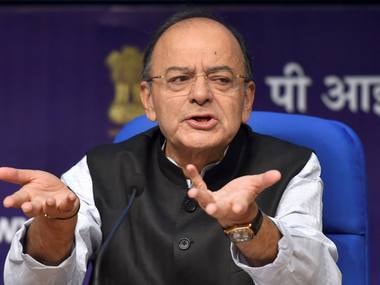 The Finance Minister said despite subdued global economic growth, India’s growth remains impressive and one of the best in the world during the last 3 years. "The Finance Minister further said: "we are following the roadmap of fiscal consolidation under which the fiscal deficit as a ratio of GDP stood at 3.9 percent in 2015-16 and 3.5 percent in 2016-17 and is budgeted to be 3.2 percent for the current financial year 2017-18."Growth of second quarter of the current financial year 2017-18 marks the reversal of the declining trend of growth witnessed in the last few quarters. We are following the roadmap of fiscal consolidation," Arun Jaitley said. According to Jaitley, country was able to achieve these fiscal targets due to focus on expenditure rationalisation, plugging of loopholes in public expenditure through Direct Benefit Transfer Scheme (DBT) and Public Financial Management System (PFMS), and by making innovative revenue raising efforts among others. The pre-Budget consultative meeting was attended by Dr Rajiv Kumar, vice-chairman, NITI Ayog, Bibek Debroy, member, Niti Ayog and chairman, economic advisory council to the prime minister (EAC-PM), Dr Hasmukh Adhia, finance secretary, AN Jha, secretary, expenditure, Subhash Chandra Garg, secretary (economic affairs), Dr Arvind Subramanian, chief economic adviser (CEA), Sushil Kumar Chandra, chairman, CBDT and other senior officers of the ministry of finance.A number of suggestions were given by the participating economists and other economic experts. Some of the major suggestions included that in the forthcoming Budget, the government should continue to follow the path of fiscal consolidation and in case, there is any shortfall due to any reasons in achieving the fiscal targets, the same thereof may be clarified, according to a PIB release. Similarly, in the forthcoming Budget, the road map for tax reforms may also be announced. It was also suggested that without compromising on macro-economic stability, more incentives be given on infrastructure investment as well as to SME and Construction Sectors to make them economically viable, give farmers more remunerative prices for their produce keeping in view the target of maintain inflation between 4-6 percent, the PIB release further said. Another suggestion was to give more thrust on disinvestment of Public Sector Units (PSUs) as it will provide extra revenue for bridging the fiscal gap and meeting the expenditure needs. Participants also suggested raising old age pension from existing Rs 200 to Rs 500 and Widow Pension from Rs 300 to minimum Rs 500. Maternity Entitlement Benefits be fully implemented and be extended up to two children. Besides, the payment system for these Social Security Schemes also need to be streamlined.Economists also backed lowering of the Corporate Tax up to 20 percent by removing all exemptions in order to make it competitive at international level. It was also suggested to tax Long Term Capital Gains to bring equity and raise revenue, reduce MAT (Minimum Alternate Tax), and announce the road map for GST including convergence of rates, extending time for transactions’ matching etc. It was also suggested to give incentives to labour intensive industries including SMEs and informal and unorganised sectors, according to the PIB release.For full coverage of Union Budget 2018, click here.
First Published:Dec 11, 2017, 17:27:47 IST
Advertisement
Advertisement

US jobless claims fall to 187,000, signalling resilient labour market ahead of Fed meeting
US jobless claims fall to 187,000 as strong labour market reinforces Fed's inflation focus
1 min read
NDTA asks Connaught Place shops, offices and restaurants to close by 6:30 pm today
NDTA says move follows advisory from NDMC Chairman and Vice Chairman amid prevailing security situation in Connaught Place
1 min read
EU slaps Google with $1 billion antitrust fine over Play Store and Search practices
European Commission says Google unfairly favoured its own services on Search and the Play Store, violating the Digital Markets Act; the company calls the decision harmful to businesses and consumers.
1 min read
Brent crude flirts with $100, reigniting inflation and forex concerns for India
Experts say a prolonged rally above $100 per barrel is unlikely, but sustained high oil prices could push up inflation, widen the current account deficit and pressure the rupee.
2 min read
Can a record May offset a shrunk international schedule and help IndiGo turn a profit?
Record domestic market share boosts operating performance, but forex losses, rising oil prices and geopolitical disruptions could weigh on IndiGo's bottom line.
3 min read
Advertisement
Advertisement