



At 3% GST rate, gold jewellery demand to be unaffected, says Icra
Under the present tax regime, jewellery retailers are levied a VAT of 1 percent in most states (except in Kerala, where 5 percent VAT is levied) on sales and an excise duty of 1 percent is levied on the input side

Mumbai: The 3 percent tax on gold jewellery is not likely to cause any major disruption to the overall gold demand, ICRA said in a report here."Gold jewellery demand is expected to be favourable over the near-term with uptick in both rural and urban demand. Rural consumption will benefit from favourable monsoon guidance, likely rise in minimum support prices, rural employment guarantee scheme and farm loans waiver in few states," ICRA Vice President and Co-Head, Corporate Ratings, K Srikumar said.He said, the urban demand will gain traction from rising income levels, pay revision for state government employees and pensioners and favourable demographic spread."The long term fundamentals of the industry remain strong driven by the cultural underpinnings in the country, evolving lifestyle, and growing disposable income," he added.The government announced a 3 percent tax on gold jewellery, in line with the 2-6 percent rates indicated earlier in the draft goods and services tax (GST) rules.[caption id="attachment_3520441" align="alignleft" width="380"]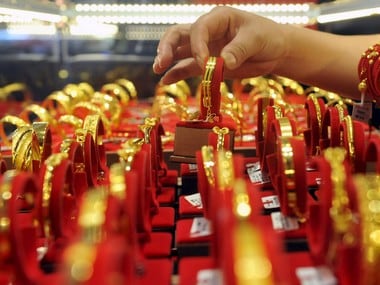 Representational image. Reuters[/caption]Under the present tax regime, jewellery retailers are levied a VAT of 1 percent in most states (except in Kerala, where 5 percent VAT is levied) on sales and an excise duty of 1 percent is levied on the input side.This apart, a duty of 10 percent is levied on bullion imports and 15 percent on jewellery imports.Against the cumulative current tax rate of 2 percent, the final GST rate at 3 percent is higher, while the import duty will continue at prevalent rates.ICRA expects the same to be passed on to end customers and the higher tax is not likely to cause any major disruption to the gold jewellery demand.Especially, ICRA said, the organised retailers are expected to benefit at the cost of unorganised players as the overall supply chain is likely to be streamlined with the scheduled rollout of GST.In recent years, the market share of organised players have increased, due to quality assurances, purity, availability of a wider designs and rising preference for fashion jewellery.Post-demonetisation and regulatory restrictions, ICRA said there was churn in the market share of unorganised retailers who were affected by liquidity squeeze and higher compliance costs.As the jewellery retailer can now claim input tax credit on purchases from goldsmiths or manufacturers, ICRA expects the structural shift and changing landscape toaccelerate the formalisation of the industry.It will be because retailers would prefer to source from organised players to claim input tax credits on jewellery and other services availed, it added.

US jobless claims fall to 187,000, signalling resilient labour market ahead of Fed meeting
NDTA asks Connaught Place shops, offices and restaurants to close by 6:30 pm today
EU slaps Google with $1 billion antitrust fine over Play Store and Search practices
Brent crude flirts with $100, reigniting inflation and forex concerns for India
Can a record May offset a shrunk international schedule and help IndiGo turn a profit?