


Ravi Deshpande launches new digital agency 'Whyness'

[caption id="attachment_1213271" align="alignleft" width="380"]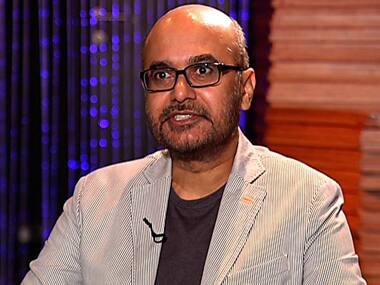 Ravi Deshpande, Founder, Whyness[/caption]
After a 27 year long career which saw him rise to the position of chairman and chief creative officer of Contract Advertising, a position he quit some months ago, Ravi Deshpande is ready with his new plans. His new shop, Whyness, will be a collaborative agency with technology and design solutions integrated into the core offering. Deshpande speaks to Storyboard editor Anant Rangaswami.
Ravi, congratulations on your new company. To begin with, tell us, what is this company? Is it a design shop or an ad agency; what is it?
Deshpande: We are an integrated communications company. We address brand challenges with solutions that combine human insights, strategy, creativity, design, and most importantly, technology. In a sense, we will bridge the gap between traditional and digital agencies.
 More from Brands
A lot of traditional agencies can say that they have access to all these things. Why would brands come to you?
Deshpande: Well, it's one thing to have access but it's another to actually build a company where you integrate resources. What happens in traditional companies is that you have the verticals --- for traditional work, for design; there is even a vertical for digital which is not quite a vertical, it's probably a little bit of pretense. On the other hand, you have digital companies who are largely concentrating on solving problems on social media for brands, making some apps; more like a media company or a medium as against a company with a holistic brand solution. So we feel that both traditional agencies and digital agencies aren't exactly offering the full service. We wanted to, therefore, integrate the two and bring in the right people. So, we blended the talent of strategy, creative, design and technology together in order to actually formulate this company.
Your company is called Whyness. What is the context of the name?
Deshpande: Defining a problem is really halfway to the answer. We thought that we must go on asking questions until the right answer is found. It's the attitude of asking the 'why' question in the right context, till the time the problem is cornered, pinned to the wall and there is no room for it to escape or there are no other questions. On such a clean slate the problem lies clear, waiting to be solved and it is in perfect condition to deliver some great work. Hence, Whyness.
There are two other entities that have come together with you to form Whyness. Can you tell us about each of those agencies, what each does and what they bring to the table?
Deshpande: We've tied up with Findability Sciences, a Boston based big data technology company, and Seenk from Paris, which is a branding and design company. These two have come and joined us in a formal way. It's a strong strategic alliance. As a result of bringing in Findability Sciences, we would actually surround ourselves with technologists; they would sit with us, surround us and help us solve problems in the technology space. So, we'd work in an integrated way and it would not be outsourced. They are a part of the company. With the Seenk alliance, in order to enhance our design thinking, we would have constant inputs coming in from them. They would physically land up for large assignments. Besides that, their constant guidance, in order to enhance the quality of design, would help us build a very strong company.
All the years that you've been in the advertising agency business in India, why didn't you do the things that you're planning to do now?
Deshpande: It's a bit challenging because all those grids are set. When you're running a traditional company, the relationship with clients is already well-defined -- there's a particular way in which you earn revenue and then there's a way in which clients expect you to work with them. It's all pretty much set. You don't have any room to change it dramatically. You can make some minor modification; you can hire a couple of people in the digital space and go and try to modify the conversation but you don't quite change things dramatically. You actually end up doing more of the same because what's asked of you is more of the same. Also, at the same time, you cannot change a model that's busy giving certain revenue to the company unless you have an extraordinary case, something of which I'm not sure that there are many takers! I don't think dramatic modification of existing companies is possible.
You spoke about the agency side, the construct that doesn't allow this change. How do you think clients will take to your model?
Deshpande: The kind of things that we wanted to do is exactly what clients are looking for, in terms of embracing new media and doing things a bit differently. I don't know if you can spend six months of your time, the client's time and resources, and actually end that journey with just a television commercial which costs quite a bit of money! And then that conversation gets over in 2-3 weeks time, which is where the funds evaporate and you don't have much room to do anything else. What's also started to happen, with more people just recording the programs that they want to watch at a time that is convenient to them, is that they've started skipping the ads. You don't know if people are watching the commercial that you painstakingly made. As a result, there is definite room to see how you can take the conversation across different platforms and mediums and do it in such a manner that people can't escape your brand, in a good way. You ensure that you definitely reach them, persuade them and make them consider your case.
Finally, if we have this conversation one year from now, what would you be happy telling me, in the progress of Whyness?
Deshpande: Well, I would like many case studies coming out from us which actually 'Walk the Talk' in terms of ensuring that the work we're creating is traveling across platforms and is esthetically beautiful. Also that it has a strong technology edge and it's a completely new, refreshed experience in the world of communications business.
Anant Rangaswami was, until recently, the editor of Campaign India magazine, of which Anant was also the founding editor. Campaign India is now arguably India's most respected publication in the advertising and media space. Anant has over 20 years experience in media and advertising. He began in Madras, for STAR TV, moving on as Regional Manager, South for Sony’s SET and finally as Chief Manager at BCCL’s Times Television and Times FM. He then moved to advertising, rising to the post of Associate Vice President at TBWA India. Anant then made the leap into journalism, taking over as editor of what is now Campaign India's competitive publication, Impact. Anant teaches regularly and is a prolific blogger and author of Watching from the sidelines.

IEA predicts major oil surplus in 2027 as Hormuz reopening sparks supply rebound
CNN-News18 Launches #CNNNews18OneLess, Inspiring India to Turn Small Actions into Big Environmental Impact
Sensex crashes over 1,000 points; Nifty tumbles 359 points in late sell-off
Hindware wins case against Google, Delhi HC fines tech giant Rs 30 lakh for trademark infringement
Best Ways to Get Exposure to Gold in India?