


Edelman's inaugural consumer study 'brandshare' proves it pays to share

Edelman today introduced 'brandshare', a new global study that explores the value and dimensions of inclusive brand marketing. The study was conducted with 11,000 people in eight countries to find out what happens when a brand shares in the truest sense of the word. Of these, the study connected with 2,125 consumers across 17 states in India, to evaluate 75 brands across 12 industry sectors. 'brandshare' measured six dimensions of sharing - shared dialog, shared experience, shared goals, shared values, shared product and shared history - and found a link between effective brand sharing and business value.
[caption id="attachment_1152465" align="alignleft" width="400"]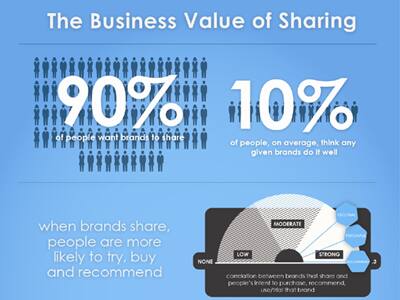 In India 82 per cent want brands to share, but only 25 per cent say brands are currently doing it effectively.[/caption]
The inaugural report found that 82 per cent of Indian consumers want brands to share, but only 25 per cent say brands are currently doing it in an effective manner.
The study reveals that consumers desire deeper engagement than brands currently provide and that they don't distinguish between the promise of a product's brand and the reputation of its corporate owner. The study also states that people become emotionally connected with the brand as a result of more sharing.
 More from Brands
"Indian consumers reward brands that share by showing a strong intent to try, purchase or recommend them," said Jennifer Cohan, global chair of the Consumer Marketing practice, Edelman. "That clearly highlights that sharing is strongly correlated to business outcomes. 'brandshare' is an ethos and organizing principle that begins with putting people at the center of brand strategy and prioritizes activities based on people's interests and needs."
Of the six dimensions for effectively sharing a brand, shared product is ranked as most important by consumers in India, with three quarters of respondents (75 per cent) stating that openness about the quality of a brand was important to them, compared to just over half (54 per cent) globally. In addition, nearly 7 in 10 (67 per cent) stated that it is important for brands to value their input and participation in the creation and development of a product, and for brands to personalize to their tastes (65 per cent). Click here to view the infographic.
However, the most powerful predictor of an Indian consumer's actions is shared history. While a majority of people don't actively ask for more of it from brands, shared history correlated most strongly to people's intent to recommend brands. Knowing the people, personalities, successes and failures behind a brand is important, according to the study.
"India, and particularly its second and third tier cities, is a relatively young market for brand engagement. As such, enthusiasm remains very high for sharing and brands are appreciated for the sharing behaviors they are already doing. This study demonstrates that shared dialog and experiences lay a critical foundation, and evolved, transparent sharing around values, goals, participation and heritage are clearly correlated with brand growth," said Cornelia Kunze, Edelman's Vice Chairman for the APACMEA region.
People are looking for a more thoughtful dialog with brands, where their opinions are solicited and responses are acted upon. Four in ten respondents globally say they want a more meaningful connection with brands, which is twice as many as desire simple branded content. Across age groups, 45-64 year olds are the most unsatisfied with brands' current levels of listening and thoughtful response with 44 per cent wanting brands to do more.
Brand experiences also remain important to consumers, and are in higher demand among respondents in emerging markets who are relatively new to these types of interactions.
"We now know more about how brands should be engaging with consumers and they must focus on a multi-disciplinary marketing approach," said Alan VanderMolen, president and CEO, global practices, Edelman and vice chairman, DJE Holdings. "Marketers must evolve from a traditional linear model of focus groups that ends with the consumer to one that involves people at every stage. Brands must also synchronize their brand marketing and corporate communications narrative into one cohesive message, while redesigning current engagement channels to incorporate higher-value sharing."

IEA predicts major oil surplus in 2027 as Hormuz reopening sparks supply rebound
CNN-News18 Launches #CNNNews18OneLess, Inspiring India to Turn Small Actions into Big Environmental Impact
Sensex crashes over 1,000 points; Nifty tumbles 359 points in late sell-off
Hindware wins case against Google, Delhi HC fines tech giant Rs 30 lakh for trademark infringement
Best Ways to Get Exposure to Gold in India?